Introduction
Here’s where most ball valve procurement decisions go wrong: someone picks a valve that looks the part, fits the pipe size, and comes in under budget. The system passes commissioning. Then eighteen months in, the maintenance team is dealing with a valve that barely seals, or one that’s been installed somewhere nobody can actually reach it.
The ball valve itself wasn’t the problem. The selection criteria were.
Choosing the right ball valve for a commercial building isn’t complicated, but it does require more than matching the pipe diameter and checking the price. Material, pressure rating, port type, connection method, installation environment , all of it feeds into whether a valve performs for twenty years or becomes a line item on your first maintenance budget.
If you’re a contractor, MEP engineer, consultant, or procurement professional working on a commercial development in Saudi Arabia, this guide covers what you actually need to know to get the specification right.
Step 1: Be Clear About the Application Before Anything Else
The single most useful question to ask before specifying a ball valve isn’t “what size?” It’s “what is this valve actually doing, and in what kind of system?”
A ball valve serving a potable water riser in a commercial office tower operates in fundamentally different conditions from one installed in a pump room feeding an HVAC chilled water circuit. Both are ball valves. Both might be the same pipe size. But one needs to be rated for drinking water contact, and the other needs to handle higher operating temperatures.
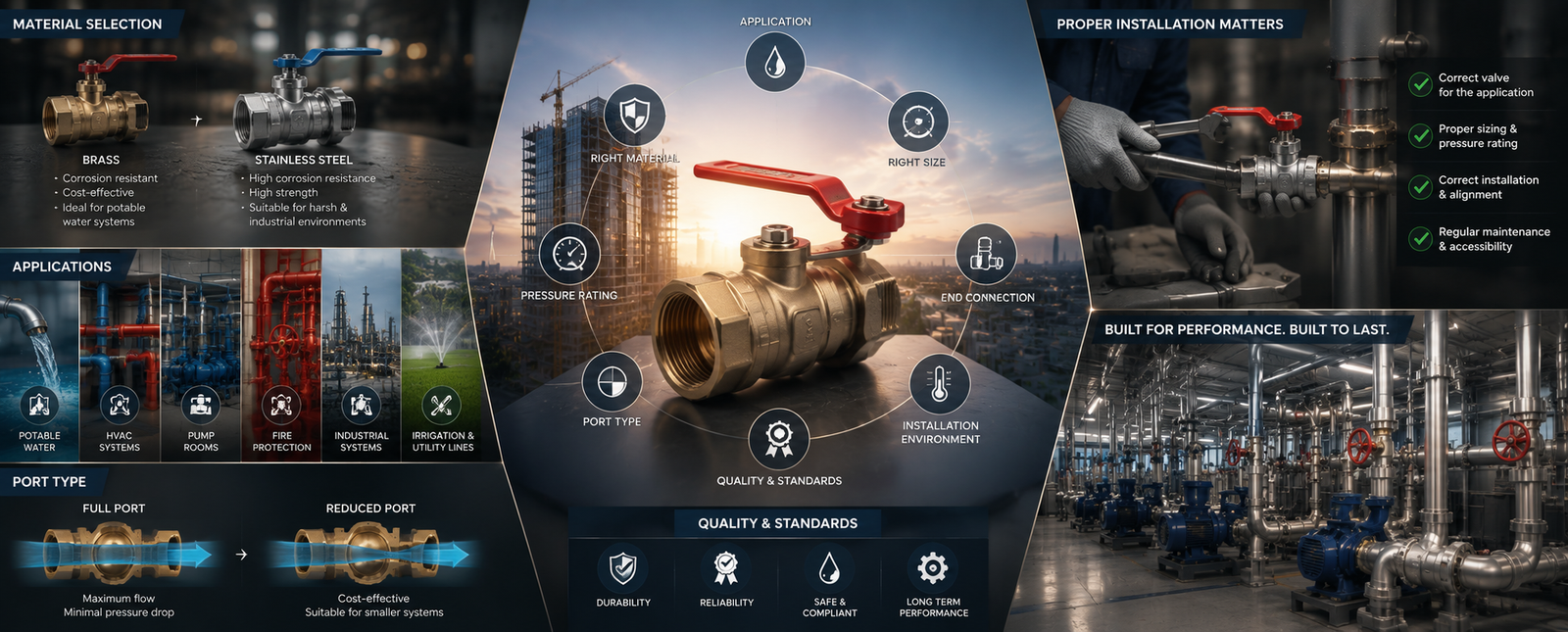
Common commercial and industrial applications, and why they matter for specification:
Potable water systems, require valves manufactured from materials approved for drinking water contact. Brass is the standard for most commercial building plumbing. Check whether your project requires WRAS, NSF 61, or SASO-equivalent approval for water contact components.
HVAC systems, chilled water and hot water circuits run at temperatures and pressures that affect material selection and seal choice. EPDM seals handle the temperature range better than standard PTFE in high-temperature hydronic systems.
Pump rooms, high-flow, higher-pressure environments where valve cycling frequency and shut-off performance under load matter more than they do on a domestic branch line.
Fire protection networks , specified and regulated separately. Not a standard procurement decision; follow the applicable fire code and FM/UL requirements.
Industrial and utility systems , corrosive environments, process chemicals, or aggressive fluids require stainless steel or specialist alloy valves, not brass. Getting this wrong is an expensive mistake.
Irrigation and utility lines, lower specification requirements, which is where reduced port valves and cost-efficient options genuinely make sense.
The application dictates the specification. Start here before you look at anything else.
Step 2 : Choose the Right Material
Material selection is where the lifecycle of a valve gets determined at the point of purchase. The choice is mostly between two options for commercial and industrial work.
Brass Ball Valves
Brass is the default for most commercial building plumbing, and for good reason. It’s corrosion-resistant in standard water systems, cost-effective at the volumes commercial projects require, easy to install and maintain, and has a long track record in the conditions most commercial buildings actually operate under.
Where brass ball valves belong:
- Office buildings and commercial developments
- Hotels and hospitality projects
- Standard domestic and commercial water systems
- Potable water applications where material compliance is met
Where brass starts to fall short: aggressive industrial environments, systems handling chemicals or aggressive process fluids, and applications with very high temperature and pressure combined. Brass also isn’t the right call if the system uses treated or softened water with chemistry that accelerates dezincification.
Stainless Steel Ball Valves
Stainless steel handles what brass can’t. It has superior corrosion resistance across a wider range of fluids and temperatures, higher mechanical strength, and better chemical compatibility for industrial applications.
Where stainless steel ball valves belong:
- Industrial and manufacturing facilities
- Chemical processing and pharmaceutical production
- Food and beverage processing
- Healthcare facilities with specific hygiene requirements
- Coastal environments where the external corrosion environment is aggressive
- High-temperature process systems
The trade-off is cost. Stainless steel valves cost more than equivalent brass. On a commercial office building’s domestic water system, that premium doesn’t deliver additional benefit. On a pharmaceutical facility’s process pipework, it’s non-negotiable.
The simple rule: use brass where the system and environment support it. Move to stainless when the application genuinely needs it, not to tick a “better quality” box.
Step 3 : Get the Valve Size Right
Oversizing and undersizing both create problems, just different ones.
An oversized valve on a smaller line adds unnecessary cost and can create low-velocity flow conditions that allow sediment build-up. An undersized valve restricts flow, increases pressure loss, and forces the system to work harder than it should , which accelerates wear on both the valve and connected equipment.
The right valve size comes from matching four things:
- Pipe diameter , the valve connection size must match the pipe size. This seems obvious and still gets wrong when a procurement team substitutes an available size for the specified one.
- Required flow rate , the valve needs to pass the design flow without generating excessive pressure drop. Refer to the valve’s Cv (flow coefficient) data.
- System pressure , covered in the next step, but pressure and flow interact in sizing.
- Engineering specification , follow the MEP engineer’s spec. If it’s not specified, or if you’re specifying it yourself, run the flow calculations properly rather than estimating.
Step 4 : Verify the Pressure Rating
This is the step that gets skipped in a hurry and causes expensive problems later.
Every ball valve has a maximum working pressure rating , commonly expressed as PN (Pressure Nominal, in bar) or PSI. That rating represents the upper limit the valve is engineered and tested to operate safely within. It’s not a suggestion, and it’s not a rough guide , it’s a ceiling.
Installing a valve with an insufficient pressure rating in a commercial system doesn’t typically cause immediate failure. It causes progressive failure: seals that degrade faster, ball seats that wear more quickly, threaded connections that develop micro-leaks as the valve cycles under load conditions it wasn’t rated for.
The fix is straightforward: verify the system’s maximum operating pressure before finalising valve selection, and specify valves rated above that pressure , not at it. Common commercial building water systems typically operate between 4 and 10 bar. Industrial systems can run higher. Confirm the project specification; don’t assume.
Step 5 : Choose the Right Connection Type
Ball valves connect to pipework in different ways, and the connection type affects both installation ease and long-term maintenance.
Threaded (BSP/NPT) Connections
The standard connection for smaller diameter commercial plumbing. Male or female threads, sealed with Teflon tape or thread sealant, installed with standard hand tools.
Where threaded connections work well:
- Pipe diameters up to DN50 in most commercial applications
- Renovation and maintenance work where flanged connections would be impractical
- Building services installations where the pipework is accessible
Flanged Connections
Flanged connections bolt the valve between two pipe flanges using a gasket seal. They’re larger, heavier, and more expensive per unit, but they’re significantly easier to remove and replace during maintenance , the valve unbolts rather than being cut out.
Where flanged connections belong:
- Larger pipe diameters (DN65 and above)
- Industrial pipework and pump rooms
- Applications where valve maintenance or replacement is expected to be frequent
- High-pressure systems where threaded connection integrity becomes a concern at scale
The maintenance accessibility argument is real. On large commercial buildings, a flanged ball valve on a main riser can be replaced without disrupting the entire branch. A threaded valve in the same location requires cutting and rethreading. Plan the connection type with future maintenance in mind, not just installation convenience.
Step 6 : Full Port vs Reduced Port
This is a specification detail that gets overlooked and occasionally matters quite a lot.
A full port (full bore) ball valve has a ball drilled to the same diameter as the pipe. When open, there’s virtually no restriction to flow , the bore through the valve is the same as the bore of the pipe. Pressure loss across a full port ball valve is negligible.
A reduced port (standard bore) ball valve has a ball drilled to a smaller diameter than the pipe. There’s a slight restriction, which creates a modest pressure drop across the valve when it’s open.
When full port matters:
- Pump suction lines, where even minor restriction increases cavitation risk
- Systems where pressure loss budget is tight across a long run
- Applications where pigging (pipe cleaning) is required , a reduced port stops a pig dead
- High-flow commercial systems where the cumulative pressure drop across multiple valves is meaningful
When reduced port is fine:
- Most branch line and fixture-level installations
- Utility and secondary systems where a small pressure drop is acceptable
- Budget-sensitive applications where full port isn’t technically required
The cost difference is real but not large on individual valves. On a large project specifying hundreds of valves, choosing full port where reduced port is adequate adds up. Choose based on actual system requirements rather than defaulting one way.
Step 7 : Plan for Maintenance Accessibility
This step has nothing to do with the valve itself. It’s about where you put it.
A ball valve that can’t be reached quickly in an emergency isn’t functioning as a safety device , it’s a liability. Yet on commercial projects under construction schedule pressure, shut-off valves routinely end up buried behind finished walls, above sealed ceilings, or in plant rooms with no clear access path.
The principle is simple: every isolation valve should be reachable by a maintenance technician without removing permanent building fabric, identified on as-built drawings with a valve tag, and accessible within a response time that actually means something in an emergency.
Plan valve locations during the design phase, not during installation. The cost of an access panel is negligible. The cost of cutting open a plastered ceiling to reach a leaking valve in an occupied commercial building is not.
Common Ball Valve Buying Mistakes
Before sending the purchase order, it’s worth running through the mistakes that most frequently lead to specification problems on commercial projects.
Buying on price alone. Low-cost valves typically have looser manufacturing tolerances, lower-grade seal materials, and shorter service lives under commercial operating conditions. The unit cost saving is real. The maintenance frequency difference is also real, and it usually outweighs the upfront saving over a ten-year operating period.
Ignoring pressure ratings. Covered above, but worth repeating: a valve rated at PN16 in a system that peaks at PN20 is a progressive failure waiting to happen.
Wrong material for the environment. Brass in an aggressive industrial process system. Uncoated steel in a coastal building’s external pipework. The valve specification page has a material column for a reason.
Mixing suppliers across the same system. Using five different suppliers for valves, fittings, and plumbing accessories creates quality consistency problems and after-sales complications. If something fails, no single supplier owns the problem.
Reduced port where full port is required. Particularly on pump suction lines. The pressure drop that looks negligible on paper becomes meaningful when the pump is cavitating.
Ball Valve vs Gate Valve: The Short Version
The choice between ball valves and gate valves comes up on almost every commercial project. The answer isn’t complicated.
Ball valves are right for most modern commercial and building services applications: faster operation, lower maintenance, automation-compatible, better sealing under frequent cycling. Gate valves earn their place on large-diameter mains and transmission pipelines where infrequent operation and zero flow restriction are the priorities.
For a full technical comparison, see the Ball Valve vs Gate Valve guide , it covers the decision framework in depth. This piece is about getting the ball valve specification right once you’ve already made that call.
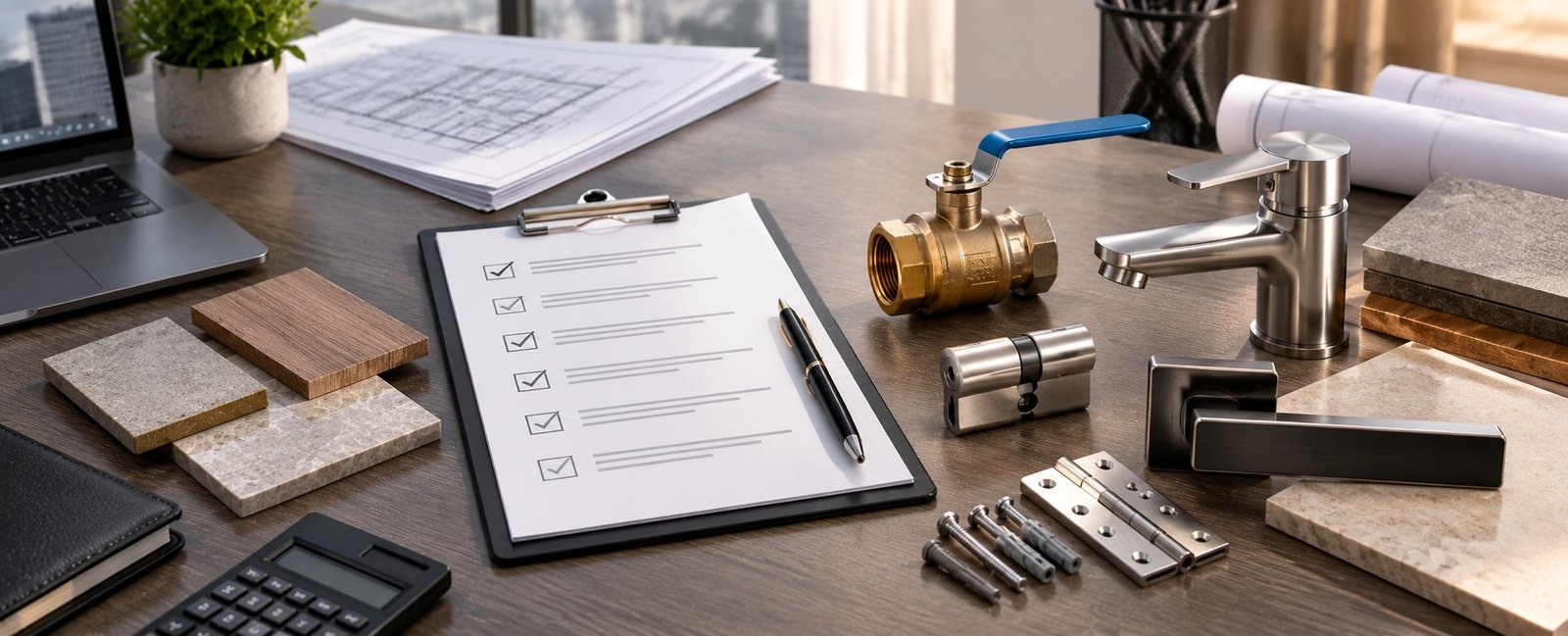
Ball Valve Buying Checklist
Run through this before placing the order:
- Pipe size confirmed and matched
- Application identified (potable water, HVAC, industrial, etc.)
- Material specified (brass or stainless) based on application and environment
- Pressure rating verified against system operating pressure , with margin
- Connection type chosen (threaded or flanged) based on pipe size and maintenance requirements
- Port type confirmed (full or reduced) based on flow requirements
- Installation location planned with maintenance access in mind
- SASO or relevant certification required? Confirmed with supplier
- Single supplier sourcing confirmed for consistency across fittings and accessories
Why Contractors and Procurement Teams Choose Kanzotech Accessories
Since 1999, Kanzotech Accessories has been supplying commercial, industrial, and infrastructure projects across Saudi Arabia with valves and flow control products built to perform in the conditions the Kingdom’s construction sector actually operates under.
The product range covers what most projects need from a single source:
As part of the Kanzotech Group, projects that need water pumps alongside plumbing accessories can source both through Kanzotech Pumps. Bathroom fittings and fixtures go through Kanzotech Faucets. One group, one quality standard, simpler cross-category procurement.
Frequently Asked Questions
1.Which ball valve is best for a commercial office building?
For most standard commercial plumbing , domestic water supply, sanitary systems, HVAC branch connections , a brass full port ball valve with the correct pressure rating for your system is the right default. The specific size and connection type depend on the pipe diameter and the installation’s maintenance requirements.
2.What’s the difference between full port and reduced port ball valves?
A full port ball valve has an opening equal to the pipe diameter, giving you maximum flow with minimal pressure loss. A reduced port valve has a smaller opening and a modest restriction. Full port is required on pump suction lines and anywhere pressure drop is a critical concern. Reduced port is fine for most branch and fixture-level applications.
3.Can brass ball valves be used in potable water systems?
Yes, provided the valve is manufactured to applicable standards for drinking water contact. In Saudi Arabia, verify that the product meets SASO requirements for water service materials. Quality suppliers should be able to provide conformance documentation.
4.How long do commercial ball valves last?
A properly specified and maintained brass ball valve in a standard commercial water system should provide reliable service well beyond ten years. The variables that shorten service life are the ones this guide covers: wrong material for the application, undersized pressure rating, poor installation, and operating the valve in conditions it wasn’t specified for.
5.When does a ball valve need replacing?
Common indicators: persistent leakage past the seat when the valve is closed, handle that’s stiff or won’t travel the full quarter turn, visible external corrosion affecting the body or stem, or any sign of body cracking. Regular inspection on plant room valves catches these early, before a failing valve becomes a system shutdown.
6.Where can I source ball valves for commercial projects in Saudi Arabia?
Kanzotech Accessories supplies ball valves and a full range of building accessories for contractors, developers, consultants, and procurement teams across Saudi Arabia. Contact the team for bulk supply enquiries or project-specific RFQ support.
Conclusion
Choosing the right ball valve for a commercial building comes down to a straightforward set of decisions: what the valve is doing, what material suits the application and environment, what size and pressure rating the system needs, how the valve connects to the pipework, and where it’s going to sit from a maintenance perspective.
None of it is complicated. But all of it has to be done before the order is placed, not after the system is commissioned. A valve specified correctly at procurement performs quietly in a plant room for twenty years. One specified on price alone tends to announce itself at the worst possible moment.
Ready to Source Ball Valves for Your Project?
Whether you’re specifying for a new commercial development, managing procurement for an industrial facility, or sourcing building accessories in bulk, Kanzotech Accessories supplies the right products for commercial and industrial projects across Saudi Arabia.
Explore our Valves and Flow Control range or contact the team to request a quotation.



 September 30, 2026
 HYZAM KENZ



Comments
No comments yet. Be the first to comment!