Introduction
Here’s a situation most installers have run into at least once: a threaded joint that looks perfectly assembled, pressure-tested fine on the day and then develops a slow weep six weeks into service.
Nine times out of ten, it comes down to the thread seal. Either the wrong product was used for the application, or it was applied incorrectly. Neither mistake is obvious until there’s a problem.
The teflon tape vs thread sealant question isn’t complicated once you understand what each product actually does and where it belongs. This guide covers both , how they work, where they’re the right call, and where they’re not with practical guidance for residential, commercial, and industrial installations across Saudi Arabia.
What They Are and How They Work
PTFE thread seal tape most people just call it teflon tape or thread seal tape is a thin, flexible tape you wrap around the male threads of a fitting before assembly. It fills the microscopic gaps between male and female threads, reduces friction during tightening, and helps the joint achieve a tighter mechanical seal. It doesn’t bond or adhesively seal anything. What it does is improve the thread to thread contact and reduce the leak paths that exist in every machined thread connection.
Thread sealant paste (also called pipe dope or thread compound) is a liquid or paste product brushed directly onto the threads before joining. It coats the thread surfaces, fills voids as the joint is tightened, and depending on the formulation can remain flexible enough to handle vibration and thermal cycling without cracking or backing off.
Both are designed to seal threaded pipe connections. But they’re not interchangeable, and the differences between them matter in practice.
Quick Comparison
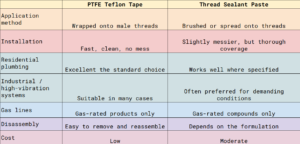
PTFE Teflon Tape: Where It Belongs
Thread seal tape is the default sealing product for most residential and light commercial plumbing in Saudi Arabia and across most of the world, for that matter. It’s inexpensive, widely available, doesn’t require any drying time, and is clean enough to use in tight under-sink spaces without making a mess.
It works best on tapered pipe threads (BSP, NPT), which are the standard in residential plumbing. As the fitting is tightened, the tapered thread form creates increasing mechanical pressure, and the tape fills the remaining gaps in the thread profile to produce a leak-resistant joint.
You’ll find thread seal tape used on bathroom fixture connections, kitchen supply lines, angle valve installations, irrigation system fittings, air lines, and compressed water systems. It’s the practical everyday choice for installers who need a fast, reliable result on standard plumbing work.
What it isn’t designed for is repairing damaged threads, stopping existing leaks, or use on straight (non-tapered) thread connections where the seal relies on a gasket or O-ring rather than thread engagement.
Sizes and Grades: What to Actually Specify
Not all PTFE tape is the same and getting the grade right matters more than most buyers realise.
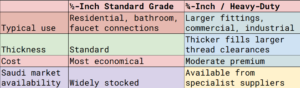
Standard ½-inch tape is what most residential installers reach for by default. For larger diameter fittings on commercial or industrial work, or where additional thread coverage is needed, a wider or heavier-duty grade is worth specifying. Kanzotech’s full teflon tape range covers both standard and heavy-duty options across sizes suited to typical Saudi construction project requirements.
Thread Sealant Paste: When to Choose It Instead
Thread sealant paste earns its place in more demanding conditions particularly where the joint will be exposed to vibration, thermal cycling, or pressure fluctuations that would work a tape seal loose over time.
Industrial piping systems, commercial mechanical rooms, HVAC installations, and high-pressure threaded connections are the typical territory. Many professional mechanical contractors prefer paste sealant on metallic threaded connections in these environments because it provides more complete thread coverage and, in the right formulation, remains flexible enough to accommodate movement without breaking down.
It’s also commonly specified on larger diameter fittings where getting consistent tape coverage on every thread pass is more difficult to achieve.
One important note: thread sealant products vary significantly by formulation. Not every paste sealant is rated for every service. Always confirm the product’s compatibility with your pipe material, operating pressure, temperature range, and service medium before specifying it. For contractors and procurement teams handling multiple product types across a project, the plumbing materials range at Kanzotech Accessories covers both tape and sealant options with specification data.
Gas Lines: A Critical Distinction
This is where both products require careful attention.
Standard PTFE thread seal tape the white tape you’d use on a water line should never be assumed suitable for gas service unless it’s explicitly rated for that purpose. Fuel gas lines require either a gas-rated PTFE tape (often yellow-coded, with higher density) or a gas-approved thread sealant compound, depending on the fitting type, thread standard, and the applicable Saudi SASO and local building code requirements.
The same principle applies to thread sealant paste. There are gas-rated compounds and there are general plumbing compounds they’re not the same product.
If you’re working on a gas installation, always verify: is this product explicitly rated for fuel gas service? Does it comply with applicable local regulations? If the answer to either question is unclear, don’t proceed until it is. No sealing material is worth a gas leak.
How to Apply Teflon Tape Correctly
Getting the application right is straightforward but the small details matter.
- Clean the threads first. Remove dirt, rust, old tape, or grease. Thread seal tape applied over contaminated threads won’t seal properly, regardless of the product quality.
- Start on the male threads only. Apply tape to the external (male) threads. Don’t cover the pipe opening itself.
- Wrap in the tightening direction. The tape needs to be wrapped in the same direction the fitting will rotate when tightened. Wrap it the wrong way and it’ll unravel during assembly.
- Apply even, overlapping wraps. Two to three wraps is usually adequate for standard residential fittings. Cover the threads smoothly without excessive bulk or folded sections.
- Press the tape into the thread profile. Run your finger firmly over the wrapped tape before assembly to seat it into the thread grooves. This keeps it in place as the fitting goes together.
- Tighten carefully. Join the fittings and tighten to the appropriate specification. Overtightening particularly on plastic fittings can crack threads and create the exact problem you’re trying to avoid.
Common Mistakes That Cause Leaks
Most failures aren’t the product they’re the application. Watch for:
- Wrapping in the wrong direction, so the tape unrolls during assembly
- Applying tape to dirty or corroded threads
- Using too much tape, creating a bulky joint that binds before it seals
- Skipping the tape on the first thread, leaving a gap at the entry point
- Using standard-rated tape on gas lines
Making the Right Choice for Your Project
For the vast majority of residential and light commercial plumbing work in Saudi Arabia, quality PTFE thread seal tape is the right tool. It’s fast, reliable, cost effective, and entirely adequate for water service, fixture connections, angle valve installations, and irrigation fittings.
For industrial environments, vibration-prone systems, or specific gas applications where a paste compound has been approved, thread sealant paste is worth the slightly higher cost and the additional specification care it requires.
The choice isn’t complicated once you’ve matched the product to the application. Where it gets people into trouble is when one product gets used as a default for everything including the situations where it wasn’t designed to perform.
For pump system installations where thread sealing forms part of a larger pipe assembly, the Kanzotech Pumps team can advise on compatible sealing products across the full pipe and fitting specification. For faucet and fixture connections, Kanzotech Faucets carries a full range of threaded fixture fittings suited to standard Saudi residential and commercial plumbing specifications.
Contractors and industrial procurement teams sourcing for project volumes can review supply options on the Contractors and Industrial Buyers pages.
Frequently Asked Questions
Is teflon tape the same as thread seal tape?
Yes they refer to the same product. PTFE tape is the technical name (polytetrafluoroethylene), but it’s sold and requested under several names including teflon tape, thread seal tape, and plumber’s tape. They all describe the same white (or yellow, for gas-rated variants) tape used to seal threaded pipe connections.
Can teflon tape be used on gas lines?
Only if the product is specifically rated for gas service. Standard white PTFE tape is designed for water lines. Gas installations require a gas-rated product typically yellow-coded, higher-density tape or an approved thread sealant compound and should comply with applicable local regulations and manufacturer instructions.
Can thread sealant replace teflon tape?
In many metallic threaded applications, yes. Thread sealant paste is often preferred for industrial systems and vibration-prone installations. The key is confirming the product is approved for your specific pipe material and service medium before using it. Not all formulations are suitable for all applications.
How many wraps of teflon tape are enough?
For standard residential fittings, two to three wraps of standard-grade tape is typically adequate. Larger fittings or heavy-duty tape grades may require fewer wraps due to greater material thickness. The goal is even, smooth thread coverage without excessive bulk. Follow the manufacturer’s guidance for the specific product you’re using.
Will teflon tape stop an existing leak?
No. Thread seal tape is a sealing product used during assembly, not a repair product for connections that are already leaking. If a joint is weeping, it needs to be disassembled, cleaned, resealed with fresh tape or compound, and reassembled correctly.
Where can I source teflon tape and thread sealant for projects in Saudi Arabia?
Kanzotech supplies a full range of teflon tape products for residential, commercial, and industrial applications across Saudi Arabia, with volume supply options for contractors and project procurement. Contact the team for specifications and RFQ support.
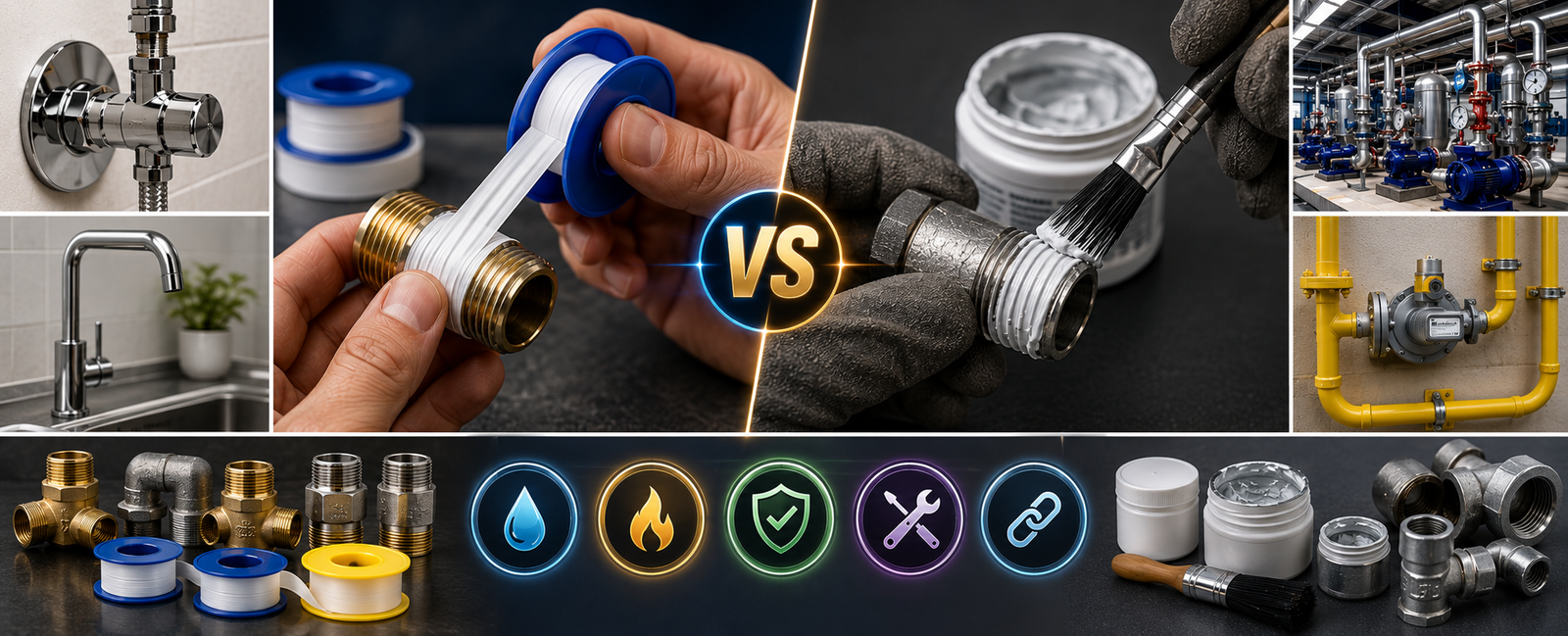




 September 30, 2026
 HYZAM KENZ







Comments
No comments yet. Be the first to comment!