Introduction
A dripping hose bib is easy to ignore, right up until you notice the water bill creeping up or a damp patch forming on the wall beneath it. It’s a small fixture that rarely gets attention until it fails, and by the time it’s visibly leaking, the underlying cause has usually been building for a while.
The good news is that a leaking hose bib almost always comes down to one of a handful of causes, most of which are simple, inexpensive fixes rather than a full outdoor plumbing overhaul. This guide walks through exactly why your hose bib is leaking, how to fix it depending on the cause, when replacement makes more sense than repair, and how a proper cap or cover can prevent the problem from coming back.
Summary
- A hose bib is the outdoor tap or spigot you connect a garden hose to, also called a sillcock, bibcock, or outdoor faucet.
- A worn rubber washer inside the valve is the most common cause of a hose bib leaking from the spout.
- Leaking around the handle usually means a loose or worn packing nut, not the washer.
- A cracked valve body, often from heat stress, physical impact, or corrosion, needs replacement, not repair.
- Hard water buildup can prevent a hose bib from shutting off fully, causing a slow, persistent drip.
- A hose bib replacement is usually a straightforward job if the supply line and shutoff valve are accessible.
- A hose bib cap protects the outlet from dust and debris when not in use, while a hose bib cover protects the whole fixture from heat and UV exposure.
- Brass hose bibs generally outlast plastic or lower grade metal options, especially under Saudi Arabia’s heat and hard water conditions.
What Is a Hose Bib?
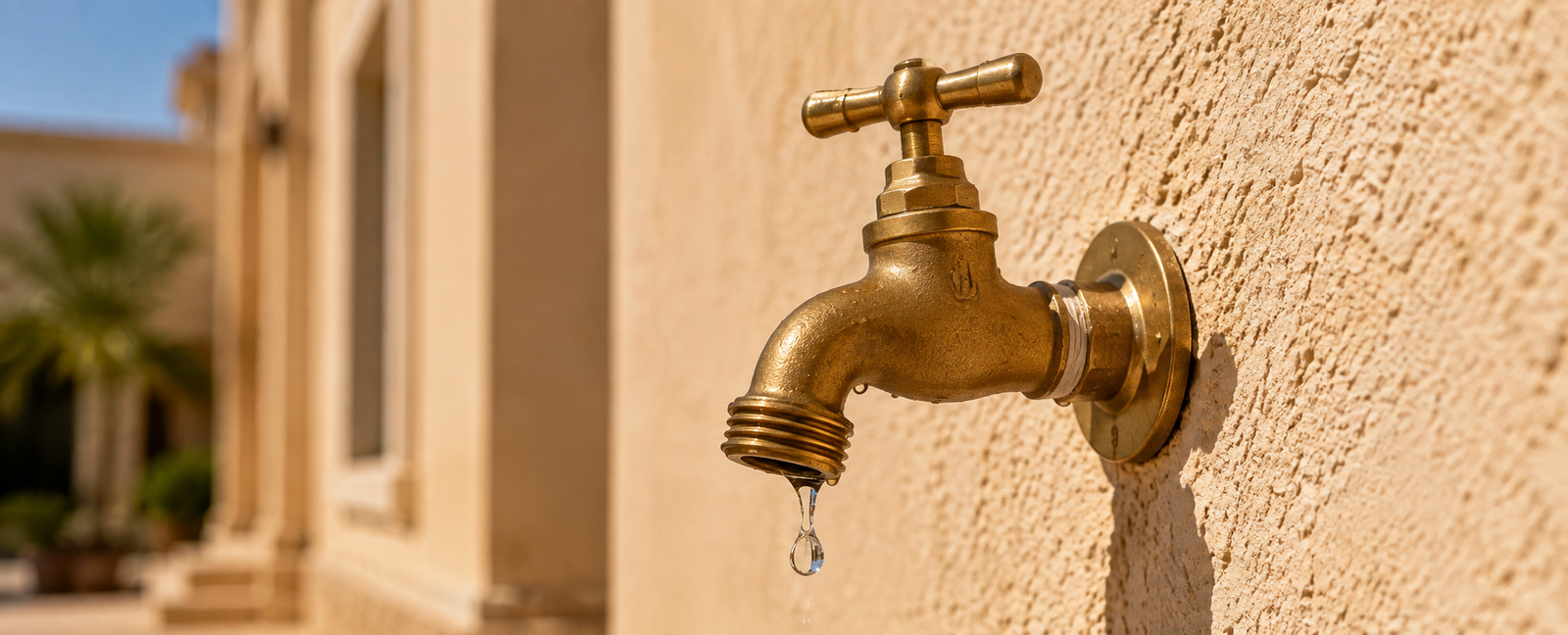
A hose bib is the outdoor tap mounted on an exterior wall, used to connect a garden hose for irrigation, washing cars, or general outdoor use. It’s also commonly called a sillcock, bibcock, spigot, or simply an outdoor faucet, depending on the region and who you’re talking to.
Why it matters: The terminology confusion is worth clearing up upfront, since “hose bib,” “outdoor tap,” and “garden tap” all refer to the same basic fixture, a single valve with a threaded outlet designed to accept a standard hose fitting.
Practical example: If you have a tap on the outside of your villa or building that a garden hose screws onto, that’s your hose bib, regardless of what term shows up on the packaging when you go to replace it.
Why Is My Hose Bib Leaking? Common Causes
Why it matters: Where the leak is coming from tells you almost everything about the cause. A leak from the spout points to a different problem than a leak around the handle, so identifying the exact location first saves you from replacing parts that aren’t actually the issue.
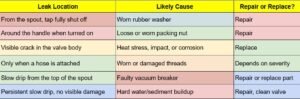
1. Worn Rubber Washer
The most common cause of a hose bib dripping from the spout after it’s been shut off. Every time the valve opens and closes, the washer compresses slightly, and over years of use it hardens, cracks, or wears down enough to stop sealing properly.
2. Loose or Worn Packing Nut
If water is leaking around the handle rather than the spout, especially when the tap is turned on, the packing nut behind the handle has likely loosened or its internal seal has worn out.
3. Cracked Valve Body
A crack in the metal body itself, often caused by heat expansion and contraction over time, physical impact, or long term corrosion, can’t be fixed with a washer replacement. This is one of the clearer signs that repair isn’t going to hold.
4. Worn or Corroded Hose Threads
If the leak only appears when a hose is attached, the threads where the hose connects may be worn, cross threaded, or corroded, preventing a tight seal even with a new hose washer.
5. Faulty Vacuum Breaker
Many modern hose bibs include a small anti-siphon vacuum breaker on top of the spout. If this component fails, it can cause a slow drip or spray from the top of the fixture even when the main valve is functioning correctly.
6. Hard Water and Sediment Buildup
In Saudi Arabia specifically, mineral buildup from hard water can prevent the internal valve from closing fully, leading to a persistent slow drip that looks like a worn washer but is actually sediment holding the valve slightly open. Our guide on why water isn’t coming out of a faucet covers the same hard water mechanics that affect hose bibs just as much as indoor fixtures.
How to Fix a Leaking Hose Bib
Step 1: Shut off the water supply. Locate the shutoff valve for the hose bib line, often inside a nearby wall, utility area, or at the main supply, and turn it off before starting any repair.
Step 2: Identify the leak location. Run the tap briefly with the handle on and off to confirm whether the leak comes from the spout, the handle area, or the hose connection threads.
Step 3: Replace the washer, if the leak is from the spout.
- Remove the handle screw and handle.
- Unscrew the packing nut and pull out the stem.
- Replace the rubber washer at the end of the stem with a matching size.
- Reassemble and turn the water back on to test.
Step 4: Tighten or replace the packing nut, if the leak is around the handle.
- Try tightening the packing nut gently first, since sometimes it’s simply loosened over time.
- If tightening doesn’t stop the leak, replace the packing washer or O-ring inside the nut.
Step 5: Clean or replace the hose threads, if the leak only happens with a hose attached. Inspect the threads for damage or debris. Light corrosion can sometimes be cleaned, but bent or heavily worn threads usually mean the fixture needs replacing.
Common mistake: Overtightening the packing nut or handle screw in an attempt to force the leak to stop. This often damages the internal seal further rather than fixing it.
When to Repair vs. When to Replace
Why it matters: Not every leaking hose bib is worth repairing. Knowing when to stop replacing small parts and just replace the whole fixture saves time and, often, money in the long run.
Repair makes sense when:
- The leak is clearly from a worn washer or packing nut, and the valve body itself is intact.
- The fixture is relatively new and otherwise in good condition.
- Replacement parts are easy to source for the specific model.
Replacement makes more sense when:
- The valve body is visibly cracked or corroded.
- The fixture has needed repeated repairs within a short period.
- The hose bib is old enough that matching replacement parts are hard to find.
- The threads at the hose connection are damaged beyond a simple clean or repair.
Choosing a Replacement Hose Bib
Why it matters: If you’ve reached the point of replacing rather than repairing, material choice affects how long the new fixture actually lasts, especially under Saudi Arabia’s combination of heat, sun exposure, and hard water.
- Brass: The most durable option for outdoor use, with strong resistance to corrosion and hard water buildup over time.
- Chrome plated brass: A good middle ground, combining brass durability with a cleaner finish, though the plating itself can wear with heavy outdoor exposure over many years.
- Plastic or lower grade metal: The most budget friendly option, but generally the first to crack under heat stress or wear out at the threads.
Kanzotech’s cold water taps range is built with this kind of durability in mind, and our brass vs. stainless steel faucets guide breaks down the material tradeoffs in more depth if you’re deciding what to replace a failing hose bib with.
Best practice: When replacing, match the new hose bib’s thread size and mounting style to the existing pipe fitting to avoid extra adapter parts or plumbing work.
Hose Bib Caps: What They Do and Why You Might Need One
Why it matters: A hose bib cap is a small threaded cover that screws directly onto the spout outlet when no hose is attached. Its main job is keeping dust, insects, and debris out of the opening, which matters more than it sounds in Saudi Arabia’s dusty outdoor conditions.
Practical benefits:
- Prevents sand and dust from settling inside the outlet threads, which can cause leaks at the hose connection over time.
- Reduces the chance of small insects or debris blocking the opening between uses.
- Adds a small extra layer of protection against accidental bumps loosening the outlet.
Best practice: If your hose bib goes unused for long stretches between uses, a cap is a cheap way to keep the threads clean and ready when you do need it.
Hose Bib Covers: Protecting Against Heat, Dust, and Hard Water
Why it matters: A hose bib cover is a larger insulated or protective shell that fits over the entire fixture, not just the outlet. While these are often marketed for freeze protection in colder climates, in Saudi Arabia their real value is shielding the fixture from direct sun exposure, heat stress, and blown sand and dust.
Practical benefits:
- Reduces heat related expansion and contraction stress on the valve body over repeated hot seasons, one of the underlying causes of cracked hose bibs mentioned earlier.
- Keeps dust and sand from accumulating around the handle and packing nut, an area prone to hard water and sediment buildup.
- Extends the working life of the rubber washer and seals by reducing direct heat exposure when the fixture isn’t in use.
Best practice: For hose bibs in direct, unshaded sun exposure for most of the day, a cover is a low cost way to extend the life of the fixture significantly, especially through peak summer months.
Comparison Table: Cause vs. Fix
Step by Step Troubleshooting Checklist
- Shut off the water supply to the hose bib line.
- Identify exactly where the leak is coming from, spout, handle, or hose threads.
- Check for a visible crack in the valve body before attempting any repair.
- Replace the washer if the leak is from the spout.
- Tighten or replace the packing nut if the leak is around the handle.
- Inspect and clean the hose connection threads if the leak only appears with a hose attached.
- If none of the above resolves it, consider hard water buildup inside the valve.
- If the fixture is old, cracked, or has needed repeated repairs, replace it entirely.
- Add a cap and cover once repaired or replaced, to prevent the same issues from returning.
Common Mistakes
- Overtightening parts to force a leak to stop, which often damages the internal seal further.
- Repeatedly repairing a cracked valve body, when the crack itself means the fixture needs full replacement.
- Ignoring a slow drip because it seems minor, when it’s often an early sign of a washer or packing nut that will fail completely soon.
- Replacing with a lower grade material to save cost, only to face the same failure again within a year or two under Saudi heat and hard water conditions.
- Skipping a cap or cover after replacement, missing an easy way to extend the new fixture’s lifespan.
Maintenance Tips
- Check hose bibs seasonally for slow drips before they become visible leaks.
- Remove the hose when not in use, rather than leaving it attached long term, since constant pressure on the outlet threads accelerates wear.
- Use a hose bib cap between uses to keep dust and debris out of the outlet.
- Add a hose bib cover for fixtures in direct sun exposure, especially through peak summer heat.
- Periodically check for mineral buildup around the handle and packing nut, and clean gently if noticed.
Frequently Asked Questions
- Why is my hose bib leaking even when it’s fully turned off? This almost always points to a worn rubber washer inside the valve, which no longer seals completely when the tap is closed.
- Why is water leaking around the handle of my hose bib? This typically means the packing nut behind the handle has loosened or its internal seal has worn out, rather than an issue with the main washer.
- Can I repair a cracked hose bib, or do I need to replace it? A cracked valve body cannot be reliably repaired. Once the metal itself is cracked, replacement is the only lasting fix.
- How often should a hose bib washer be replaced? There’s no fixed schedule, but if a hose bib starts dripping after being fully shut off, the washer is usually the first thing worth checking and replacing.
- What’s the difference between a hose bib cap and a hose bib cover? A cap screws directly onto the spout outlet to keep debris out when no hose is attached, while a cover fits over the entire fixture to protect it from heat, sun, and dust exposure.
- Do I need a hose bib cover in Saudi Arabia if freezing isn’t a concern? Yes, though for a different reason than in colder climates. In Saudi Arabia, a cover mainly protects against heat stress, direct sun exposure, and dust buildup rather than freezing.
- What material lasts longest for an outdoor hose bib in Saudi Arabia? Brass generally offers the best combination of corrosion resistance and durability under heat and hard water conditions, outperforming plastic or lower grade metal options over time.
- Is it normal for a hose bib to drip slightly right after installation? No. A properly installed and sealed hose bib shouldn’t drip once fully closed. Persistent dripping right after installation usually means a washer or connection issue that needs addressing early.
- Can hard water really cause a hose bib to leak? Yes. Mineral buildup inside the valve can prevent it from closing fully, creating a slow, persistent drip that looks like washer wear but is actually sediment related.
- How do I know if I need a full hose bib replacement instead of a repair? If the valve body is cracked, the fixture has needed repeated repairs, or the connection threads are significantly worn or damaged, replacement is generally more practical than continuing to repair it.
Conclusion
A leaking hose bib is almost always traceable to one of a small set of causes: a worn washer, a loose packing nut, a cracked valve body, damaged threads, or hard water buildup inside the valve. Identifying exactly where the leak is coming from points you to the right fix quickly, and knowing when to stop repairing and simply replace the fixture saves both time and repeated frustration. A cap and cover afterward go a long way toward making sure the fix actually lasts under Saudi Arabia’s heat, dust, and hard water conditions.
Your next steps:
- Identify exactly where your hose bib is leaking from.
- Work through the relevant repair steps above.
- If the valve body is cracked or repairs keep recurring, plan for a full replacement.
- Browse Kanzotech’s cold water taps range or the full shop for a durable, hard water ready replacement.
Dealing with a hose bib that won’t stop leaking, or sourcing outdoor taps for a project? Contact Kanzotech Faucets for guidance on the right fitting for your site.



 September 30, 2026
 HYZAM KENZ



Comments
No comments yet. Be the first to comment!