Introduction
A door handle that won’t open is a five-minute problem for a homeowner. Across a portfolio of buildings, the same failure is a different kind of problem entirely, one that needs an actual answer before it gets fixed, because that answer decides who pays for it. Was it a manufacturing defect covered under warranty? An installation error the original contractor is liable for? Or ordinary wear-and-tear that belongs in next year’s maintenance budget, not a warranty claim?
This guide is written for facility managers and MRO teams dealing with door hardware failures at scale, not a single stuck handle at home. It walks through how to tell these three failure categories apart for the three most common door hardware complaints, and why getting that distinction right matters for warranty claims and vendor accountability.
Why Root Cause Matters More Than the Fix
Why it matters: Fixing a failed door handle, lock, or closer is usually straightforward. Figuring out why it failed is what actually protects a facilities budget. A failure traced to a manufacturing defect should go back to the supplier under warranty. A failure caused by poor installation is the installing contractor’s responsibility, not an ongoing maintenance cost. A failure from years of expected wear is neither of those, it’s a normal maintenance item, and treating it as anything else wastes time chasing a claim that was never going to be honored.
Getting this categorization wrong in either direction costs money: under-claiming lets a supplier off the hook for a genuine defect, while over-claiming against wear-and-tear damages a legitimate warranty relationship and wastes time on claims that won’t be approved.
The Three Failure Categories
Why it matters: Every door hardware failure worth investigating falls into one of three categories, and the diagnostic approach differs for each.
- Manufacturing defect: A flaw present in the product from the point of production, a weak internal spring, a poorly cast component, a seal that was never going to hold. These tend to show up early, often within months of installation, and frequently appear across multiple units from the same batch.
- Installation error: The hardware itself is sound, but it was installed incorrectly, wrong backset, misaligned strike plate, incorrect door prep, or improper adjustment. These also tend to show up early, but usually affect specific doors or units tied to a particular installation crew or project phase, rather than a whole batch of hardware.
- Wear-and-tear: Normal, expected degradation from years of regular use. These failures cluster around a hardware item’s realistic service life, not within the first months of installation, and tend to be spread evenly across a portfolio rather than concentrated in one batch or one installation crew’s work.
Door Handle Won’t Open: Root-Cause Diagnosis
Why it matters: This is one of the most common door hardware complaints, and the underlying cause varies significantly depending on what’s actually happening inside the mechanism.
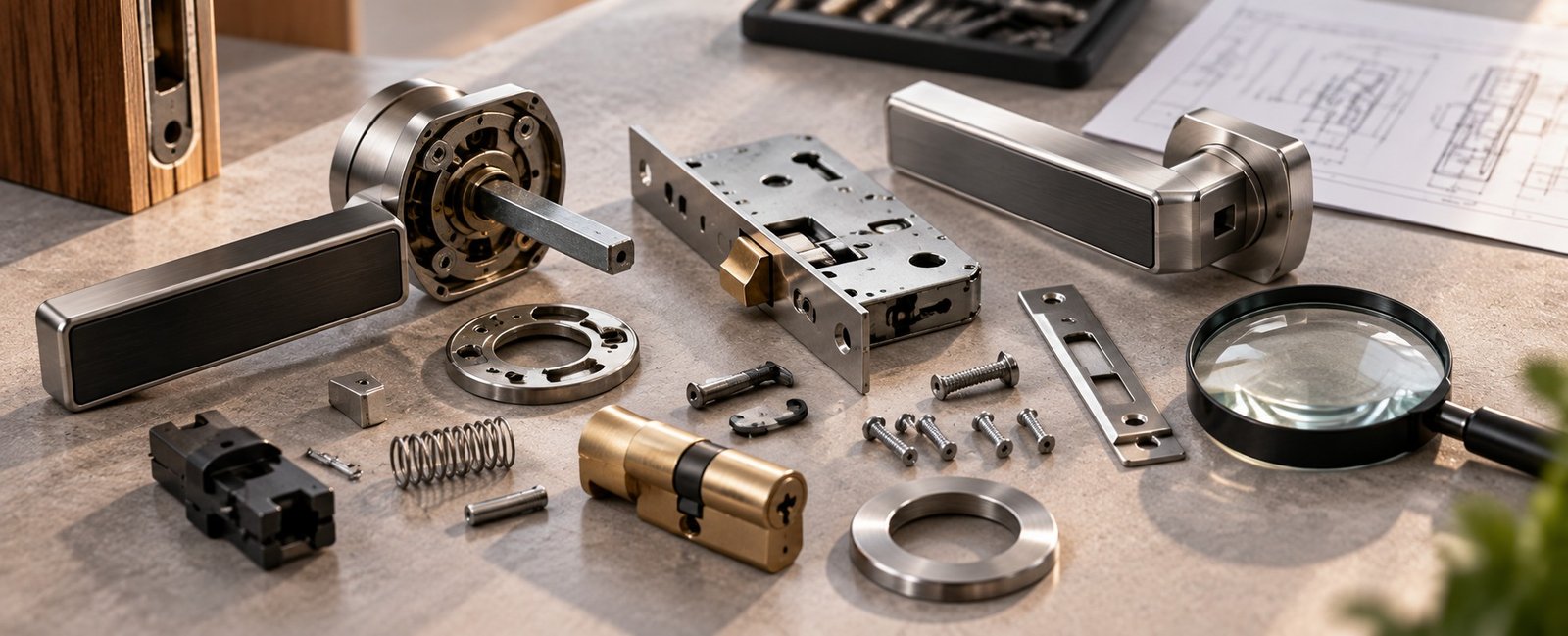
- Manufacturing defect signs: A broken internal spring or a misaligned spindle and cam mechanism straight out of the box, or failing within the first few months, especially if the same failure shows up on other units from the same delivery batch.
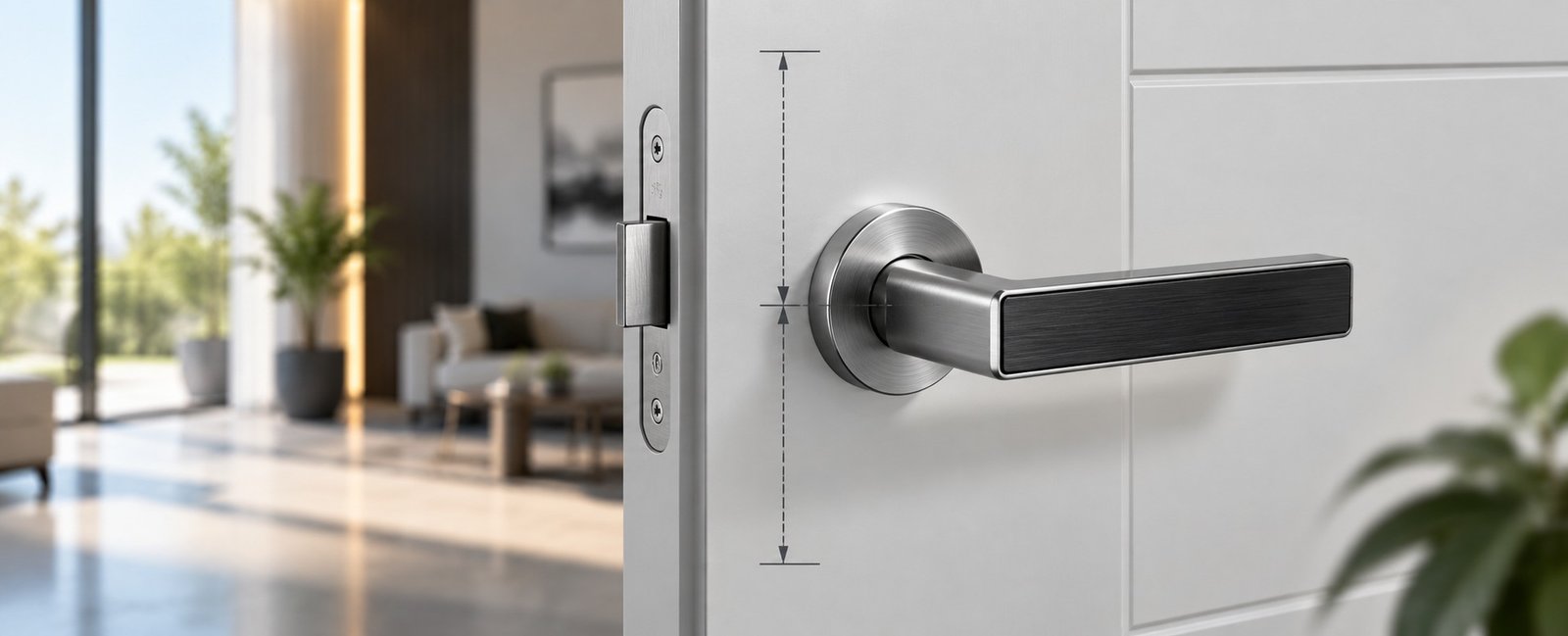
- Installation error signs: The handle operates stiffly or inconsistently from day one, often tied to an incorrect backset measurement or door prep that doesn’t match the hardware’s specifications, common when hardware is installed against a door that wasn’t prepped to the manufacturer’s exact template.
- Wear-and-tear signs: The handle operated normally for years before gradually stiffening or failing, consistent with the natural wear of internal components after tens of thousands of open-close cycles, the kind of failure pattern you’d expect on a high-traffic door well past its typical service interval.
What to check: Installation date versus failure date, whether other units from the same batch or installation date show the same issue, and whether the failure is isolated to high-traffic doors, which points toward wear, versus scattered across both high- and low-traffic doors, which points more toward a defect or installation issue.
Door Lock Key Won’t Turn: Root-Cause Diagnosis
Why it matters: A key that won’t turn can stem from problems in the key itself, the lock cylinder, or the door’s alignment, and each points to a different root cause.
- Manufacturing defect signs: The cylinder binds or refuses to turn smoothly from initial use, with no visible misalignment issue at the strike plate, suggesting a problem with the cylinder or pin mechanism itself rather than the installation.
- Installation error signs: The key turns partially but binds, often caused by a misaligned strike plate or a lock installed before a new door fully settled into its frame, a common issue when locks are installed too early in a construction timeline, before normal door and frame settling has finished.
- Wear-and-tear signs: The key used to turn smoothly and has gradually become harder to operate over months or years, consistent with worn pins or tumblers after extended use, or a key itself that’s become worn from repeated use and needs replacing rather than the lock.
What to check: Whether a spare or newly cut key has the same issue, which points toward the lock rather than the key, and whether the strike plate and door alignment look correct, since a misaligned strike plate is one of the most common, and most easily missed, installation-related causes of this exact complaint.
Door Closer Not Working: Root-Cause Diagnosis
Why it matters: Door closers fail through a few distinct mechanisms, and distinguishing them matters given how much more involved closer replacement or repair typically is compared to a handle or lock.
- Manufacturing defect signs: A hydraulic fluid leak appearing early in the unit’s service life, often visible as fluid residue around the closer body, or a closer that never held consistent closing speed from installation, pointing to a seal or internal component issue present from manufacture.
- Installation error signs: The closer arm is installed at an incorrect angle or the closing power is set incorrectly for the door’s actual weight and size, common when a closer isn’t adjusted to match the specific door it’s installed on rather than left at a generic factory setting.
- Wear-and-tear signs: A closer that functioned correctly for years before gradually losing closing speed or developing a late-life fluid leak, consistent with the natural end of a hydraulic closer’s service life after extended use.
What to check: How long the closer has been in service, whether the arm and power setting match the door’s actual specifications, and whether the issue appeared suddenly or developed gradually, sudden failure early in service life points toward a defect, gradual decline after years of service points toward wear.
Why This Distinction Matters for Warranty Claims
Why it matters: Manufacturing defects are exactly what a warranty is meant to cover. As covered in our guide on how Kanzotech manufactures and supplies building materials to Saudi Arabia, every product is checked twice, once at the point of manufacture and again by Kanzotech’s own technicians once it arrives in Saudi Arabia, specifically to catch defects before they ever reach a customer. When a genuine manufacturing defect does surface after installation, it’s covered under a 2-year replacement warranty with door-to-door service, no need to ship anything back or wait on a slow resolution process.
Installation errors and wear-and-tear are different conversations entirely. An installation error is a matter for the installing contractor, not a warranty claim against the hardware manufacturer. Wear-and-tear is an expected, budgeted maintenance cost, not a defect at all. Knowing which category a failure actually falls into before raising it means the right conversation happens with the right party, rather than a warranty claim being submitted, and rejected, for something that was never a manufacturing issue in the first place.
Building a Root-Cause Diagnostic Log
Why it matters: For a facilities team managing door hardware across a portfolio of properties, tracking failures individually as they happen misses the patterns that actually reveal root cause.
What to track for every failure:
- Installation date and failure date, to establish how quickly the failure occurred relative to service life.
- Product batch or delivery date, to identify whether multiple failures trace back to the same shipment.
- Installing contractor or installation phase, to identify whether failures cluster around a specific crew or project timeline.
- Failure mode, specifically what happened, not just “it stopped working.”
Why this matters at scale: A single failed handle tells you very little on its own. Ten failed handles, all from the same delivery batch, installed within the same month, tells you something concrete about a manufacturing defect. Ten failed handles scattered across a portfolio, installed at different times by different contractors, but all on the highest-traffic doors in each building, tells you something concrete about wear-and-tear instead.
What This Means for Vendor Accountability at Scale
Why it matters: This diagnostic approach protects a facilities team in both directions. It prevents under-claiming, missing a genuine defect pattern because failures were investigated individually rather than tracked as a batch, and it prevents over-claiming, submitting warranty claims against a manufacturer for failures that were actually caused by installation quality or simple wear, which damages the credibility of future legitimate claims. As covered in our guide on sourcing door hardware in bulk, a supplier’s defect rate across a full production batch, not just a single sample, is exactly the kind of data a well-kept diagnostic log helps a facilities team actually verify over time.
Practical Diagnostic Checklist
- Record installation date, failure date, and product batch for every door hardware failure.
- Check whether other units from the same batch or installation date show the same failure.
- Determine whether the failure appeared suddenly, early in service life, or developed gradually over years.
- Check installation-specific details, backset, strike plate alignment, arm angle, and power settings, before assuming a product defect.
- Cross-reference failure patterns against installing contractor or project phase to identify installation-related clusters.
- Route genuine manufacturing defects to warranty claims, installation issues to the responsible contractor, and wear-and-tear to routine maintenance budgeting.
Conclusion
A door handle that won’t open, a key that won’t turn, or a closer that’s stopped working are common complaints, but the fix is only half the job for a facilities team managing hardware at scale. Knowing whether the root cause is a manufacturing defect, an installation error, or ordinary wear-and-tear determines who’s actually responsible for it, and getting that distinction right, backed by a proper diagnostic log rather than a one-off inspection, protects both the facilities budget and the supplier relationship over the long run.
Your next steps:
- Start logging installation date, batch, and failure mode for every door hardware issue, not just the fix applied.
- Use failure patterns across your portfolio to distinguish defects from installation issues from expected wear.
- Explore Kanzotech’s door hardware and locking system range, backed by a 2-year replacement warranty and door-to-door service for genuine manufacturing defects.
Managing door hardware failures across a facility portfolio and need help distinguishing warranty-eligible issues? Contact Kanzotech Accessories to discuss your maintenance and warranty process.



 September 19, 2026
 HYZAM KENZ




Comments
No comments yet. Be the first to comment!