Introduction
A door lock is one of those things you don’t think much about until something goes wrong a break-in attempt, a lock that jams during a power outage, a cylinder that gives up after eighteen months because nobody accounted for what Riyadh summer dust does to a mechanism rated for a temperate European market. By the time the problem shows up, the cost of having chosen the wrong product has already landed, and it rarely lands as just the price of a new lock. For a homeowner it might mean a locksmith call-out at an inconvenient hour. For a contractor or facilities manager, it can mean a maintenance ticket multiplied across forty identical doors on a compound, a guest complaint at a hotel, or a liability question if a fire exit didn’t open the way it should have.
Understanding the different types of door locks available isn’t complicated, but it does require more than picking whatever looks substantial in a supplier catalogue. Deadbolts, mortise locks, smart locks, cylindrical levers, electronic access systems these aren’t interchangeable products competing on the same axis of “better” or “worse.” Each one is engineered for a specific door construction, a specific traffic pattern, and a specific level of security demand. A lock that’s perfect for a hotel guest room corridor is the wrong choice for a villa’s main gate, and a lock that’s ideal for a bedroom door has no business being the only thing standing between a storeroom and the street. Getting that match right from the start is what separates hardware that quietly does its job for a decade from hardware that becomes a recurring line item on a maintenance budget within a year.
This guide works through the main categories of door locks used in residential and commercial buildings across Saudi Arabia, explains door lock cylinder types and why the cylinder is arguably the more important decision of the two, and closes with a practical buying checklist and answers to the questions we hear most often from homeowners and project buyers alike.
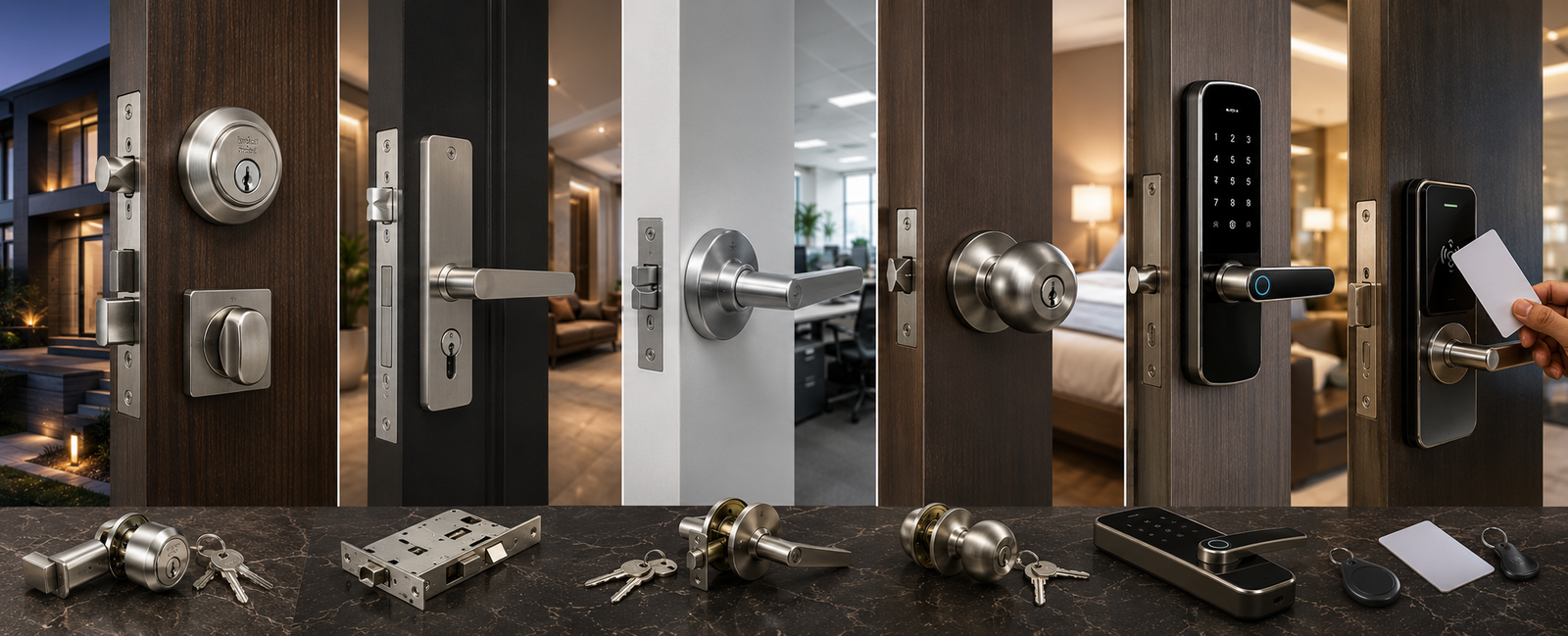
The Main Door Lock Types
Before comparing individual products, it helps to think in terms of function rather than appearance. Every lock on this list answers a different question: is this door the primary line of defence against forced entry, a high-traffic interior door that needs to operate hundreds of times a day, a door where credential management matters more than brute mechanical strength, or a door where convenience is the only real requirement? Matching the lock to the question is most of the work.
Deadbolt Locks
Deadbolts are the standard recommendation for exterior residential doors, and for good reason. The locking bolt is solid metal typically hardened steel with a brass, stainless steel, or zinc-alloy housing depending on price tier and unlike a spring latch, it doesn’t retract under sideways pressure. Once thrown, it extends straight into a pocket cut in the door frame, usually to a depth of around 25mm on a quality deadbolt, which is what makes prying, shoulder-charging, or kicking a door so much harder than it would be against a latch-only lock.
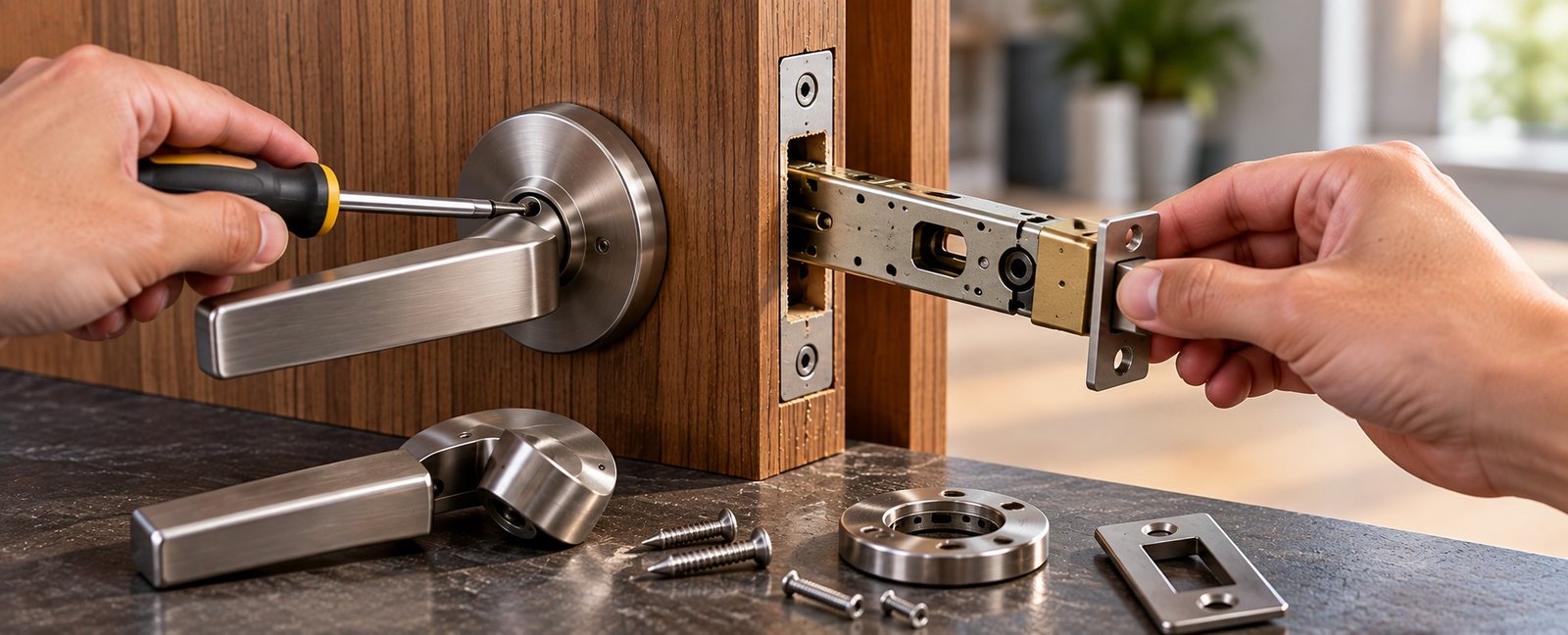
The mechanism is simple, but the installation around it carries almost as much weight as the bolt itself. A deadbolt is only as strong as the strike plate it locks into and the screws holding that strike plate to the frame. A short strike plate held with two 25mm screws into softwood trim will fail under a solid kick regardless of how good the bolt is; a reinforced strike plate fixed with longer screws that bite into the structural frame behind the trim turns the same bolt into a genuinely difficult obstacle. This is the detail that separates a deadbolt installed correctly from one installed quickly, and it’s worth raising explicitly with whoever fits the door.
You’ll find two main configurations on the market. A single-cylinder deadbolt uses a key on the exterior face and a thumb-turn on the interior this is the standard setup for the overwhelming majority of villa and apartment entrance doors, because it lets anyone inside exit instantly without hunting for a key, which matters in an emergency. A double-cylinder deadbolt requires a key on both sides instead of a thumb-turn, and it’s specified in a narrower set of circumstances: typically where a door sits next to a glass sidelight or vision panel that someone could break to reach in and turn an interior thumb-turn by hand. The trade-off is real and shouldn’t be glossed over double cylinders create an emergency egress problem, because exiting quickly in a fire or other emergency requires a key to be available on the inside, and that’s a habit most households and many staffed buildings don’t maintain reliably. Where a double cylinder is genuinely necessary, pairing it with a key hook mounted discreetly near the door, rather than relying on someone remembering to carry a key, closes most of that gap.
For main entrance doors on residential properties across Saudi Arabia villas, apartments, townhouses a single-cylinder deadbolt built around a high-grade cylinder is the baseline security recommendation, and it remains the right baseline even on properties that later add a smart lock or electronic system, since most of those products are themselves built around a deadbolt-style bolt mechanism with electronics layered on top.
Mortise Locks
Mortise locks are fitted into a pocket the “mortise” cut directly into the door body itself, rather than bored straight through it. Because the entire lock case sits recessed inside the door rather than relying on surface-mounted hardware for its structural integrity, the lock body itself can be considerably heavier and more complex than a deadbolt or cylindrical lock without making the door look bulky from either side. That extra internal volume is what lets a single mortise lock case combine several functions a spring latch for everyday closing, a deadbolt for security, and in many designs one or two auxiliary locking points into one unit, sometimes extending into a three-point or five-point locking system on premium villa entrance doors, where additional bolts shoot into the frame at the top and bottom of the door in addition to the main lock.
This is the dominant lock type in commercial buildings, hotels, and premium residential projects across the Kingdom. In hospitality and commercial construction specifically, mortise locks are effectively the default specification for main entrance doors and guest room doors, because they’re built to handle tens of thousands of open-close cycles without the mechanism loosening, and because the recessed case is inherently more resistant to the kind of prying attack that targets surface-mounted hardware. A well-specified mortise lock also accepts a wide range of lever and handle designs on the same case, which matters for hospitality projects where the hardware finish needs to match a design brief rather than whatever happens to fit a particular lock body.
The trade-off is that the door has to be physically capable of accepting the lock. The door needs to be thick enough and structurally solid enough for mortise fitting typically a 35mm minimum, with 45mm or thicker preferred for heavy-duty commercial doors and anywhere the lock will see continuous high-traffic use. Hollow-core interior doors, thin aluminium-clad doors, and some lightweight imported door sets simply can’t host a mortise case properly, which is why specification needs to happen at the door-selection stage, not retrofitted after the doors have already arrived on site. On fire-rated door sets, the mortise lock case itself also needs to carry a matching fire rating and be paired with intumescent seals around the lock a detail that’s easy to miss on hotel and commercial fit-outs and one that inspectors check for specifically.
Cylindrical Lever Locks
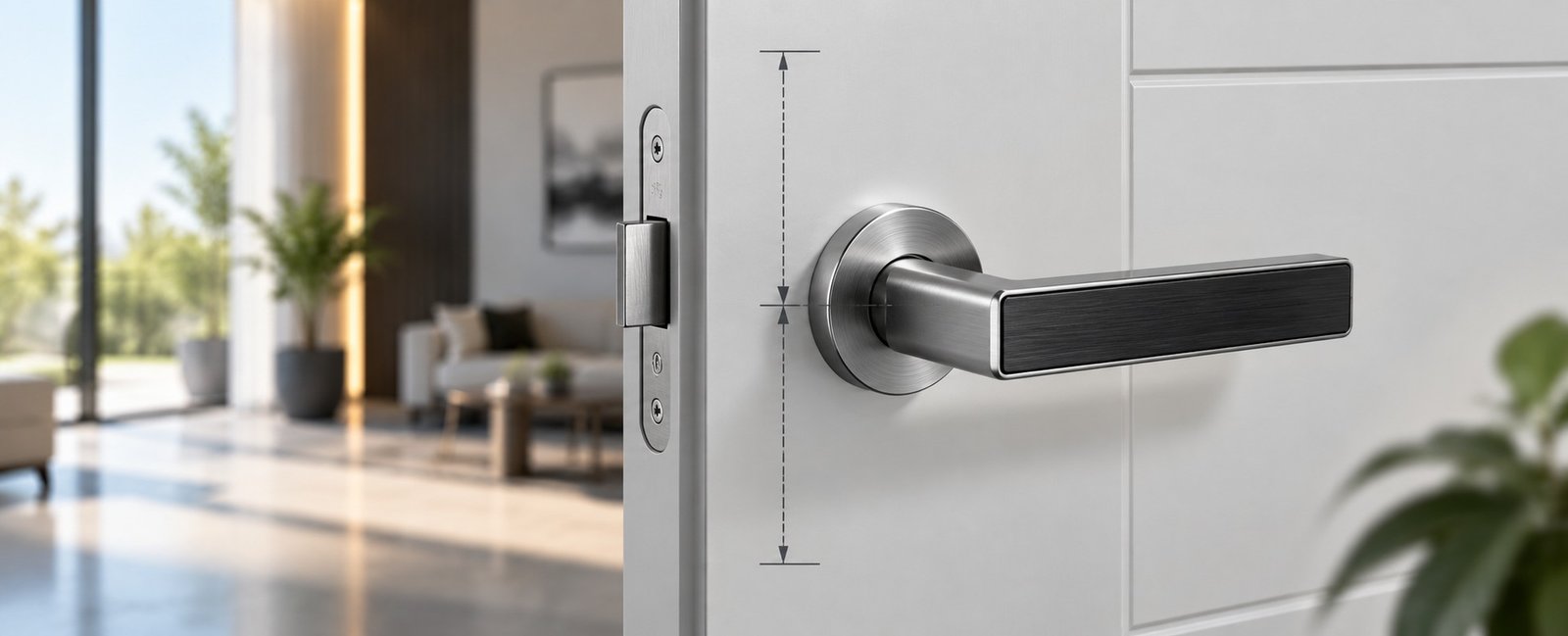
Cylindrical lever locks sometimes called bored locks, because the mechanism installs through two cross-bores in the door face rather than into a milled mortise pocket are the workhorse of interior commercial doors. The lever handle is mechanically tied to the latch, so a single downward motion both releases the latch and opens the door, which is faster and more intuitive than a knob and matters in buildings where doors cycle constantly and people’s hands are frequently occupied: offices, schools, healthcare corridors, retail back-of-house.
Levers also have a genuine accessibility advantage over knobs. A knob requires grip strength and wrist rotation to turn, which is a real barrier for elderly users, anyone with arthritis or limited hand strength, and anyone carrying something in both hands; a lever can usually be operated with an elbow or forearm if needed. That’s part of why building codes and accessibility guidelines in many markets favour or require lever handles on accessible routes, and it’s worth factoring into specification even where it isn’t formally mandated, particularly for healthcare and senior living projects.
They’re not typically specified as the primary security lock for exterior entrances, and that’s a deliberate trade-off rather than an oversight the bored-lock mechanism offers meaningfully less resistance to forced entry than a deadbolt or mortise lock, since the latch itself can sometimes be manipulated or the lever forced with enough leverage on lower-grade products. For interior office doors, internal corridors, classroom doors, and similar applications where controlling who walks through a doorway matters more than resisting a determined break-in attempt, they remain the practical standard. Higher-grade commercial versions also come in “clutch” or free-wheeling configurations, where the outer lever spins freely without retracting the latch when the door is locked this protects the mechanism from being forced or wrenched off, which matters on doors that see rough handling.
Knob Locks
Knob locks build the locking mechanism directly into the door knob rather than into a separate lever or bolt assembly. They’re widely used on residential interior doors bedrooms and bathrooms particularly where the priority is a quick privacy function rather than meaningful security. Most residential knob locks use a simple push-button or turn-button privacy mechanism on the interior side, with a small external release (often operable with a flathead screwdriver or a coin from outside) so a child locked inside accidentally, or an adult who’s had a medical issue behind a locked bathroom door, can still be reached.
They shouldn’t be used as the primary lock on any exterior door, and the reason is mechanical rather than about the locking cam itself: the knob is a lever in its own right. Its round shape gives an attacker something to grip with a wrench or channel-lock pliers and simply twist or “shuck” off the spindle, which defeats the lock without ever touching the actual locking mechanism. This is a well-documented failure mode for knob locks specifically, and it’s one reason the lever-lock alternative, despite looking similar, behaves differently under attack a lever offers less purchase for that kind of twisting force. On exterior doors, knob locks are sometimes still seen paired with a deadbolt above them, which is a workable combination, but only because the deadbolt is doing essentially all of the security work in that pairing.
Smart Door Locks
Smart locks have seen rapid adoption across Saudi Arabia over the past several years, particularly in modern villa developments, serviced apartments, and premium commercial properties. The appeal is straightforward: keyless entry by PIN code, fingerprint, mobile app, or proximity card removes the physical key-management problem entirely, and most systems add access logging and remote control knowing exactly when a door was opened, by whom, and being able to grant or revoke access without ever touching the lock in person.
Two practical details matter more than the marketing copy usually suggests. First, most reputable smart locks retain a traditional key cylinder as a mechanical backup, which is essential rather than optional batteries run down, Wi-Fi networks go offline, app servers occasionally have outages, and a household or facility that has no physical way into its own building when any of that happens has traded convenience for a real liability. Second, and more fundamental: the weakest point in most smart lock installations isn’t the electronics, it’s the door and frame the lock is mounted to. A smart deadbolt with excellent app security and encrypted communication is still only as strong, in a forced-entry sense, as the same mechanical bolt-and-strike-plate setup discussed in the deadbolt section above. Buying a smart lock doesn’t upgrade a weak door; it adds convenience and visibility on top of whatever security the door already provides.
A few region-specific considerations are worth flagging. Saudi Arabia’s exterior heat affects battery chemistry and the longevity of any rubber gaskets or seals on the exterior-facing unit, so it’s worth checking a product’s rated operating temperature range rather than assuming a lock designed for a milder climate will perform the same way mounted on a south-facing villa gate. Fingerprint sensors can also be less reliable with very dry or dusty fingertips, which is common in the local climate, so a fallback PIN or app method is genuinely useful rather than a redundant feature. For rental properties and facilities that need temporary or time-limited access a steadily growing requirement in Saudi Arabia’s short-term rental and serviced accommodation market smart locks are a genuinely practical upgrade over rekeying, since a code can be issued for a guest’s exact stay dates and expire automatically without anyone visiting the property.
Electronic Access Control Locks
Where smart locks are typically residential or light-commercial products built around a single door and a single owner, electronic access control systems are the specification for high-traffic, multi-door, managed facilities. RFID card readers, biometric scanners, PIN keypads, and mobile credential systems let a facility manager control exactly who can open which doors, log every entry and exit event with a timestamp, and revoke a single person’s access instantly none of which a standard mechanical lock, or even a standalone smart lock, is really built to do at scale.
It’s worth understanding the distinction between “offline” and “online” systems, because it drives both cost and capability. Offline, standalone locks , the kind used on the vast majority of hotel guest room doors read a credential locally and make their own access decision without being wired into a central server in real time; they’re periodically synced with a handheld device to update the list of valid credentials and download the access log. This keeps installation cost manageable across hundreds of rooms, since no cabling runs to each door. Online, networked systems typical for server rooms, finance departments, and similarly restricted areas are wired (or increasingly, wireless but still continuously connected) to a central access control panel, which makes real-time decisions, can lock down every controlled door simultaneously in an emergency, and produces a live audit trail rather than one that’s only available after the next sync.
Hotels use these systems on every guest room door as standard. Corporate offices use them on server rooms and finance departments. Hospitals use them on pharmacy storage and clinical areas where regulatory record-keeping around access matters as much as the physical barrier itself. In every one of these cases, the value proposition is the access management layer the credential issuing, logging, and revocation , not just the strength of the bolt behind it, which is usually a fairly standard mortise or auxiliary lock case wired to an electronic strike or motorised lock body.
Rim Locks
Rim locks mount directly onto the interior face of the door rather than being recessed into the door body the way a mortise lock is. That surface-mounted design makes them simple and fast to retrofit onto a door that was never prepared for a mortise pocket, which is exactly why they remain relevant in two specific scenarios: older properties with doors that can’t easily or affordably be re-machined for a modern mortise case, and secondary or utility doors storerooms, back gates, plant rooms where a simple, easily-fitted lock is genuinely adequate for the risk involved.
The trade-off is visible in the design itself: because the lock case sits on the surface rather than inside the door, it’s more exposed to direct physical attack than a recessed mortise case, and the fixing screws holding the case to the door are themselves a point of vulnerability if they’re accessible. For that reason, rim locks aren’t a sound primary choice on any main entrance that faces real security risk, but for secondary gates, storeroom doors, and older residential properties where preserving the original door, rather than cutting a new mortise pocket into it is the priority, they remain a practical, low-cost, easily-serviced option. They’re also commonly paired with an additional mortise deadbolt on older heritage-style doors where the owner wants to add security without losing the door’s original surface-mounted night-latch hardware.
Padlocks
Padlocks are portable, removable, and need no permanent fitting to the door or gate itself, which makes them the right tool wherever the opening doesn’t support or shouldn’t need a fixed lock: warehouse roller shutters, storage containers, equipment cabinets, generator enclosures, scaffolding lock-boxes, and lockers all fall naturally into padlock territory.
Quality matters considerably more here than most buyers assume, because the padlock market spans an unusually wide range for what looks like a simple product. The shackle shape is the first real differentiator: an open shackle leaves more of the loop exposed to bolt cutters and saws, while a shrouded or closed-shackle design where the lock body itself covers most of the shackle meaningfully reduces the leverage and access an attacker has to work with. Body construction is the second variable: laminated steel bodies, solid brass bodies, and hardened boron-alloy shackles each sit at different points on the cost-versus-resistance curve, and for outdoor use specifically, the finish matters as much as the core material a solid brass or hardened steel shackle with a genuinely corrosion-resistant finish earns its extra cost quickly in Saudi Arabia’s heat, dust, and, in coastal cities, salt air, where a cheap zinc-alloy padlock can seize or corrode within a single summer.
For facilities managing many padlocks across a site a warehouse with dozens of cabinets, a contractor running lockout-tagout procedures on equipment keyed-alike or master-keyed padlock systems are worth specifying from the start, since they let one key open everything a particular person is authorised for, or let a facilities manager hold a master key that opens every unit-level lock on site, without needing to track an unmanageable bunch of unrelated keys.
Choosing the Right Lock for Your Application
The lock types above aren’t ranked against each other in any absolute sense, the right choice always depends on what the door is actually for. The table below is a starting point rather than a final specification; the exact cylinder grade, lock body grade, and finish should still be matched to the door construction and the building’s overall security profile.
Door Lock Cylinder Types: Why This Choice Matters
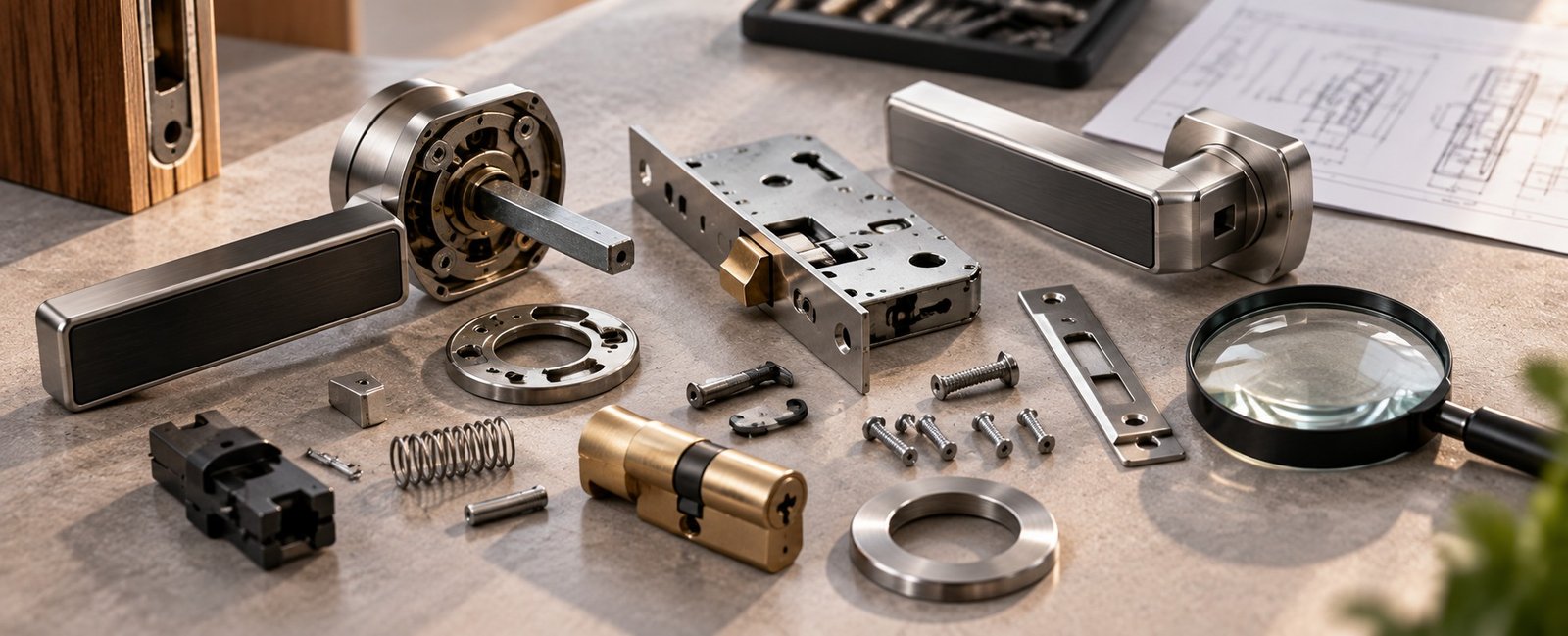
The cylinder is the small component inside the lock that the key actually turns, and it’s also, overwhelmingly, the component that break-in attempts target picking, bumping, snapping, and drilling are all attacks on the cylinder specifically, not the surrounding lock body or the door itself. That means the cylinder grade can matter more for real-world security than which category of lock it sits inside; a basic, unrated cylinder fitted into an expensive mortise lock body leaves the whole door no more secure than the cylinder allows.
Single cylinder. Key on the exterior, thumb-turn on the interior. This is the standard configuration for the large majority of residential entrance doors, precisely because it allows fast, key-free exit from inside in an emergency a detail that matters far more than it sounds like it should until the one time it’s actually needed.
Double cylinder. Key required on both sides, with no interior thumb-turn at all. This configuration exists specifically for doors with a nearby glass panel that creates a reach-through risk someone breaking the glass and turning an interior thumb-turn by hand without ever picking the lock itself. The cost is genuine: double cylinders complicate emergency egress, and many building codes and life-safety guidelines restrict or actively discourage their use on designated escape routes for exactly that reason. Where one is genuinely needed, it should be the exception rather than the default, and it should come with a clear, reliable plan for keeping a key accessible from inside.
Euro profile cylinder. This is the dominant cylinder format across Saudi Arabia’s commercial and residential construction market, built to a standardised DIN-style profile that fits across most modern deadbolts and mortise lock bodies regardless of manufacturer. Because it’s so widely used, it’s also where almost all of the meaningful security innovation in mechanical locks has concentrated. Anti-snap euro cylinders are built with a deliberate weak point a “sacrificial” snap line positioned so that if an attacker does manage to snap the cylinder under leverage, it breaks at a point that leaves the internal locking mechanism intact rather than exposing it. Anti-pick versions use serrated or spool-shaped pins (and sometimes an internal sidebar) specifically designed to bind and give false feedback to standard picking tools. Anti-drill versions embed hardened steel inserts or free-spinning ball bearings along the likely drill path, so a drill bit either can’t penetrate the hardened material or simply spins the bearing without making progress. Anti-bump designs use security pin profiles that resist the sharp vibration a bump key relies on. When upgrading the security of an existing door without replacing the whole lock, swapping to a higher-grade euro cylinder is consistently the most cost-effective single improvement available.
Oval cylinder. An alternative profile, rounder in cross-section than the flat-sided euro format, used in some commercial lock systems and more common in certain regional markets than in Saudi Arabia’s mainstream construction supply chain. It does show up occasionally in imported lock products, and the practical issue it creates isn’t performance it’s procurement. A property with oval-cylinder hardware can find itself with a narrower, sometimes import-dependent pool of suppliers for a replacement or spare cylinder compared with the much deeper local stock of euro-profile parts.
Interchangeable core (IC) cylinder. Built specifically for rapid cylinder replacement without removing the surrounding lock body at all. A facilities team uses a separate control key to pull the entire core out as a unit and drops a new one straight in no locksmith call-out, no disassembly of the lock hardware itself, just a key-operated swap that takes seconds per door. This is widely used in office buildings, educational facilities, and any multi-site operation where re-keying needs to happen quickly and often across many doors at once most commonly after a staff departure, a lost master key, or a change of tenant. The upfront cost per cylinder runs higher than a standard euro cylinder, but for an operation re-keying regularly across dozens or hundreds of doors, the saved locksmith labour over the lock’s lifetime typically outweighs that difference.
For exterior doors on any Saudi property, residential or commercial, a minimum EN3-rated euro cylinder (or an equivalent grade) is the appropriate baseline, EN 1303, the relevant European standard for cylinder locks, grades cylinders across several performance categories including durability under repeated cycling, corrosion and temperature resistance, and resistance to physical attack methods like drilling and picking, with higher classifications indicating stronger performance. High-value residential properties and commercial buildings should specify EN5 or EN6 anti-snap cylinders as standard, particularly on aluminium-profile doors, where cylinder-snap attacks are a documented and specifically targeted vulnerability of that door type.
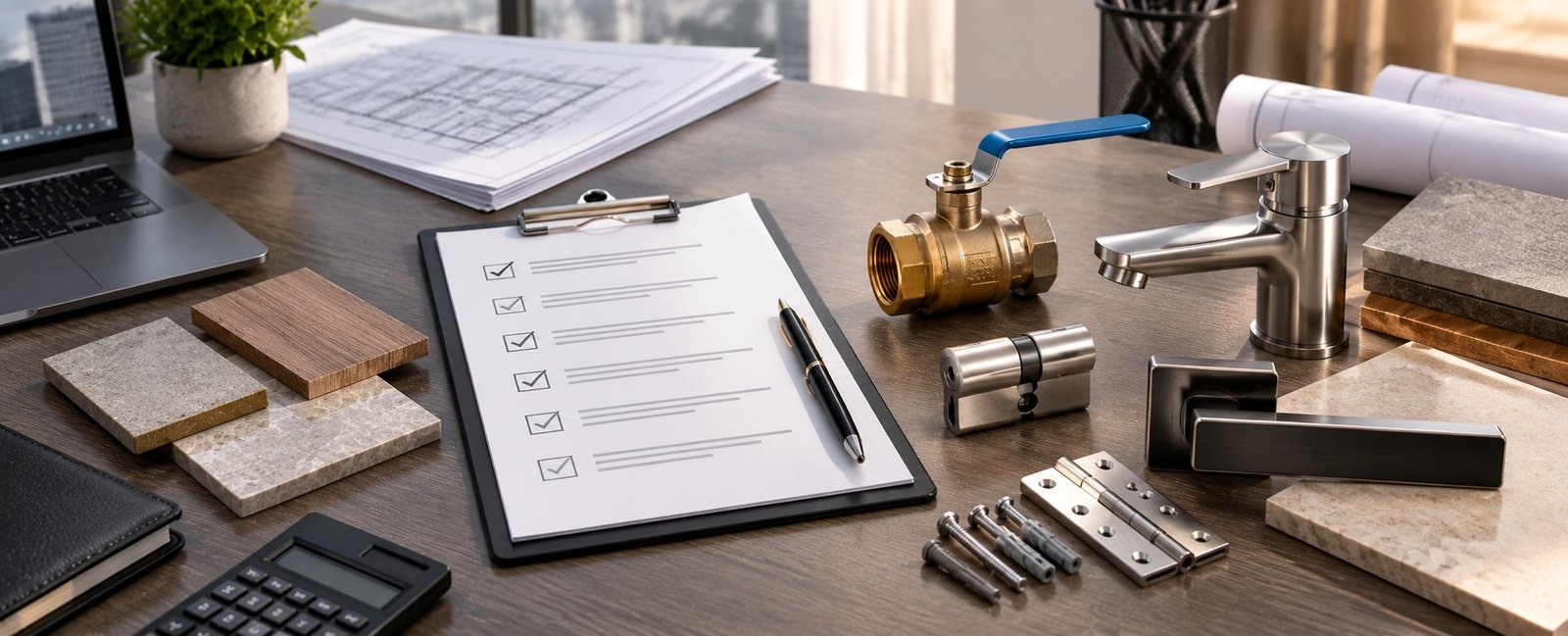
What to Check Before Buying a Door Lock in Saudi Arabia
Door construction and thickness. The lock has to match the door before anything else gets decided. Mortise locks need a door thick enough and solid enough to host the lock case generally 35mm minimum, more for heavy commercial use while a thin or hollow-core door simply can’t take one safely regardless of how much the buyer would prefer that lock type. Aluminium-profile doors, extremely common across Saudi Arabia’s villa and apartment market, come with their own specific lock and cylinder profile requirements that differ from timber doors, and not every lock body designed for wood will mount cleanly into an aluminium profile system. Confirming compatibility with the actual door supplier or fabricator before purchasing the lock rather than after it arrives on site avoids a surprisingly common and entirely avoidable site delay.
Security grade and certification. Look for locks tested against recognised standards rather than relying on marketing language alone EN 12209 for mechanical lock and latch hardware, EN 1303 for cylinders specifically. A genuine security grade marking reflects independent testing of things like cycle durability, resistance to specific attack methods, and corrosion performance; a product description that simply says “high security” without referencing a standard hasn’t actually told the buyer anything verifiable.
Climate suitability. Exterior locks in Saudi Arabia face a genuinely demanding combination of conditions: sustained high heat that can affect internal lubricants and accelerate the breakdown of lower-grade plastics, fine windblown dust that works its way into any cylinder without adequate sealing, and, in coastal cities, salt-laden air that drives corrosion in anything other than brass, stainless steel, or a properly finished alloy. Zinc-alloy components, common on budget hardware, tend to underperform all three of these stresses compared with brass or stainless steel over a multi-year lifespan. It’s worth specifically asking a supplier whether the cylinder sealing has been tested or rated for dusty environments a cylinder that gradually fills with fine sand over months of exposure will eventually stop turning reliably, and that failure mode is one of the most common service calls on exterior locks in the region.
SASO compliance. For commercial and government projects in the Kingdom, specified building hardware should meet the applicable Saudi Standards, Metrology and Quality Organization (SASO) requirements, and main contractors and consultants on larger projects increasingly request conformity documentation as a condition of approving a hardware submittal rather than treating it as optional paperwork. It’s worth confirming this documentation directly with the supplier before committing to a product for any regulated or tendered project, rather than assuming it exists simply because the product is already on sale locally.
After-sales support and cylinder availability. A lock is only genuinely maintainable for as long as its supply chain stays available. A proprietary cylinder that isn’t stocked locally turns a lost key or a worn-out cylinder into a real procurement problem rather than a same-day fix, and that risk compounds quickly across a project with dozens or hundreds of identical doors. Favouring products built around widely available formats euro profile cylinders chief among them in the Saudi market and confirming with the supplier that spare cylinders, replacement keys, and compatible handle sets will still be available years after the original purchase is a small amount of diligence that prevents a much larger headache later.
For contractors sourcing door hardware across multiple units on a development project, the Contractors page covers volume supply and project RFQ support. The full door accessories range includes door locks, cylinders, handles, and related hardware for complete door set specification.
Frequently Asked Questions
What are the most common door lock types in Saudi Arabia?
For residential properties, deadbolt locks paired with euro profile cylinders are the standard for main entrances, usually backed by a mortise lock on secondary doors in higher-spec villas. Mortise locks are the dominant specification for commercial buildings and hotels, where their multi-function lock case and durability under heavy cycling make them the practical default. Smart locks and electronic access systems are the fastest-growing category, expanding rapidly across modern villas, serviced apartments, and corporate facilities as keyless convenience and access logging become standard expectations rather than premium add-ons.
Which door lock is best for a villa in Saudi Arabia?
A solid single-cylinder deadbolt fitted with a high-grade anti-snap euro cylinder on the main entrance, combined with a quality mortise lock on secondary access doors, gives strong, well rounded coverage at a reasonable cost without over-specifying every opening in the property. For owners who want keyless convenience on top of that baseline, a certified smart lock with a mechanical key backup is a practical addition but it’s worth confirming the door and frame quality actually match the lock’s rated specification first, since no smart lock compensates for a weak frame behind it.
What’s the difference between a mortise lock and a deadbolt? A deadbolt is a single-function lock its entire job is throwing a solid bolt into the door frame for security, nothing more. A mortise lock is fitted inside the door body itself and typically integrates several functions in one case: a spring latch for everyday use, a deadbolt for security, and in many designs additional locking points beyond that. Mortise locks are mechanically more complex, generally more durable under heavy commercial cycling, and far more commonly specified in hotels, offices, and premium developments. Deadbolts are simpler, considerably easier to retrofit onto an existing door, and perfectly adequate often the better choice for most residential security needs.
What are door lock cylinder types and why do they matter?
The cylinder is the part the key actually turns, and it’s the part that virtually every attack method picking, bumping, snapping, drilling is aimed at, not the lock body around it. Common types include single cylinder (key outside, thumb-turn inside), double cylinder (key required on both sides), euro profile cylinder (the standard format across most Saudi commercial and residential projects), oval cylinder (less common locally, found mainly in some imported hardware), and interchangeable core cylinders built for fast re-keying across many doors. The cylinder’s security grade its rated resistance to picking, snapping, and drilling specifically is often the single most important specification decision on any exterior door, frequently more consequential than which brand of lock body sits around it.
Are smart locks secure enough for Saudi homes?
Modern, certified smart locks are genuinely secure when they’re installed correctly on a solid door with a properly reinforced frame the electronics themselves aren’t usually the weak point people assume them to be. The actual vulnerability in most smart lock installations is the door and frame underneath, not the lock’s app or encryption. A smart lock mounted on a weak or poorly fitted door doesn’t deliver the security its spec sheet implies, regardless of how advanced the electronic side is. Choosing a product with an established security certification, a genuine physical key backup, and components rated for local heat and dust conditions covers the practical risks that actually matter day to day.
Which door lock type suits commercial buildings?
Mortise locks with an appropriately high cylinder security grade remain the standard for commercial entrances and office doors generally, thanks to their durability under heavy cycling and their compatibility with a wide range of handle and finish options. For areas that need managed, logged access specifically server rooms, restricted departments, hotel guest room doors electronic access control systems add the credential management and audit-trail capability that a purely mechanical lock, however well made, simply isn’t designed to provide on its own.
Find the Right Door Lock for Your Project
Whether the task at hand is specifying a single lock for a residential front door or procuring hardware across a multi-unit commercial development, getting three decisions right early lock type, cylinder grade, and material specification suited to the local climate , avoids the considerably more expensive problem of replacements, callbacks, and security upgrades after the doors are already installed and the project has moved on.
Browse Kanzotech’s door accessories range for door locks, cylinders, and related hardware suited to residential and commercial projects across Saudi Arabia. For project volumes and specification support, contact the team for RFQ assistance tailored to your requirements.






 September 30, 2026
 HYZAM KENZ




Comments
No comments yet. Be the first to comment!