Types of Valves in Plumbing: Ball, Angle, Check, and Gate Valves Explained
Most plumbing problems don’t start with a burst pipe or a failed pump. They start much earlier with the wrong valve installed in the wrong place.
It’s a surprisingly common issue on construction projects across Saudi Arabia. A contractor specifies a gate valve where a ball valve was needed. An angle valve gets skipped beneath a basin to save cost. A pump discharge line ships without a non-return valve. The immediate installation looks fine. Six months later, you’re dealing with reverse flow, pressure loss, or maintenance that could have been avoided entirely.
Understanding the different types of valves in plumbing and when each one is actually the right choice , isn’t complicated. But it does require more than a quick skim of a product catalogue.
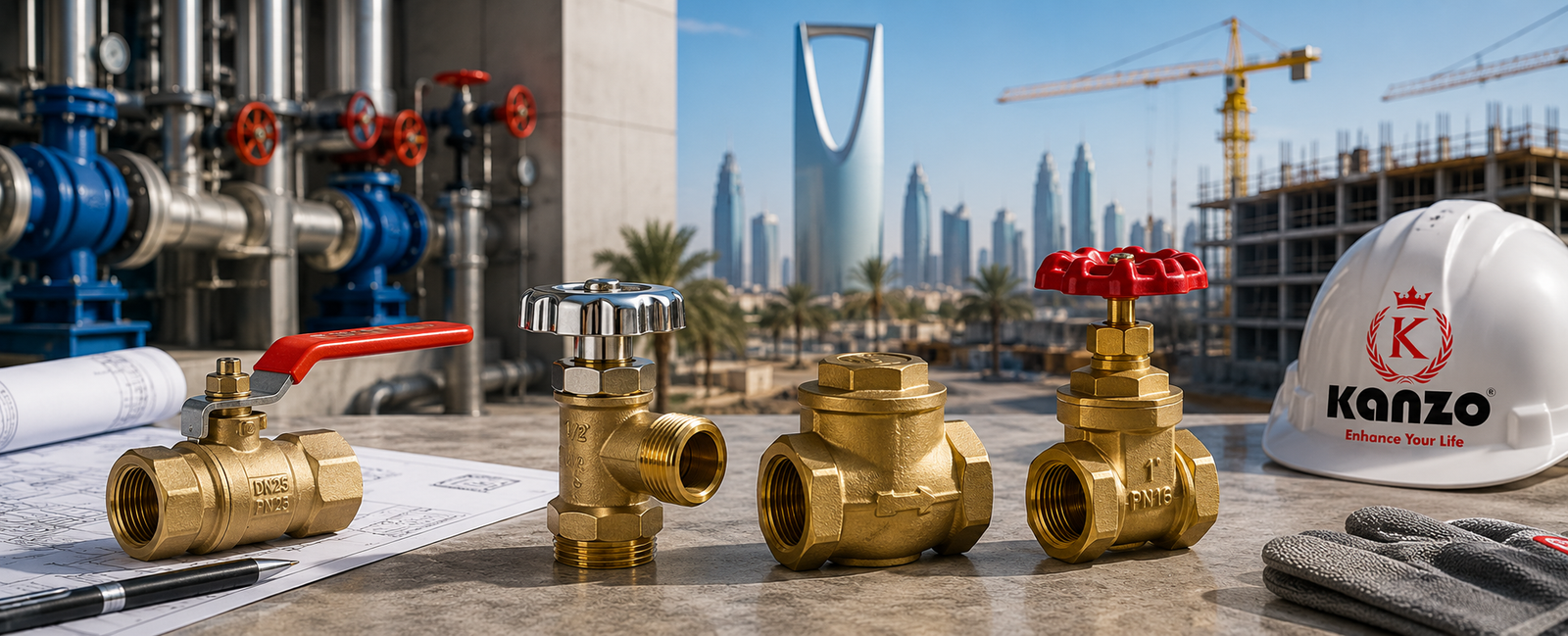
This guide covers the four valve types you’ll encounter most on residential, commercial, and industrial projects: ball valves, angle valves, check valves (non-return valves), and gate valves.
Why Valve Selection Matters More Than Most Buyers Realise
Pick the right valve and it does its job quietly for decades. Pick the wrong one and you’re looking at water leakage, pressure drops, equipment damage, or pump failure often well before the project’s warranty period ends.
For Saudi Arabia’s construction sector specifically, the stakes are higher than they might be elsewhere. Variable water pressures across building types, high ambient temperatures, hard water in many regions, and the sheer scale of current infrastructure and residential development all mean that valve specification deserves genuine attention. It’s not just a plumbing detail.
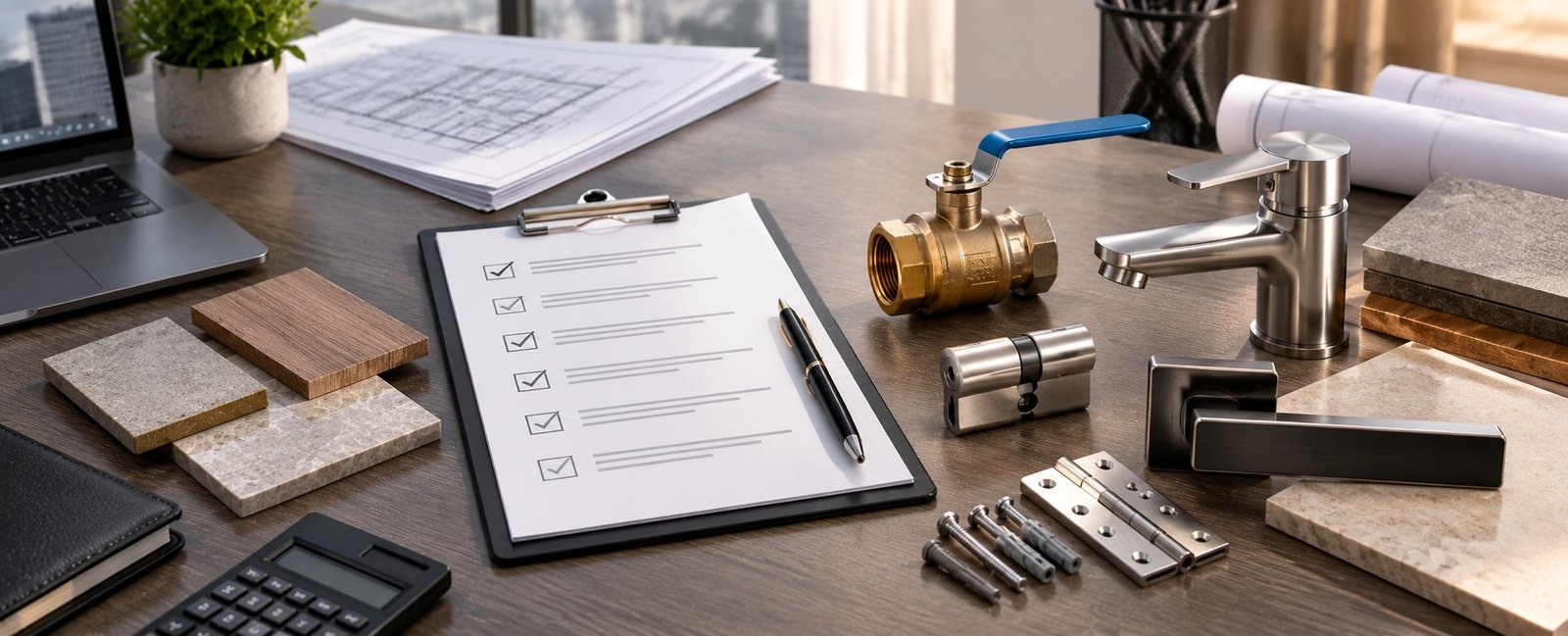
Professional engineers and procurement teams evaluate valves on operating pressure, installation location, material compatibility, maintenance requirements, and application type. That’s the framework this guide uses too.
Ball Valves: The Default Choice for Reliable Shut-Off
If there’s one valve type you’ll encounter more than any other in modern plumbing installations, it’s the ball valve.
The mechanism is simple: a drilled sphere sits inside the valve body. Quarter-turn the handle and the opening either aligns with the pipe for full flow, or rotates 90 degrees to block it completely. That’s it. There’s no partial position, no gradual throttling , just open or closed.
That simplicity is exactly why contractors and engineers prefer them for isolation work. Ball valves seal tightly, operate quickly, and hold up well with minimal maintenance over long service cycles.
Full Bore vs Standard Bore
A full bore ball valve has an internal opening equal to the pipe diameter. Flow passes through unrestricted, which keeps pressure loss to a minimum. These are worth specifying on high-performance systems and industrial pipelines where friction losses compound over distance.
Standard bore designs have a slightly smaller opening and are perfectly adequate for most residential and light commercial applications where peak flow rate isn’t the priority.
Brass vs Stainless Steel
For domestic plumbing, potable water systems, and general commercial installations, brass ball valves are the practical choice. They’re affordable, corrosion-resistant, and straightforward to install. For industrial environments, chemical processing lines, or high-pressure systems, stainless steel variants offer superior resistance and a longer service life under demanding conditions.
3-Way Ball Valves
Standard ball valves handle one pipeline. 3-way ball valves redirect or mix flow between multiple lines , making them common in HVAC systems, water treatment facilities, and automated industrial control systems where flow direction needs to change based on operating conditions.
Angle Valves: Small Fixture, Significant Function
Angle valves don’t get much attention, but they quietly do something important: they let you isolate a single fixture without shutting off water to the rest of the building.
You’ll find them installed beneath bathroom basins, kitchen sinks, toilets, bidets, and vanity units. When maintenance is needed , replacing a tap cartridge, clearing a blocked aerator, swapping a cistern inlet valve , the angle valve means a technician can isolate just that one fitting while the building’s main supply keeps running normally.
The valve body itself changes water direction by 90 degrees, which is why it works so well in under counter applications where supply pipes run vertically and need to connect to horizontal fixture inlets.
One-Way vs Two-Way
A one-way angle valve supplies a single outlet. That covers the majority of residential installations a basin mixer, a toilet cistern, a kitchen tap.
A two-way angle valve splits one supply into two independent outlets. It’s useful when you’re connecting a sink alongside a water purifier, or a basin tap alongside a bidet spray, without having to run additional pipework back to a supply point. It keeps things clean and reduces the complexity of the rough-in.
The standard ½-inch angle valve is the dominant size in Saudi residential plumbing, compatible with most fixture connections. Before ordering in volume, always confirm the thread standard, pressure rating, and connection type, particularly on projects sourcing from multiple suppliers.
Browse Kanzotech Building Accessories range of brass angle valves and two-way brass angle valves for residential and commercial specifications.
Check Valves (Non-Return Valves): Backflow Prevention You Can’t Skip
A check valve also called a non-return valve or one-way valve , does one thing: it lets water flow in the intended direction and automatically blocks reverse flow the moment pressure drops or reverses.
No manual operation, no handle to turn. The valve responds to pressure alone.
That might sound like a minor function, but backflow in a plumbing system isn’t a minor problem. Reverse flow contaminates clean water supplies. It can spin pumps backward, cause pressure surges, and create water hammer effects in the pipework. On larger systems, the damage compounds fast.
Where Non-Return Valves Are Critical
Every pump installation should have a check valve on the discharge line. Without one, water flows back through the pump when it’s not running, which causes reverse rotation, accelerated wear, and , on unprotected systems , outright failure. This applies equally to domestic booster pumps, agricultural irrigation systems, and large industrial pumping arrangements.
Beyond pump protection, non-return valves belong anywhere that pressure reversals could occur: building risers serving multiple floors, municipal connection points, solar water heater circuits, and irrigation systems with significant elevation changes.
Swing Check Valves
The most common design uses a hinged disc that swings open with forward flow and closes under reverse pressure. Low pressure loss, simple construction, and reliable long-term operation. They’re standard on municipal and commercial water systems for good reason.
Brass and PVC Options
Brass check valves are the default for domestic plumbing, potable water applications, and building services. They’re durable, corrosion-resistant, and widely available in Saudi Arabia.
PVC versions are lighter and cost-effective for outdoor or agricultural use irrigation systems, swimming pool pipework, chemical transfer lines where weight and chemical resistance matter more than the mechanical robustness of a metal body.
Gate Valves and Bib Cocks: Proven Solutions for Isolation and Outdoor Use
Gate Valves
Gate valves operate by raising or lowering an internal gate , literally a plate , that either blocks or allows flow through the pipe body. When fully open, there’s virtually no restriction to flow. When fully closed, the seal is complete.
That last sentence contains the important caveat: fully open or fully closed. Gate valves aren’t designed for flow regulation or partial throttling. Using them in a half-open position causes turbulence, accelerated wear on the gate, and eventual sealing failure. They’re isolation valves, and that’s the application they excel at.
You’ll find gate valves on underground water mains, building supply risers, municipal distribution lines, fire protection systems, and industrial piping where the valve stays open almost all the time and is only closed for maintenance or emergencies.
Bib Cock Valves
Bib cocks are the outdoor taps — the ones you see on building exteriors for garden irrigation, hose connections, vehicle washing, and general outdoor use. Modern brass bib cocks offer straightforward manual operation and reliable service life, and they’re a standard specification item on most residential and commercial projects.
Choosing the Right Valve: A Practical Decision Framework
Rather than a separate section for each valve type, here’s a single reference:

When in doubt between ball valves and gate valves, ball valves win for most modern applications. They’re quicker to operate, seal more reliably, and require far less maintenance over their service life. Gate valves still make sense for large underground mains and infrastructure where their full-bore, low-resistance design matters and infrequent operation is guaranteed.
Material Selection: It’s Not Just About Valve Type
The valve type determines function. The material determines how long it lasts.
Brass is the standard for domestic and commercial plumbing in Saudi Arabia. Good corrosion resistance, suitable for potable water, easy to machine to tight tolerances, and widely available in the Kingdom.
Stainless steel is the right call for industrial environments, chemical processing lines, and high-pressure or high-temperature systems. The cost premium over brass is justified by its resistance to aggressive media and its extended service life in demanding conditions.
PVC is lightweight, inexpensive, and highly resistant to corrosion and many chemicals. It’s the practical default for irrigation systems, swimming pools, and outdoor agricultural pipelines. Don’t specify it where mechanical strength or heat resistance matters.
For industrial and contractor procurement in Saudi Arabia, see the Industrial and Contractors pages for supply and volume enquiry details.
Related Products and Components
Valves don’t work in isolation. A complete plumbing installation typically pairs valves with compatible pipes and connection materials. Kanzotech Building Accessories supplies heater hoses and pipes and Teflon tape for thread sealing , both commonly specified alongside valve installations on residential and commercial projects.
For pump installations requiring check valves, the Kanzotech Pumps division covers the full pump selection for residential, commercial, and industrial applications across Saudi Arabia.
Frequently Asked Questions
What are the main types of valves in plumbing?
The most common are ball valves, angle valves, check valves (non-return valves), gate valves, and bib cock valves. Globe valves and butterfly valves appear in specific industrial and HVAC applications.
What’s the difference between a check valve and a non-return valve?
Nothing , they’re the same component. Both terms describe a valve that allows flow in one direction only and closes automatically under reverse pressure. The terms are used interchangeably across the industry.
Are ball valves better than gate valves?
For most modern plumbing applications, yes. Ball valves seal more reliably, operate with a simple quarter-turn, and require minimal maintenance. Gate valves remain the right choice for large-diameter pipeline isolation where full-bore flow and infrequent operation are the priority.
Where exactly are angle valves installed?
Under sinks, basins, toilets, bidets, and similar fixtures , anywhere you need localised shut-off without interrupting the building’s main water supply.
Why do pump systems need non-return valves?
Without a check valve on the discharge line, water flows back through the pump when it’s not running. That causes reverse rotation, internal wear, and pressure fluctuations that shorten the pump’s service life significantly.
Do plumbing valves need to meet SASO standards in Saudi Arabia?
Yes. Valves specified for new builds and commercial installations in the Kingdom should comply with SASO requirements. Confirm compliance documentation with your supplier before specifying or installing on regulated projects.
Find the Right Valve for Your Project
Whether you’re fitting out a single villa or procuring for a large development, getting the valve specification right from the start is one of the least expensive ways to avoid costly maintenance problems later.
Browse the complete Valves and Flow Control category for full specifications, materials, and sizing options. For bulk orders or project-specific requirements, contact the team directly or send your specifications via WhatsApp for a fast RFQ response.



 September 30, 2026
 HYZAM KENZ



Comments
No comments yet. Be the first to comment!