Introduction
Choosing a valve manufacturer isn’t like picking a hardware supplier off a catalog page. A wrong choice can mean failed pressure tests on site, delayed handovers, or a valve that fails months into service on a project where downtime costs far more than the part itself.
Saudi Arabia’s construction and industrial sector has no shortage of companies advertising themselves as “valve manufacturers” or “valve suppliers,” but the gap between a supplier who simply moves boxes and one who actually understands material specification, pressure ratings, and site conditions is significant. For procurement teams, MEP consultants, and contractors sourcing valves for anything from a commercial building to an industrial facility, that gap is exactly where budget overruns and project delays start.
This guide walks through the real criteria for evaluating a valve manufacturer or supplier in Saudi Arabia, how to tell a genuine manufacturer from a trading company reselling under a different label, and the specific questions worth asking before you place a bulk order, whether you’re sourcing for a project in Riyadh, Jeddah, or an industrial hub like Dammam.
Summary
- Certifications matter more than marketing claims. Look for SASO, ISO, and where relevant, API compliance, not just a logo on the website.
- Understand whether you’re dealing with a manufacturer, a distributor, or a trading company, since each affects pricing, lead time, and accountability differently.
- Material and pressure rating range matters as much as price. A supplier with only one or two valve types can’t support a full project scope.
- Local stock availability in Saudi Arabia significantly reduces project delays compared to suppliers relying entirely on international shipping.
- Ask about quality control and testing procedures directly. A credible manufacturer will have clear, specific answers.
- After-sales support and warranty terms reveal a lot about how confident a supplier is in their own product.
- Location matters for industrial buyers. A valve supplier in Dammam with proximity to major industrial zones can mean faster turnaround for petrochemical and utility projects.
- Watch for red flags like vague technical answers, no physical stock, or an inability to provide test certificates.
Why Choosing the Right Valve Manufacturer Matters
Why it matters: A valve is a small component with an outsized impact when it fails. Whether it’s controlling water flow in a commercial building or managing pressure in an industrial process line, a valve that doesn’t match its site conditions can lead to leaks, pressure loss, or complete system failure.
This is especially true across Saudi Arabia’s fast moving construction and industrial sectors, where projects tied to Vision 2030 developments, industrial expansion, and large scale real estate are under tight delivery schedules. A supplier that can’t deliver consistent quality at scale becomes a direct risk to project timelines.
Practical example: A contractor sourcing angle valves for a mid rise residential project needs consistent quality across hundreds of units. If even a small percentage arrive with inconsistent thread quality or weak sealing, it turns into a costly on site replacement problem discovered only after installation. Our own breakdown of common plumbing installation mistakes covers how often these issues trace back to the sourcing stage rather than the installation itself.
Understanding the Types of Valves You Might Need
Why it matters: “Valve manufacturer” covers a wide range of products, and not every supplier stocks or manufactures every type. Knowing what you actually need helps you filter suppliers faster.
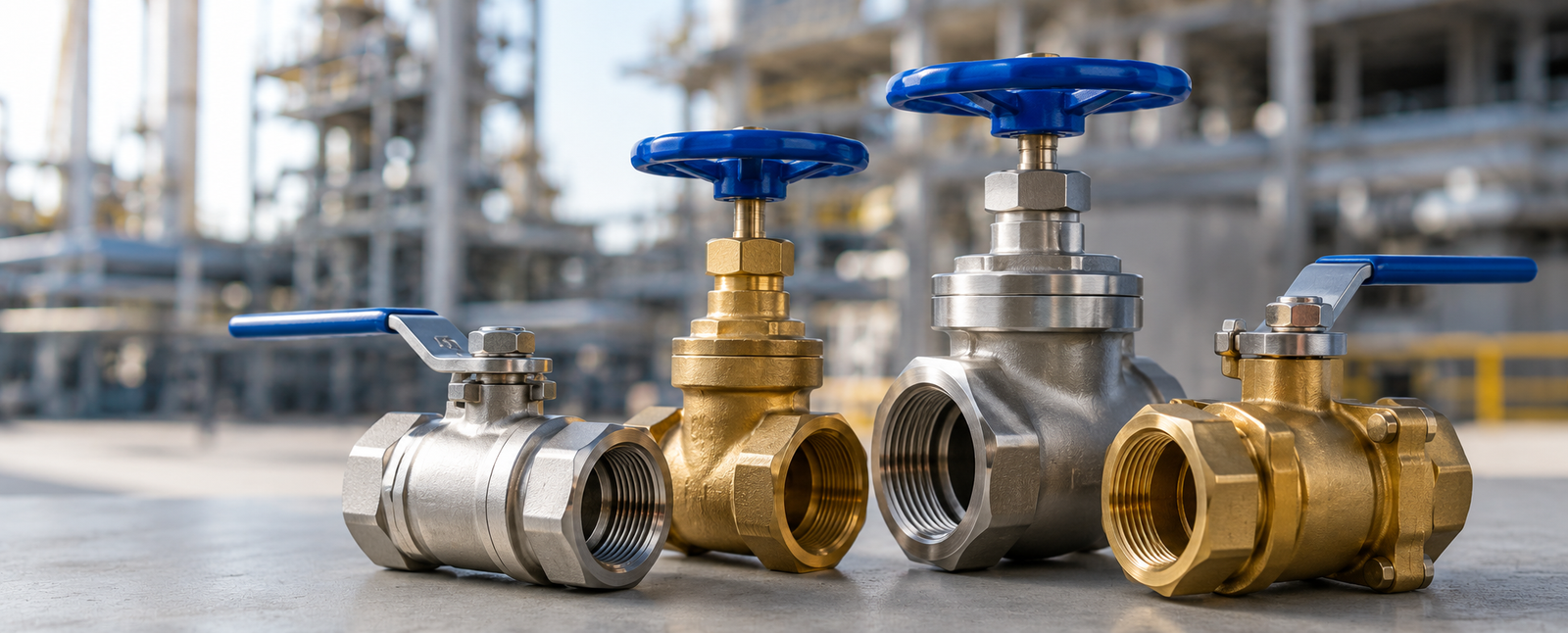
- Angle valves: Common in residential and commercial plumbing for controlling supply lines to fixtures.
- Ball valves: Used widely across commercial and industrial applications for reliable on/off flow control. Our detailed guide on how to choose the right ball valve for commercial buildings covers this specific valve type in more depth.
- Gate valves: Typically used where a fully open or fully closed flow state is needed, common in larger pipeline applications.
- Check valves: Prevent backflow in a system, critical in both plumbing and industrial piping.
- Industrial flow control valves: A broader category covering valves engineered for higher pressure, temperature, or chemical resistance requirements found in industrial and process applications.
Best practice: Before contacting suppliers, list out the specific valve types, sizes, and materials your project requires. This turns a vague “do you supply valves” conversation into a specific, comparable quotation request.
Key Criteria for Choosing a Valve Manufacturer
Certifications and Compliance
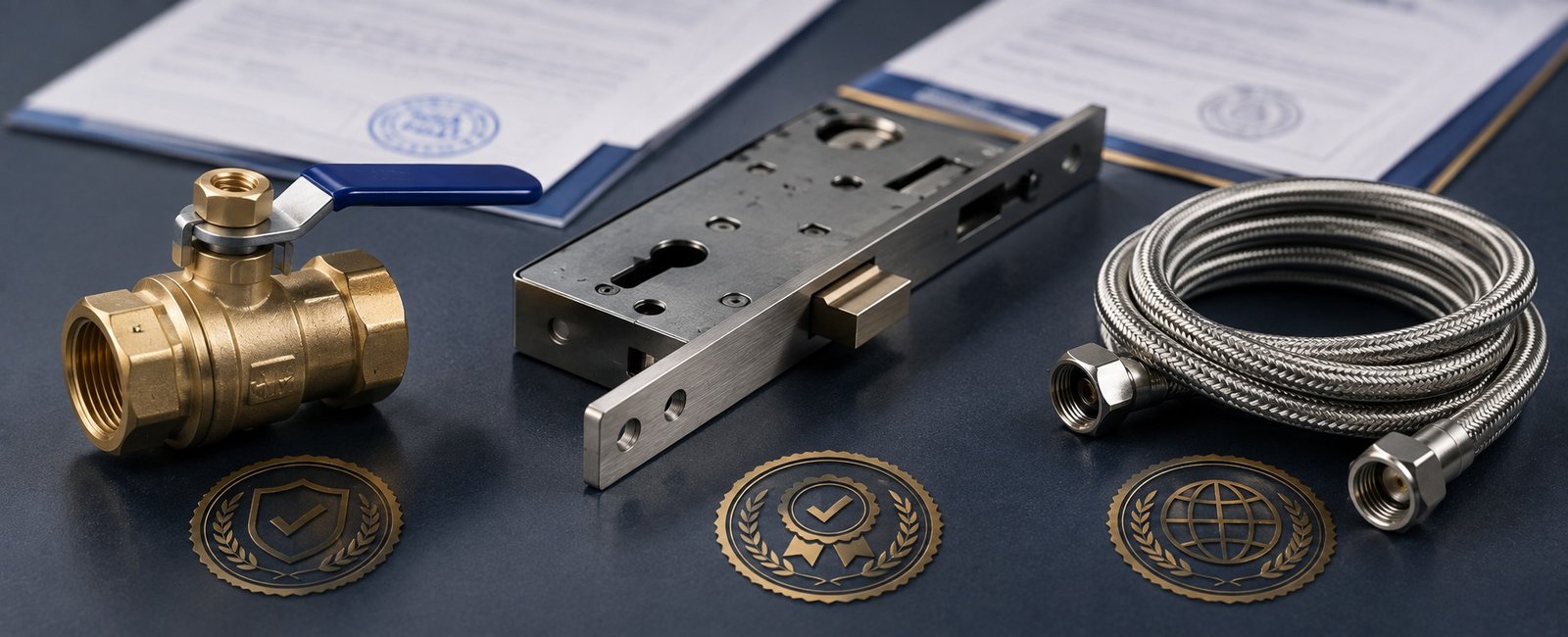
Why it matters: Certifications are the fastest way to separate credible manufacturers from suppliers making unverified claims. Look for SASO certification as a baseline for the Saudi market, alongside ISO manufacturing standards, and API compliance where relevant for industrial or process applications.
Common mistake: Accepting a certification claim without asking for documentation. A credible supplier will provide test certificates and compliance documents without hesitation.
Material and Product Range
Why it matters: Brass, stainless steel, and zinc valves each suit different applications and budgets. A manufacturer offering a genuine range, rather than a single material pushed as a one size fits all solution, signals real manufacturing capability rather than a narrow reselling operation. Kanzotech Accessories manufactures its own valves and flow control range, spanning brass, zinc, and stainless steel angle valves, with quality controlled directly at the production stage rather than inherited from a third party.
Manufacturing Capacity and Lead Times
Why it matters: For bulk orders tied to project timelines, a supplier’s actual production and stock capacity matters more than their catalog size. Ask directly about current stock levels and realistic lead times for the quantities you need, not just the smallest sample order.
Quality Control and Testing
Why it matters: Ask specifically how valves are tested before shipping, pressure testing, leak testing, and material verification are standard practices for a serious manufacturer. Vague or evasive answers here are a warning sign.
Local Stock and Supply Chain Reliability
Why it matters: Suppliers with local stock in Saudi Arabia significantly reduce the risk of project delays compared to those relying entirely on international shipping for every order. This becomes especially important for urgent replacement orders mid project.
After-Sales Support and Warranty
Why it matters: A manufacturer confident in their product will offer clear warranty terms and responsive after-sales support. Weak or unclear warranty terms often reflect weak confidence in long term product performance.
Pricing and MOQ Flexibility
Why it matters: The lowest price per unit isn’t useful if the minimum order quantity doesn’t match your project scope, or if it locks you into a single bulk order without room for adjustment as project needs shift.
Industry Experience and Track Record
Why it matters: A supplier with a track record across multiple sectors, residential, commercial, and industrial, generally has broader quality control experience than one operating in a single narrow niche. Kanzotech’s work across bulk industrial supply, contractors and fit-out projects, and real estate developments reflects the kind of cross-sector experience worth asking any supplier about.
Manufacturer vs. Distributor vs Trading Company
Why it matters: These terms get used loosely, and understanding the difference affects pricing, accountability, and how much technical support you’ll actually get.
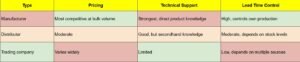
Manufacturer: Produces the valves directly, or oversees production closely enough to control quality, materials, and specifications firsthand. Typically offers the most competitive bulk pricing and the most detailed technical support.
Distributor: Buys from manufacturers and resells, often holding local stock and offering faster delivery than ordering directly from an overseas manufacturer, but with less control over production specifics.
Trading company: Sources products from multiple manufacturers without manufacturing or holding significant technical oversight themselves. Can offer variety, but often less consistency and slower response to technical questions.
Common mistake: Assuming a company is a manufacturer because their website says so. Asking direct questions about production facilities and quality control processes usually reveals the real answer quickly. Kanzotech Accessories manufactures its valve range directly, which is why we’re able to speak specifically to material sourcing, production quality control, and testing when clients ask, rather than passing the question along to a third party factory.
Why Location Matters: Sourcing a Valve Supplier in Dammam and Other Hubs
Why it matters: For industrial buyers specifically, supplier location has a real, practical impact on project timelines. Dammam sits at the center of Saudi Arabia’s Eastern Province industrial corridor, close to major petrochemical, oil and gas, and utility infrastructure projects. A valve supplier in Dammam with local stock and delivery capability can respond to urgent replacement needs far faster than a supplier shipping from Riyadh or overseas for every order.
Practical tip: If your project is based in or near an industrial zone, ask any prospective supplier directly about their delivery timelines to your specific location, not just their general shipping capability. Kanzotech’s doorstep delivery service across Saudi Arabia is built around exactly this kind of project-critical turnaround.
Red Flags to Watch For When Vetting a Valve Supplier
- Vague answers to technical questions. A real manufacturer can explain pressure ratings, material specs, and testing procedures without hesitation.
- No physical stock or facility to reference. Suppliers unwilling or unable to show real production or warehousing capacity are worth extra scrutiny.
- Unwillingness to provide certificates. SASO, ISO, or test certification should be available on request, not treated as confidential.
- Unrealistic pricing with no explanation. Prices significantly below market rate often mean compromised materials or untested batches.
- No clear point of contact for after-sales issues. If it’s unclear who handles a warranty claim or replacement request, that’s a problem before you’ve even placed an order.
Comparison Table: Manufacturer vs. Distributor vs. Trading Company
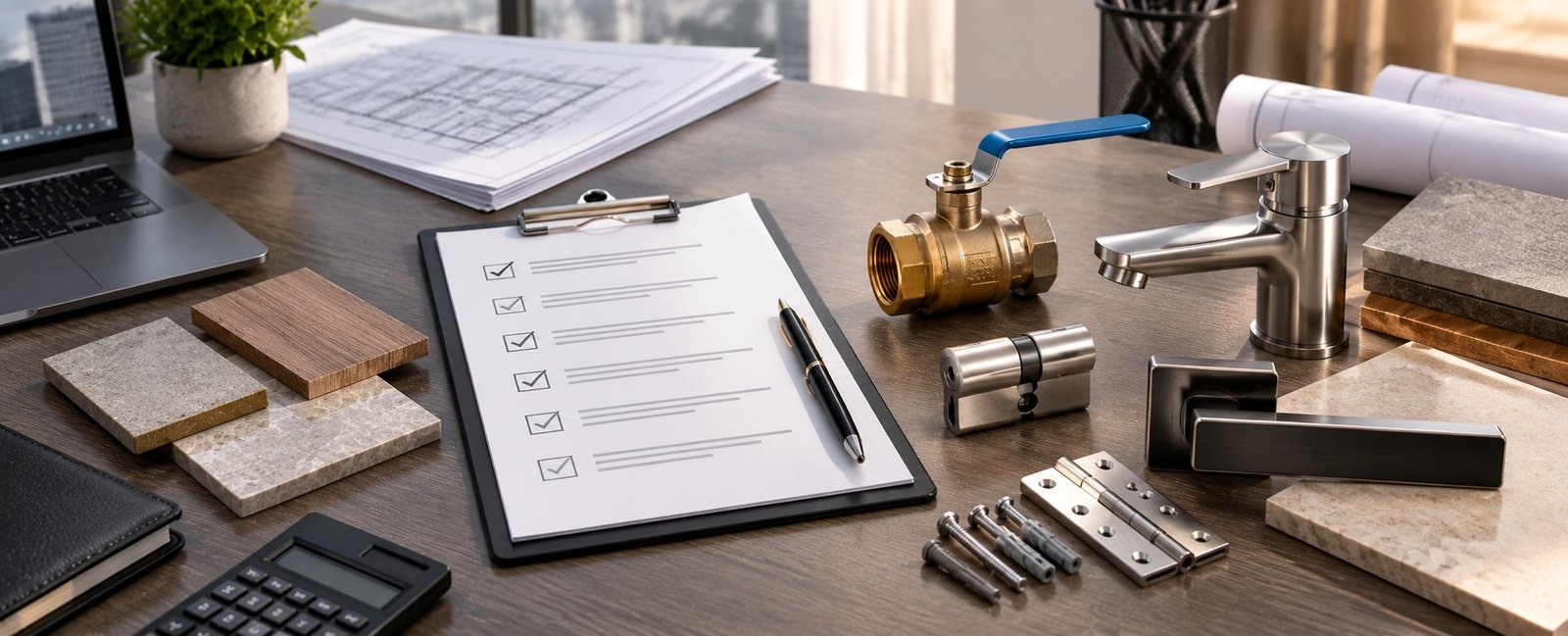
Step by Step Vendor Evaluation Checklist
- List your specific valve types, sizes, and material requirements before contacting suppliers.
- Ask directly whether the company manufactures, distributes, or trades the products.
- Request SASO, ISO, or API certification documents.
- Ask about current local stock levels and realistic lead times for your order quantity.
- Ask specifically how products are quality tested before shipping.
- Confirm warranty terms and after-sales support process in writing.
- Compare pricing against MOQ flexibility, not just per-unit cost.
- Check the supplier’s track record across sectors relevant to your project.
- For industrial or urgent projects, confirm delivery timelines to your specific site location.
Common Procurement Mistakes
- Choosing based on price alone. The cheapest quote often reflects compromised materials or untested stock, not efficiency.
- Not verifying certification claims. A logo on a website isn’t proof. Always request documentation.
- Ignoring after-sales terms until there’s a problem. By then, it’s too late to negotiate better warranty coverage.
- Overlooking product range. A supplier who can only fulfill part of a project’s valve requirements adds coordination overhead across multiple vendors.
- Skipping a small trial order. For large or ongoing projects, a smaller initial order helps verify consistency before committing to full volume.
Frequently Asked Questions
- What’s the difference between a valve manufacturer and a valve supplier? A manufacturer produces the valves directly and controls quality and specifications firsthand, while “supplier” is a broader term that can include manufacturers, distributors, or trading companies reselling products from multiple sources.
- What certifications should a valve manufacturer in Saudi Arabia have? SASO certification is the baseline requirement for the Saudi market, alongside ISO manufacturing standards. Industrial applications may also require API compliance depending on the sector.
- Why does it matter if a valve supplier is based in Dammam? Dammam sits within Saudi Arabia’s Eastern Province industrial corridor, making local suppliers there better positioned for fast delivery to petrochemical, oil and gas, and utility projects in the region compared to suppliers shipping from further away.
- How do I know if a company is really a manufacturer and not just reselling? Ask direct questions about their production facilities, quality control process, and testing procedures. A genuine manufacturer answers these clearly and can usually provide documentation or facility references, while resellers often give vague or generic responses.
- What materials are most common for industrial and commercial valves in Saudi Arabia? Brass, stainless steel, and zinc are the most common materials, each suited to different pressure levels, budgets, and corrosion resistance needs depending on the application.
- Should I always choose the manufacturer with the lowest price? Not necessarily. Unusually low pricing often reflects compromised materials, skipped testing, or unverified certification. Comparing total value, including certification, warranty, and lead time, gives a more accurate picture than price alone.
- What’s a reasonable minimum order quantity for bulk valve sourcing? This varies by supplier and product type, but a credible manufacturer should be able to offer some flexibility based on your project size rather than a single rigid MOQ for every client.
- How important is after-sales support when choosing a valve supplier? Very important for any project involving bulk quantities. Clear warranty terms and a responsive support process reduce risk significantly if issues arise after installation.
- Can one supplier realistically cover both commercial and industrial valve needs? Yes, if they carry a genuinely broad product range and have documented experience across both sectors. It’s worth asking directly about their track record in each application area rather than assuming based on their general marketing.
- What questions should I ask before placing a bulk valve order? Ask about certification documentation, current stock levels, lead times for your specific quantity, quality testing procedures, warranty terms, and delivery capability to your project location.
Conclusion
Choosing a valve manufacturer in Saudi Arabia comes down to verifying real capability, not marketing claims. Certifications, product range, quality control process, and after-sales support tell you far more about a supplier’s reliability than price alone ever will. For industrial buyers specifically, location and local stock availability can be the difference between a smooth project timeline and a costly delay.
Your next steps:
- List your exact valve requirements before reaching out to suppliers.
- Request certification documents and ask direct questions about manufacturing versus distribution.
- Compare suppliers on total value, not just per-unit price.
- Explore Kanzotech’s manufactured valves and flow control range or download the full product catalogue to see certified options built and tested in-house for the Saudi market.
As a manufacturer, not just a supplier, Kanzotech Accessories controls quality from raw material through to the finished valve, which means fewer handoffs, more consistency at bulk volume, and direct answers to your technical questions. Sourcing valves for a commercial or industrial project? Contact Kanzotech Accessories to request a bulk quotation and speak directly with our technical team.



 September 19, 2026
 HYZAM KENZ



Comments
No comments yet. Be the first to comment!