Introduction
Here’s what most plumbing failures in commercial buildings actually have in common: the product wasn’t the problem.
The ball valve that started leaking two years in? Installed in the wrong application. The threaded connection that failed behind the wall? Teflon tape wrapped the wrong direction. The pump room that’s now a maintenance headache? Valves installed where nobody can reach them. Not product failures , installation failures that were avoidable.
This matters more in commercial settings than anywhere else. A residential leak is an inconvenience. A leak in a commercial office tower, hospital, hotel, or warehouse is a business disruption, a liability, and in some cases, a safety issue. And commercial plumbing systems run continuously under varying pressure and usage loads, which means small errors compound over time rather than being caught early.
If you’re a contractor, MEP engineer, consultant, facility manager, or project owner working on anything from a mid-size commercial development to a large industrial facility, these are the mistakes worth knowing about before they show up on a defects list.
Why Plumbing Installation Quality Determines Long Term System Performance
Commercial plumbing systems don’t get the benefit of light use. They run all day, often under high or variable pressure, across multiple floors, with usage patterns that don’t follow predictable residential cycles.
When installation quality is poor, the system tells you. It just usually waits until the building is occupied and the fix is ten times more expensive than it would have been during construction:
- Water leaks behind inaccessible walls
- Reduced pressure on upper floors while lower floors over-pressurize
- Fittings that crack under thermal expansion
- Valves that can’t be isolated during maintenance without shutting down an entire riser
- Connections that hold for six months and then don’t
Using quality plumbing accessories alongside proper installation technique is what closes the gap between a system that performs for twenty years and one that starts causing problems in year two.
Mistake 1 : Choosing the Wrong Valve for the Application
This is the most common mistake, and it usually comes down to procurement choosing based on price rather than specification.
Different applications genuinely need different valves. That’s not a sales argument , it’s how the products were engineered.
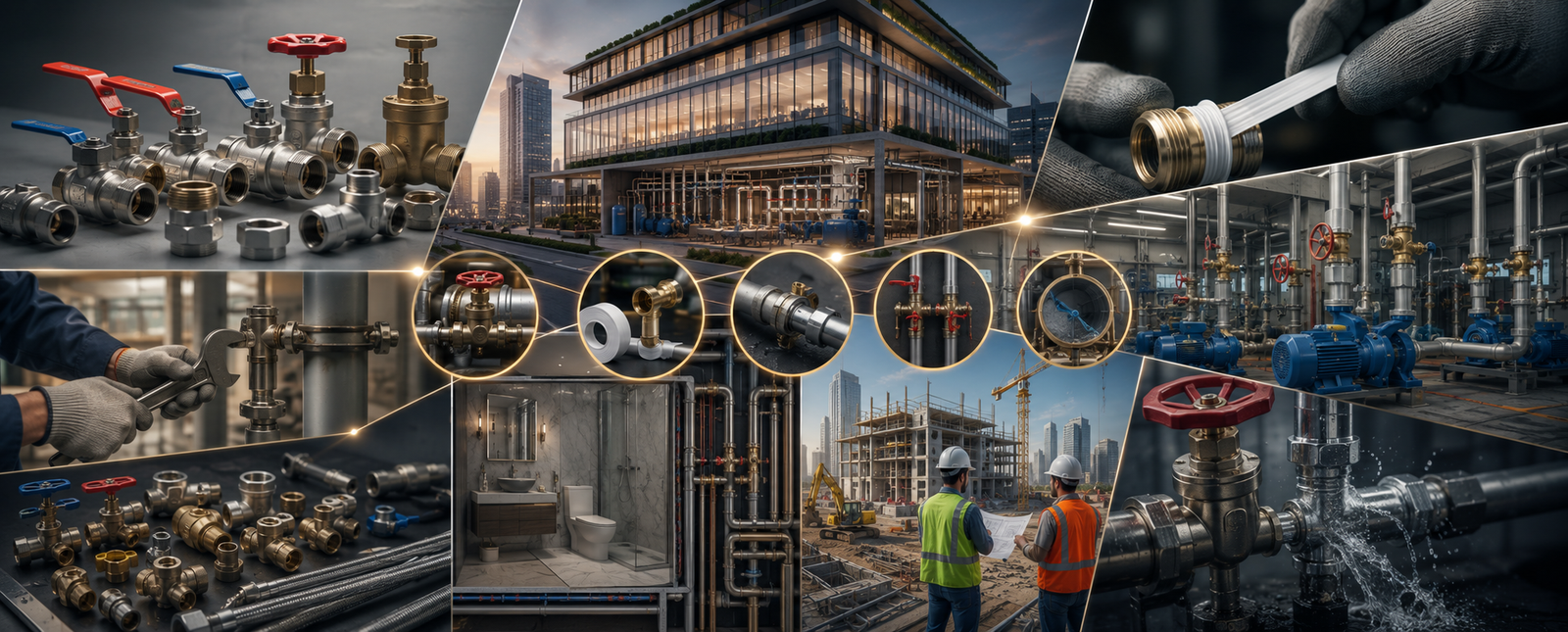
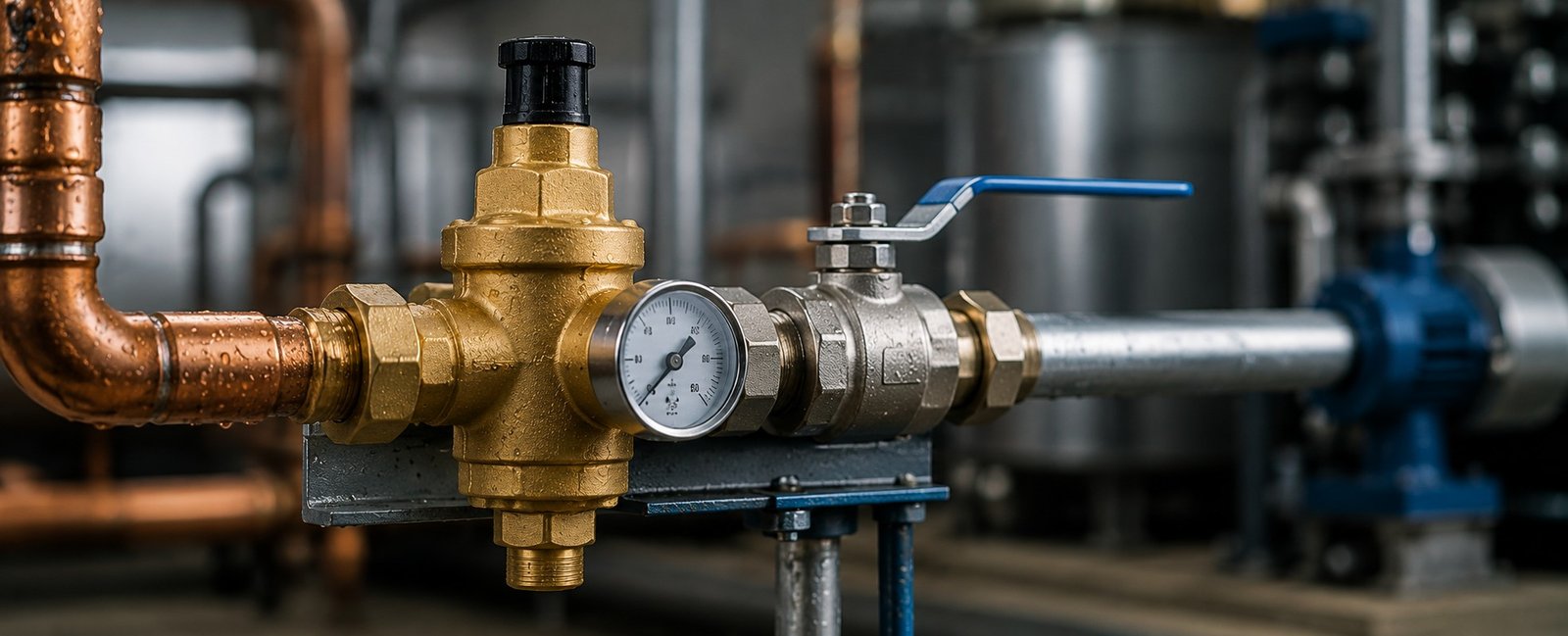
Ball valves are the right default for most commercial plumbing: quick quarter-turn shut-off, reliable sealing, low maintenance, and they handle frequent cycling without wearing out. If a valve is going to operate regularly daily, weekly, or as part of any automated system a ball valve is the right call.
Swing check valves exist for one job: preventing backflow. They don’t regulate flow, they don’t isolate lines , they stop water going backwards through a system. Using them for anything else creates problems.
Angle valves provide localized control at the fixture level , underneath a basin, behind a toilet, at a washing machine connection. They’re not system-level valves.
Gate valves belong on large-diameter mains that stay open almost permanently and only close for maintenance. Using them in daily-operation applications accelerates wear on the gate and seats, which eventually means sealing failure.
The practical rule: select valves by application, pressure rating, pipe size, flow requirements, and how often they’ll actually operate , not by what’s cheapest in the price list.
Mistake 2 : Getting Teflon Tape Wrong
This one is responsible for a significant number of slow leaks that don’t appear until months after handover. Teflon tape is one of the most straightforward plumbing materials there is, but it’s routinely misapplied in ways that defeat the entire purpose.
The four most common errors:
- Too little tape , insufficient wraps mean the threads don’t seal properly under pressure.
- Too much tape , excessive layering can actually prevent the connection from threading tightly enough, leaving micro gaps that weep.
- Wrong direction , the tape needs to wrap in the direction the fitting tightens. Wrap it the other way and the threading action peels it back rather than compressing it into the joint.
- Using tape that’s been left out and degraded , damaged or dried-out tape doesn’t compress and seal the way it should.
The correct process: clean the threads first, remove any debris or old sealant. Then wrap the Teflon tape clockwise (looking from the male thread end) for two to three passes, with consistent tension. Use quality tape rated for plumbing applications , thin plumber’s tape and PTFE tape for gas lines are different products and shouldn’t be substituted for each other.
Mistake 3 : Misaligned Pipes
Pipe alignment problems don’t always announce themselves during installation. The joint looks acceptable, the connection holds pressure during testing, and everyone moves on.
Then the building heats up, the pipes expand thermally, and the stress that was sitting quietly on the fitting or valve manifests as a crack or a joint failure.
Misaligned pipes put bending stress on connections they weren’t designed to absorb. Over time that stress concentrates at the weakest point , usually a fitting, a valve body, or a threaded joint. Proper alignment during installation costs nothing extra beyond attention to detail. Fixing misalignment after walls are closed costs a great deal.
Mistake 4 : Ignoring Pressure Ratings
Every valve, fitting, and accessory in a plumbing system has a rated maximum operating pressure. It’s not a suggestion , it’s the upper limit the product was engineered and tested to handle.
Installing components rated below your system’s operating pressure doesn’t usually cause immediate failure. It causes accelerated wear. Seals degrade faster. Ball seats erode. Threaded connections develop micro-leaks. The system technically works during commissioning and starts failing at eighteen months.
On commercial projects, always verify the system pressure specification before finalizing product selection. This applies to valves and flow control products, flexible hoses, heater hoses, and angle valves at fixture points. The pressure rating conversation needs to happen during procurement, not during a defects inspection.
Mistake 5 : Undersupporting Long Pipe Runs
Long horizontal pipe runs need support at regular intervals. Most installation codes specify the maximum unsupported span for different pipe materials and diameters. Those specs exist because unsupported pipe sags, and sagging pipe creates real problems.
What happens when pipe runs aren’t properly supported:
- The sag creates low points where sediment and air collect
- Joints at either end of a sagging run carry stress they weren’t designed for
- Thermal expansion has nowhere to go, so it forces itself through connections
- Vibration from pumps and flow pulsation amplifies instead of dampening
The fix is simple and inexpensive during construction. It becomes far more complicated once ceilings are in and the building is occupied.
Mistake 6 : Overtightening Connections
This one surprises people because the instinct during installation is to go tight. Tighter must mean more secure, right?
Not with plumbing components. Overtightening damages the components you’re trying to seal:
- Ball valves can have their body distorted, which binds the ball and causes operational problems
- Angle valves crack at the body threads when over-torqued , brass is strong but not infinitely so
- Bib cocks and small tap fittings crack at the inlet connection
- Flexible hoses kink or develop micro-tears at the compression fitting end
The deformation doesn’t always show up as an immediate leak. It shows up as a slow drip that starts after a few thermal cycles, when the compromised component finally gives.
Use calibrated torque tools where manufacturer specifications are available. Where they’re not, snug plus a quarter to half turn is the general principle for most brass and zinc plumbing components not snug plus maximum force.
Mistake 7 : Installing Valves Where Nobody Can Reach Them
A shut-off valve that can’t be isolated quickly isn’t a safety feature , it’s a liability.
On large commercial projects, time pressure during the building phase leads to valves being buried behind fixed walls or ceilings, in plant rooms with no clear access path, or in locations that technically meet the installation spec but practically require dismantling something else to get to.
This matters enormously when something goes wrong. A burst pipe, a failed fitting, a fixture that needs replacing , all of these require isolating supply. If the nearest valve is behind a plastered wall with no access panel, the response to a minor failure becomes a major one.
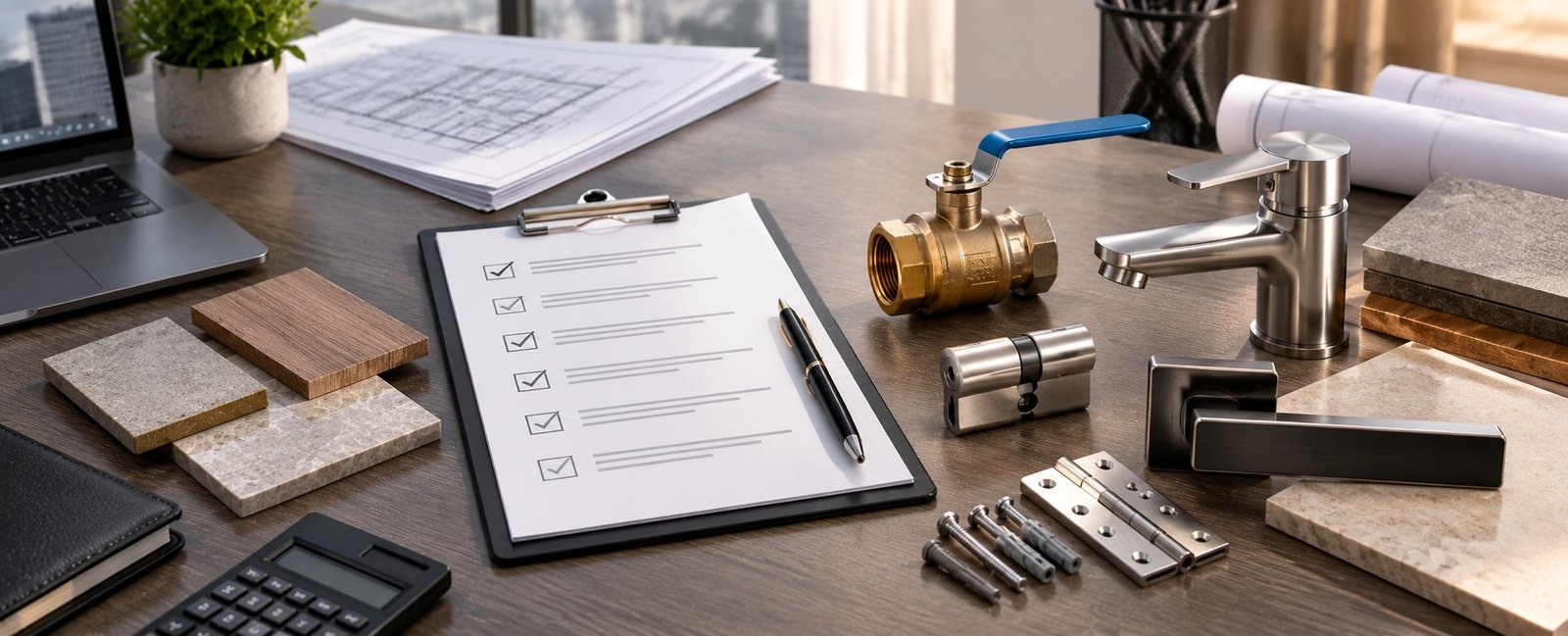
Plan valve locations during the design phase, not during installation. Every isolation point should be clearly identified on as-built drawings, accessible without removing finished building fabric, and on larger systems , labelled so that a facilities team who didn’t install the system can find and operate the right valve quickly.
Mistake 8 : Mixing Quality Levels Across the Same System
A plumbing system is only as reliable as its weakest component.
It’s a mistake procurement teams make when they specify quality valves but then source generic fittings, cheap flexible hoses, or unbranded Teflon tape to hit a budget number. The premium ball valve performs exactly as it should. The low-grade compression fitting on the connection to the fixture fails at eighteen months. The result is a leak in a system that was supposed to be reliably built.
Material compatibility matters too. Mixing metals that react with each other , copper and unprotected steel in the same run without dielectric fittings, for example , creates galvanic corrosion that degrades both components from the inside.
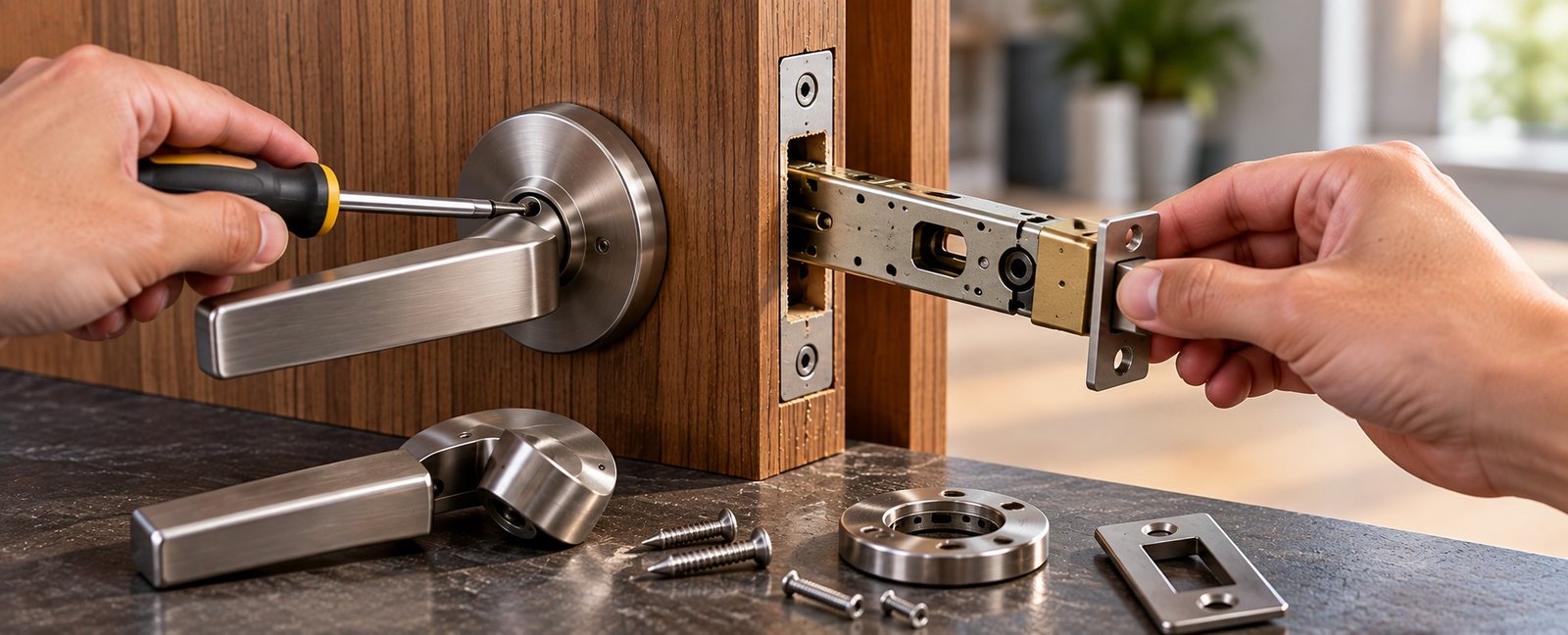
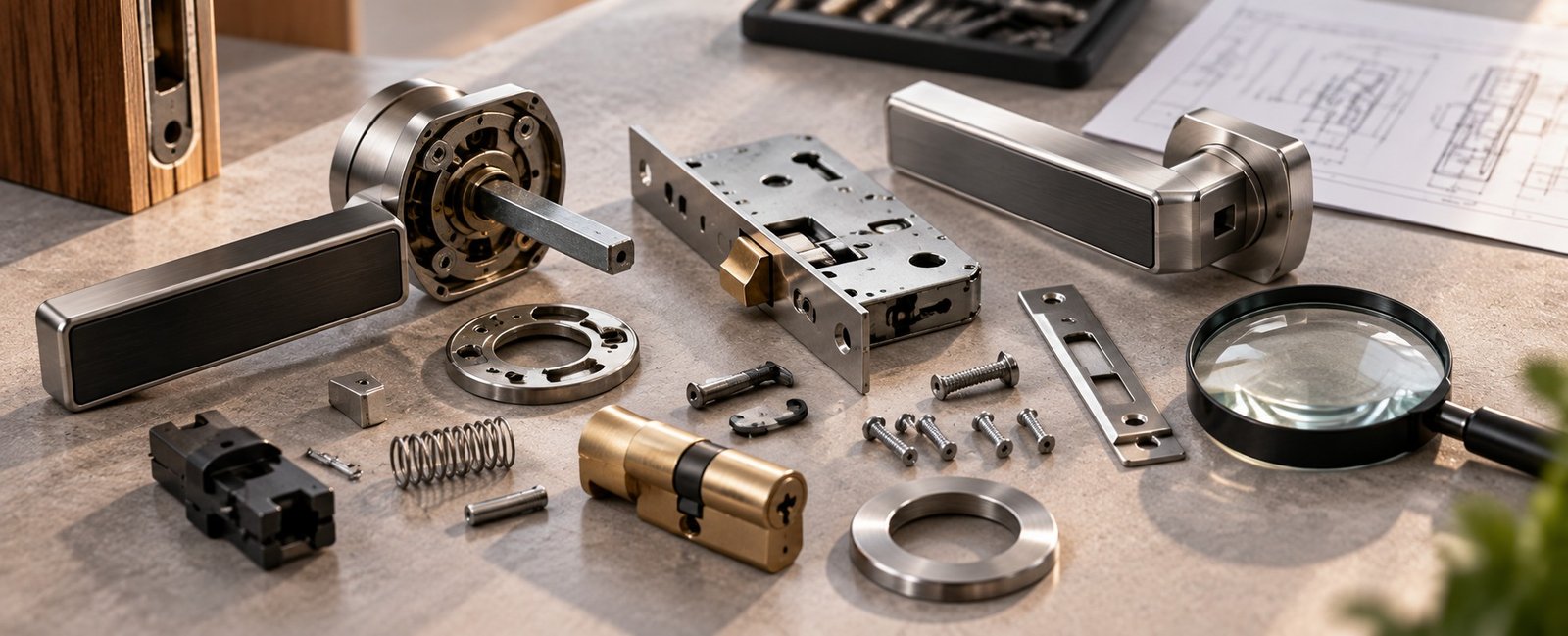
Source compatible products from trusted suppliers. On large projects, coordinating procurement through a supplier that covers multiple product categories reduces the risk of specification mismatches. Kanzotech Accessories supplies valves, tapes, hoses and pipes, and door hardware from a single source ,one consistent quality standard across the installation.
Mistake 9 : Skipping the Pressure Test Before Handover
Pressure testing before commissioning is not optional on a well-run commercial project. It’s the checkpoint that lets you catch installation errors while fixing them is still straightforward.
During a hydrostatic pressure test, the system is pressurised above its normal operating pressure and held there for a period. Any leak, loose connection, or defective fitting announces itself. The repair happens before the ceiling goes in, before the wall is plastered, before the building is occupied.
Skip the pressure test, and those same failures announce themselves differently as a leak report from a tenant, a water damage insurance claim, or a defects liability call six months after handover.
The test adds time to the programme. It costs considerably less than the alternative.
Mistake 10 : Specifying on Price Rather Than Performance
Commercial buildings have operating lives measured in decades. The plumbing system running through them is expected to perform for at least that long with manageable maintenance. Specifying the cheapest available option at procurement doesn’t reduce project cost , it defers it.
Low-quality components in a commercial installation tend to show similar patterns: seals that degrade faster under continuous use, threaded connections that don’t hold tolerance as well, surface finishes that corrode earlier in humid or coastal environments. The initial saving is real. The five-year replacement and maintenance cost is larger.
Quality building accessories specified correctly at the outset deliver better lifecycle value, fewer call-backs, and a building that performs the way it was designed to rather than one that needs attention every other year.
Why Quality Plumbing Accessories Reduce Long-Term Costs
The connection between component quality and building operating cost is direct and measurable, it just takes a few years to show up in the numbers.
Quality products reduce maintenance call frequency, extend the interval between replacements, and in commercial buildings, minimise the tenant disruption that comes with repair work on occupied floors. They also tend to specify and install more consistently because tolerances are tighter and dimensions are held to standard , which means fewer adjustment problems during installation and fewer callbacks after handover.
For project owners and developers who carry long-term maintenance obligations, the quality of the products installed at construction is a direct input to operating cost. It’s one of the more straightforward places to make a good decision.
Why Contractors and Procurement Teams Choose Kanzotech Accessories
Since 1999, Kanzotech Accessories has been supplying contractors, developers, MEP consultants, and procurement teams across Saudi Arabia with building accessories built for commercial and industrial applications.
The product range covers what most commercial projects actually need:
As part of the Kanzotech Group, projects that need water pumps alongside plumbing accessories can source both through Kanzotech Pumps, and bathroom fittings through Kanzotech Faucets , one group, one quality standard, simpler procurement across product categories.
Frequently Asked Questions
What’s the most common plumbing installation mistake on commercial projects?
The most common combination is incorrect valve selection alongside poor threaded connection sealing. Get the valve type wrong and it either wears out faster than it should or creates operational problems during maintenance. Get the Teflon tape wrong on a threaded connection and you have a slow leak behind a wall. Both are entirely avoidable.
Why does Teflon tape direction matter?
The tape needs to wrap in the same direction the fitting tightens. If it wraps the opposite way, threading the connection rolls the tape back rather than compressing it into the joint, and you end up with incomplete sealing. Clockwise wrapping from the male thread end is the standard for most plumbing connections.
Why are ball valves so common in commercial buildings?
Quarter-turn operation, reliable bi-directional sealing, low maintenance, and compatibility with pneumatic and electric actuators for automated systems. They handle frequent cycling without meaningful wear, which is exactly what most commercial building services applications require.
Should commercial plumbing systems always be pressure tested before commissioning?
Yes. Always. The test identifies leaks, loose connections, and installation defects before the building is occupied while fixing them is still straightforward. Skipping it means those same defects surface as tenant complaints, damage claims, or defects liability issues after handover.
How does component quality affect long-term building maintenance costs?
Directly. Lower-tolerance components wear faster under continuous use, need more frequent maintenance, and tend to fail earlier. Over a ten or twenty-year building operating life, the difference between specified-quality accessories and generic alternatives shows up clearly in maintenance records and replacement costs. The upfront saving rarely holds.
Where can I source plumbing accessories and building hardware in Saudi Arabia?
Kanzotech Accessories supplies valves, tapes, hoses, door hardware, and building accessories for residential, commercial, and industrial projects across Saudi Arabia. Contact the team for bulk supply enquiries or project-specific RFQ support.
Conclusion
Plumbing installation mistakes aren’t usually dramatic. They’re small decisions the wrong valve type, tape wrapped the wrong way, a fitting over-torqued by 20% that sit quietly inside walls and ceilings until the building is occupied and they become expensive.
The ten mistakes in this guide are all avoidable. They require attention to specification, the right materials, proper technique, and a pressure test before you hand the keys over. None of it is complicated. It just has to happen consistently on every project, not just the ones with the closest supervision.
Ready to Source Plumbing Accessories for Your Next Project?
Whether you’re pricing a commercial development, specifying for an industrial facility, or procuring materials for a residential tower, Kanzotech Accessories supplies dependable valves, tapes, hoses, and building hardware for projects across Saudi Arabia.
Contact our team to request a quotation, or explore the full product range to find the right accessories for your application.



 September 30, 2026
 HYZAM KENZ



Comments
No comments yet. Be the first to comment!