Introduction
Door handle height looks like a minor installation detail right up until a project fails an accessibility inspection over it. In Saudi Arabia, hardware mounting height on accessible routes isn’t a design preference left to a contractor’s judgment, it’s a specific, code-mandated requirement under the Saudi Building Code, and getting it wrong is one of the more common, entirely avoidable reasons a project gets flagged during final inspection.
This guide covers what Saudi Building Code accessibility provisions actually require for door handle height, why the requirement is a range rather than a single number, and what it means for how door hardware should be specified from the start.
Why Door Handle Height Isn’t Just an Installation Preference
Why it matters: Saudi Building Code SBC 201, the Kingdom’s general building code, includes dedicated sections covering accessible means of egress and door hardware specifically, Section 1009 and Section 1010 respectively, mirroring the same accessibility framework used in the International Building Code, which SBC 201 is structured around. Compliance with these provisions is mandatory for construction projects across the Kingdom, public and private, and accessibility requirements are checked as part of standard inspection and approval processes, not treated as optional best practice.
The Standard Saudi Building Codes Are Built On
Why it matters: SBC 201’s accessibility provisions are built around the same underlying accessibility standard used internationally, ICC A117.1, Accessible and Usable Buildings and Facilities, which is referenced by the International Building Code and forms the technical basis for door hardware accessibility requirements. Understanding this connection matters practically: the same well-documented height ranges and hardware requirements used across IBC-based jurisdictions apply directly to how SBC 201’s door hardware provisions are structured and enforced in Saudi Arabia.
The Actual Height Requirement
Why it matters: This is the specific figure worth knowing precisely, since it’s the number an inspector will actually check.
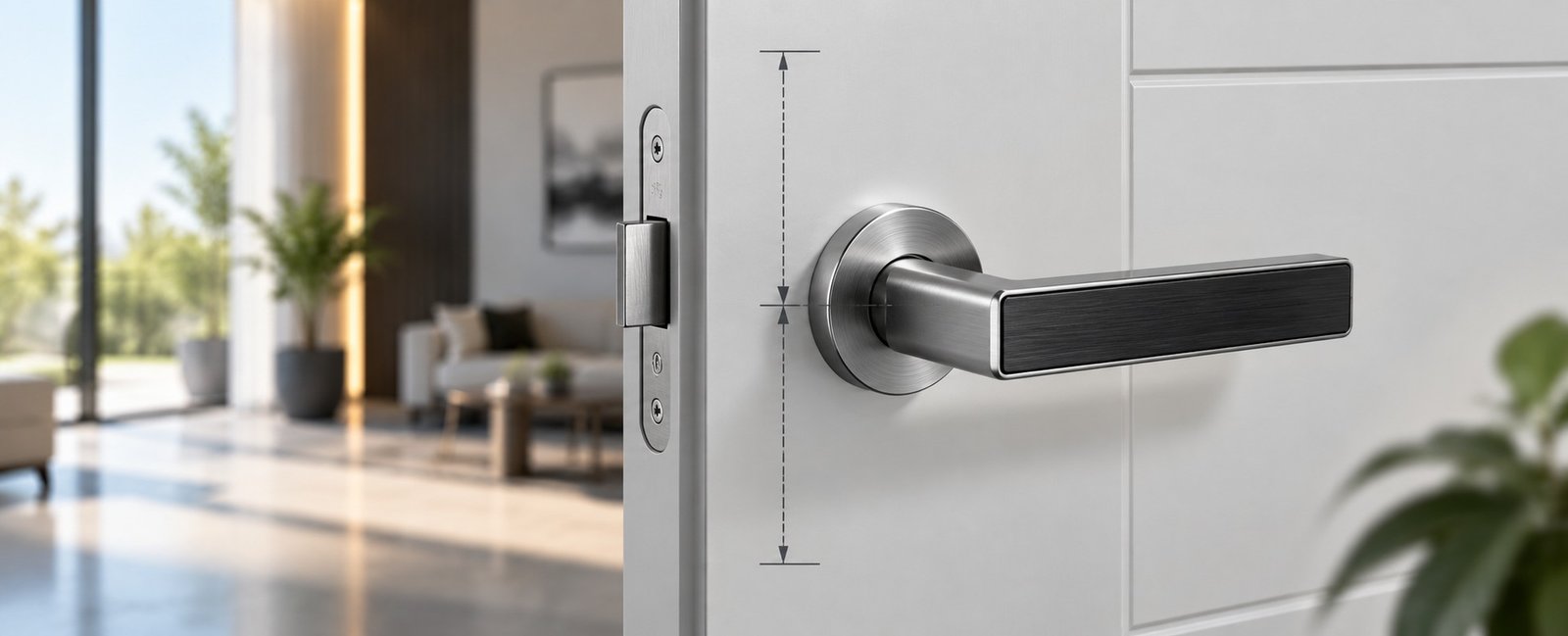
Under the accessibility standard SBC 201 is built around, door handles, pulls, latches, locks, and other operating hardware must be installed no lower than 864 millimetres (34 inches) and no higher than 1,219 millimetres (48 inches) above the finished floor. This range applies to any door hardware intended for normal passage use on an accessible route, not just doors specifically designated for wheelchair users, meaning it functions as a general design standard across most doors in a building, not an exception applied only in specific accessible units.
Practical tip: Given how directly this figure gets checked during inspection, it’s worth building 864mm to 1,219mm into standard architectural and MEP specification templates as a default, rather than treating it as a special accessibility callout applied only to certain doors.
Why the Range, Not a Single Number
Why it matters: The reasoning behind a range, rather than one fixed height, reflects genuine accessibility logic worth understanding, not an arbitrary tolerance.
A single fixed height would work well for some users and poorly for others. The 864mm to 1,219mm range accommodates the practical reach range of wheelchair users, people of varying height, and users with limited mobility or dexterity, without requiring a separate, non-standard hardware height for different populations. Specifying hardware height within this range, rather than defaulting to whatever height feels visually standard, is what actually makes a door usable across the widest realistic range of building occupants.
It’s Not Just Height: Operating Force and Grip Type Matter Too
Why it matters: Height compliance alone doesn’t satisfy accessibility requirements if the hardware itself demands a grip or force level that excludes the same users the height range is meant to accommodate.
- Operating force is limited to 5 pounds-force (22.2 newtons) maximum for interior doors, and 10 pounds-force (44.4 newtons) maximum for exterior doors, under the same accessibility standard.
- Grip type matters directly. Hardware must not require tight grasping, pinching, or twisting of the wrist to operate, which is precisely why lever-style handles are specified over round door knobs on accessible routes, a round knob demands exactly the kind of grip and wrist rotation the standard is designed to avoid.
Common mistake: Specifying a compliant handle height but pairing it with a round knob or a stiff, high-force latch mechanism, satisfying the letter of the height requirement while missing the underlying accessibility intent entirely.
Exceptions Worth Knowing
Why it matters: A small number of specific exceptions apply, and knowing them avoids both over- and under-specifying hardware unnecessarily.
- Security-only locks, not used for normal day-to-day operation, are permitted at any height, since they aren’t part of the standard passage hardware a user needs to operate the door in typical use.
- Pool, spa, and hot tub barrier gates are permitted a higher allowance for self-latching release devices, given the specific child-safety rationale behind those barriers overriding the standard reach-range logic.
What This Means for Door Hardware Selection
Why it matters: Compliance starts with the hardware itself, not just the installation height. As covered in our guide on door hardware bulk sourcing, specifying consistent, quality hardware across a project simplifies both compliance and long-term maintenance.
- Choose lever-style handles over round knobs for any door on an accessible route, covering the overwhelming majority of doors in most commercial and residential projects.
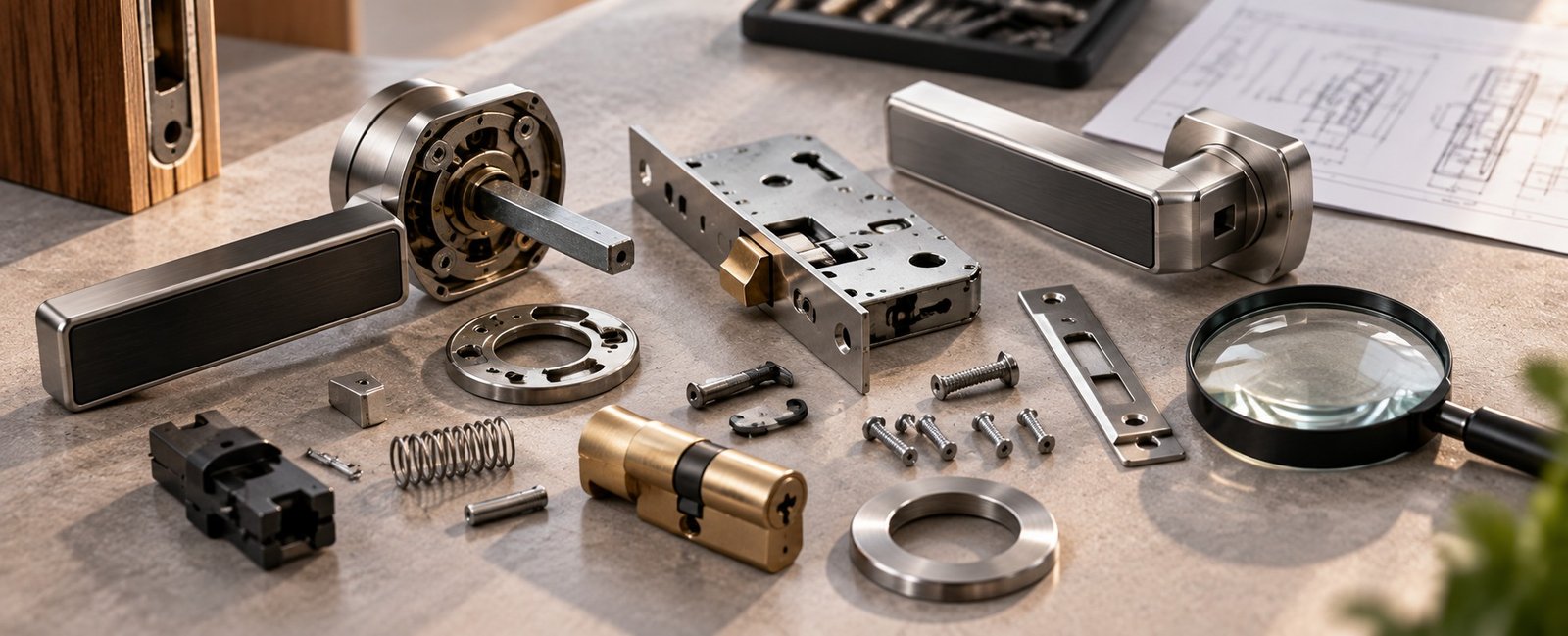
- Confirm rim locks and complete lock sets specify a strike and handle configuration compatible with the required mounting height range. Kanzotech’s rim lock range and door lock complete sets are suited to standard accessible mounting configurations.
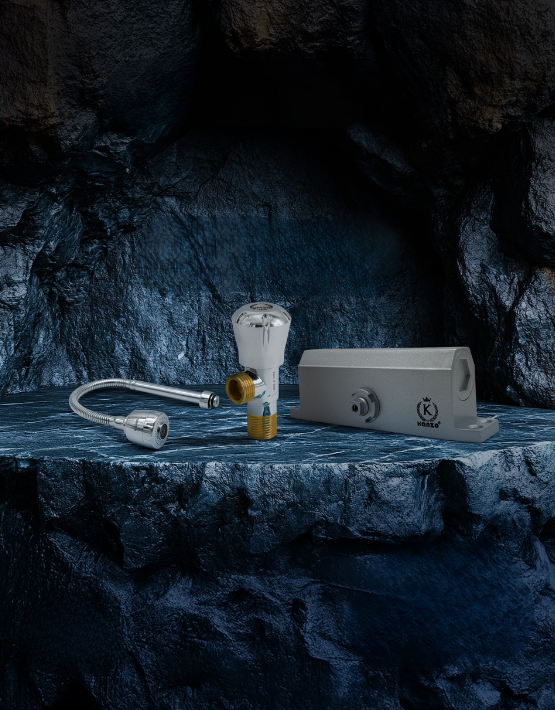
- Confirm door closer force settings align with the same accessibility standard, since closer resistance interacts directly with the same operating force limits applied to handles and latches. Our door closer range should be specified with this force limit in mind for any accessible route application.
Practical Compliance Checklist
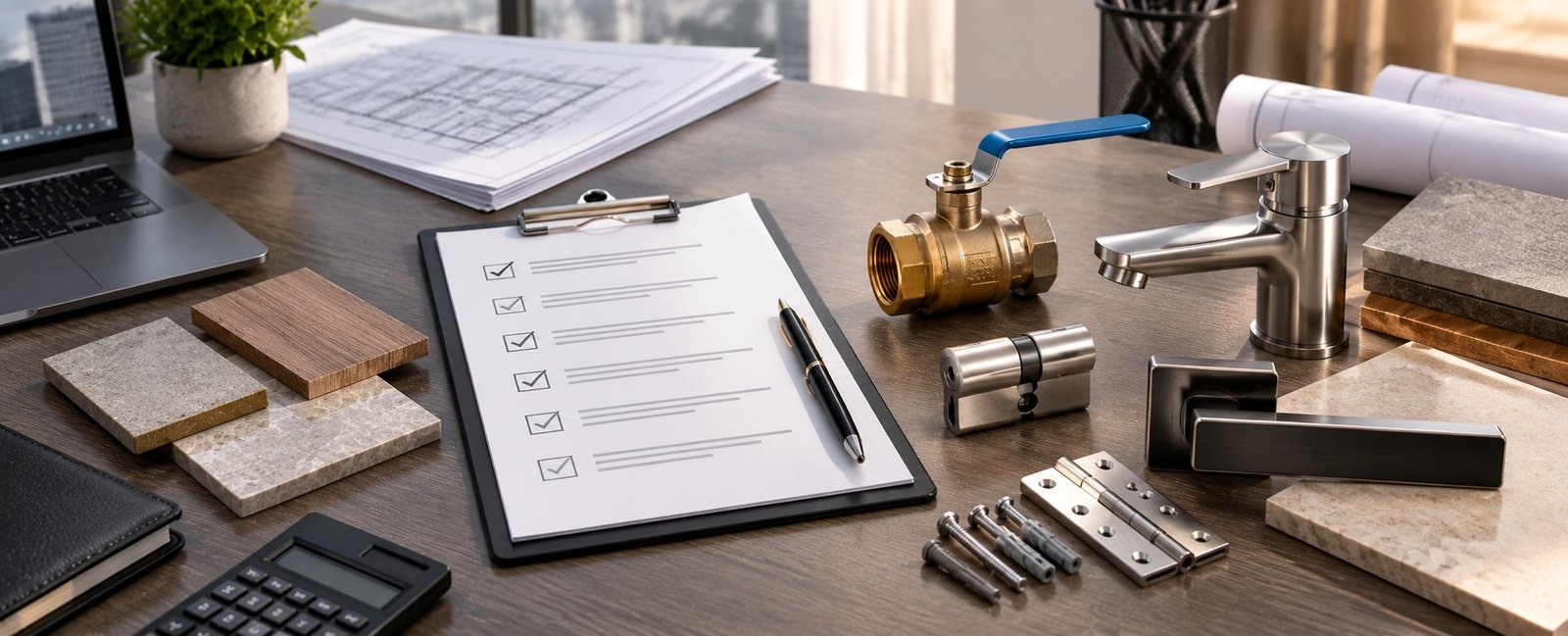
- Specify door handle, pull, latch, and lock mounting height between 864mm and 1,219mm above finished floor as a project-wide default.
- Choose lever-style hardware over round knobs on any door along an accessible route.
- Confirm operating force stays within 5 lbf (22.2N) for interior doors and 10 lbf (44.4N) for exterior doors.
- Apply the security-only lock exception narrowly, only to hardware genuinely not used for normal passage.
- Confirm door closer force settings don’t push total opening force beyond the same accessibility limits.
- Build these figures into standard specification templates rather than treating them as a special callout for isolated accessible units.
Conclusion
Door handle height compliance in Saudi Arabia isn’t a matter of design preference, it’s a specific, code-mandated requirement, 864mm to 1,219mm above finished floor, paired with lever-style hardware and defined operating force limits, all built around the same accessibility standard underpinning SBC 201’s door hardware provisions. Getting this right from the specification stage, rather than discovering it during a failed inspection, is a simple, low-cost decision that avoids one of the more common and entirely avoidable compliance gaps in Saudi construction projects.
Your next steps:
- Build the 864mm to 1,219mm handle height range into your standard door hardware specifications.
- Confirm lever-style hardware and compliant operating force across all doors on accessible routes.
- Explore Kanzotech’s door hardware and locking system range for hardware suited to accessible mounting configurations.
Specifying or sourcing accessibility-compliant door hardware for a project in Saudi Arabia? Contact Kanzotech Accessories for technical guidance and bulk pricing.



 September 19, 2026
 HYZAM KENZ




Comments
No comments yet. Be the first to comment!