Introduction
It’s easy to assume valves fall under the same water efficiency labeling requirements as faucets in Saudi Arabia, and that assumption leads to a real specification mistake. Standard shutoff, ball, and check valves aren’t individually graded or labeled the way faucets are. Their contribution to water efficiency is real, but it works differently, through pressure management, leak prevention, and backflow control, rather than a per-model consumption rating.
This guide, written as the companion piece to our faucet-specific guide on what Saudi consultants need to know about faucets and water efficiency, covers what’s actually regulated for valve-type products, where general valves fall under a different compliance framework entirely, and what to actually specify to support a project’s water efficiency goals correctly.
Why Valves Matter for Water Efficiency, Even Without a Product Label
Why it matters: Unlike faucets, which carry a mandatory, graded SASO Water Efficiency Label tied to a specific product model, most valves contribute to a building’s water efficiency performance functionally rather than through an individual consumption rating. A well-specified valve system reduces waste through pressure control, leak prevention, and backflow protection, contributions that matter just as much to a project’s actual water consumption, even though they aren’t captured on a label the way a faucet’s flow rate is.
What’s Actually Covered Under SASO’s Water Efficiency Labeling for Valve-Type Products
Why it matters: SASO’s Technical Regulation for Water Rationalization Tools does include one specific valve-adjacent category directly, the water flow regulator, alongside faucets, showers, and toilets in its labeling scope. This is a specific type of flow-restricting device, not a blanket requirement covering every valve type.
What this means for consultants: If a product is genuinely a flow regulator, a device specifically designed to restrict and meter flow rate for water conservation purposes, it likely falls under the same mandatory labeling requirement as faucets. Standard angle valves, ball valves, and check valves, used for on/off control, isolation, and backflow prevention rather than flow restriction, generally don’t fall under this specific labeling scheme.
Where General Valves Actually Fall Under Regulation
Why it matters: This is the distinction that matters most for accurate specification. General valves are regulated, but under a different framework than faucets.
As covered in our guide on how to choose a valve manufacturer in Saudi Arabia, valves used in water supply networks fall under SASO’s broader technical regulations for pipes and metals used in construction, processed through the SABER platform with a Certificate of Conformity, separate from the water efficiency labeling scheme specific to faucets and flow regulators. For valves with pressure-retaining components, additional compliance with Saudi Arabia’s pressure equipment regulations may apply depending on the specific valve type and application.
What to specify: Confirm valve compliance against the correct regulatory framework, general building materials and pressure equipment standards, rather than assuming a water efficiency label applies the same way it does to faucets.
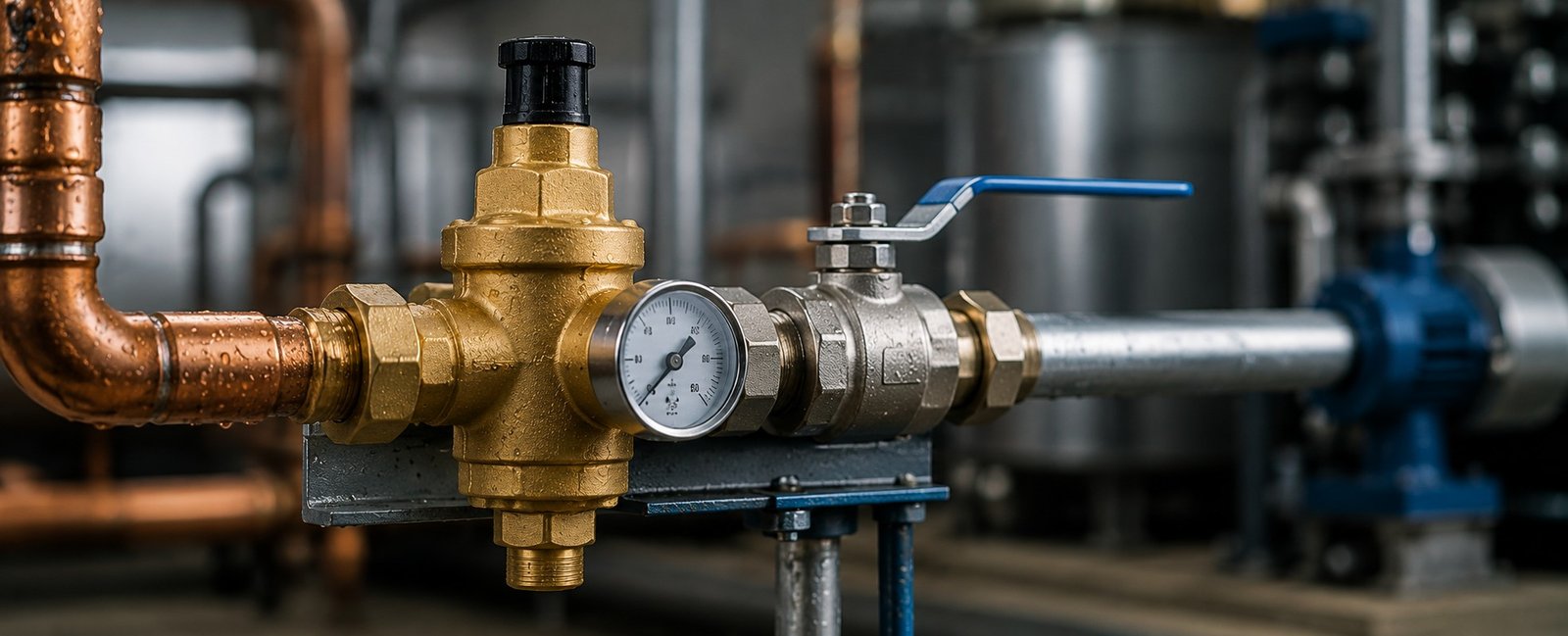
Pressure Reducing Valves: A Direct, Measurable Water Efficiency Role
Why it matters: This is where valves genuinely earn their place in a water efficiency conversation, not through a consumption label, but through system-level pressure management that directly protects both water use and downstream fixture performance.
Pressure reducing valves, commonly specified against the EN 1567 standard for water supply applications, prevent excess system pressure that leads directly to water waste, unnecessary flow at fixtures beyond what’s actually needed, and accelerated wear on downstream components. This connects directly to a detail covered in our faucet-specific guide: Saudi faucet testing evaluates performance at pressures up to 4.5 bar, and a system running pressure meaningfully above what fixtures are designed and tested for both wastes water and risks premature fixture failure. A correctly specified pressure reducing valve keeps the system within the range faucets are actually built and certified to perform at.
What to specify: Pressure reducing valves sized and set to keep system pressure within the operating range your specified faucets and fixtures are actually rated for, treating this as a genuine water efficiency decision, not just a mechanical protection measure.
Backflow Prevention and Leak Control: The Water Efficiency Role Rarely Discussed
Why it matters: Check valves and backflow prevention devices don’t reduce flow rate the way a faucet aerator does, but they prevent a different, often larger source of water waste, contamination requiring water to be discharged rather than used, and the compounding loss from valve failures that go undetected.
A poor-quality valve that develops a slow leak wastes water continuously, often for extended periods before it’s noticed, particularly in less frequently inspected areas of a building or site. Specifying quality check valves and backflow preventers, built to hold seal reliably over years of service rather than the minimum required to pass initial testing, is a genuine, if less visible, water efficiency decision.
What to specify: Backflow prevention and check valves selected on build quality and long-term seal reliability, not just minimum compliance, particularly at points in a system where a slow failure would be difficult to detect quickly.
How This Ties to Mostadam
Why it matters: As covered in our guide to Mostadam and Saudi green building standards, water efficiency is an explicitly weighted scoring category, rewarding reduced consumption, smart irrigation, and recycled or greywater use. Valves play a direct, functional role in each of these: pressure reducing valves supporting reduced consumption, flow control valves enabling smart irrigation zoning, and check valves protecting the integrity of greywater and recycled water systems from contamination or backflow.
What to specify: Where a project is targeting Mostadam certification, document the specific role valve selection plays in supporting the project’s water efficiency credit strategy, rather than treating valve specification as a separate, unrelated line item from the project’s sustainability goals.
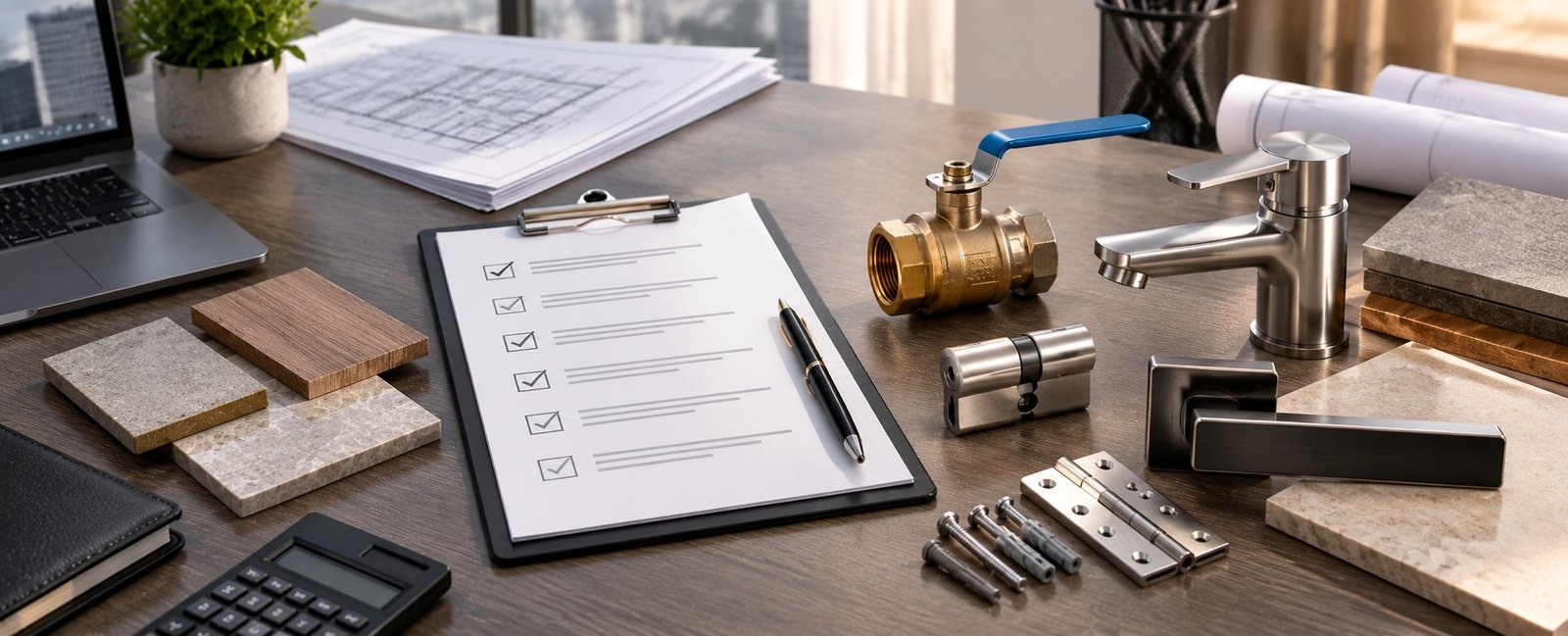
What Consultants Should Actually Specify
- Don’t assume standard valves require a SASO Water Efficiency Label. Confirm whether a specific product is genuinely a flow regulator falling under that scope, or a standard valve regulated under building materials and pressure equipment standards instead.
- Specify pressure reducing valves explicitly where system pressure could otherwise exceed the tested operating range of downstream faucets and fixtures.
- Reference EN 1567 or the applicable pressure equipment standard directly in specification documents for pressure reducing and pressure-retaining valve components.
- Prioritize build quality on check valves and backflow preventers, treating long-term seal reliability as a genuine water efficiency factor, not just a compliance checkbox.
- Document valve selection’s role in Mostadam water efficiency credits explicitly, connecting pressure management, irrigation control, and greywater protection to the project’s certification strategy.
Conclusion
Valves contribute to water efficiency in Saudi Arabia through a fundamentally different mechanism than faucets do, system-level pressure management, leak prevention, and backflow protection, rather than an individually graded consumption label. Understanding this distinction matters for accurate specification: knowing which valve-type products genuinely fall under SASO’s water efficiency labeling scope, which fall under general building materials and pressure equipment standards instead, and how pressure reducing valves directly protect the performance of the water-efficient faucets specified alongside them, gives consultants a complete picture rather than an incomplete assumption carried over from faucet specification.
Your next steps:
- Confirm which valve-type products in your project genuinely fall under SASO’s water efficiency labeling scope versus general building materials regulation.
- Specify pressure reducing valves to protect the operating range your certified faucets and fixtures are actually rated for.
- Explore Kanzotech’s valves and flow control range for quality-built valves supporting your project’s water efficiency and Mostadam certification goals.
Specifying valves for a project with water efficiency or Mostadam certification requirements? Contact Kanzotech Accessories for technical guidance and documentation support.



 September 30, 2026
 HYZAM KENZ



Comments
No comments yet. Be the first to comment!