Introduction
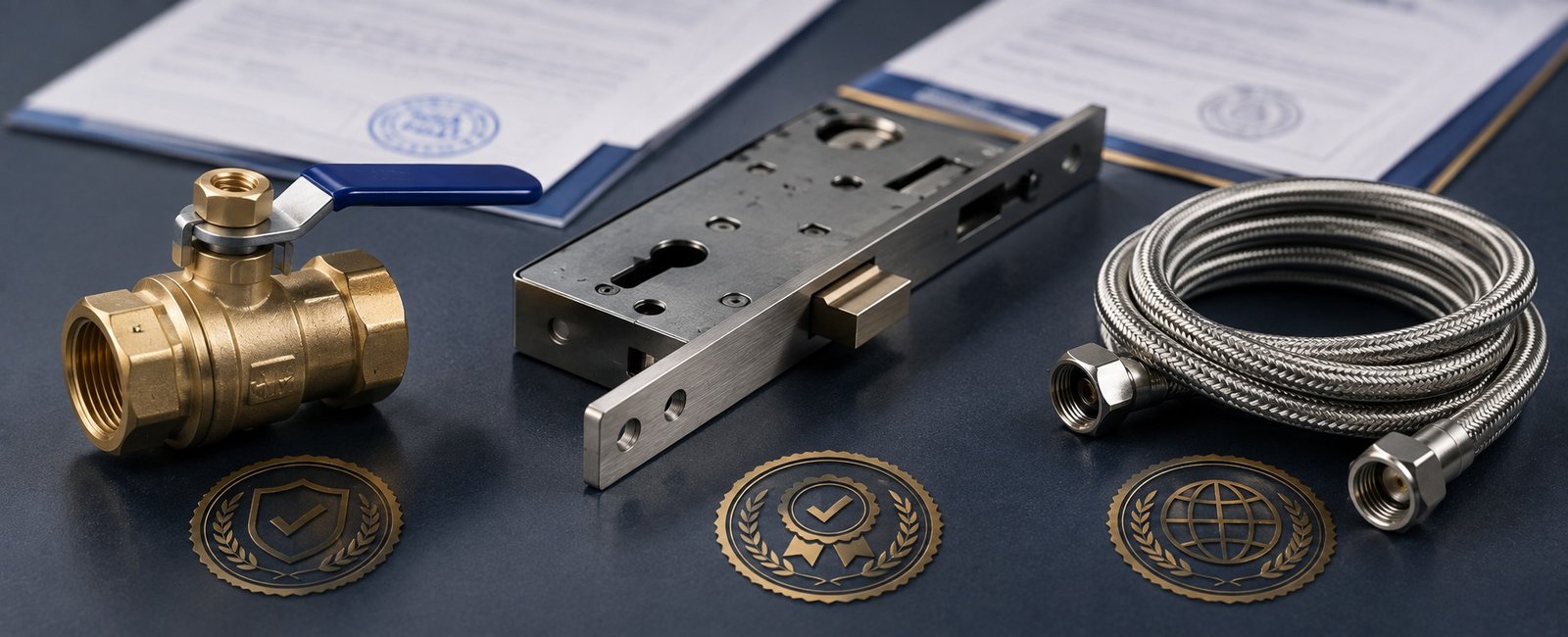
Most building hardware suppliers put certification logos somewhere on their website, usually in a small row near the footer, easy to scroll past without a second thought. But for anyone actually responsible for sourcing valves, door hardware, tapes, or hoses for a real project, those three letters, SASO, ISO, and IEC, aren’t decoration. They represent specific, verifiable standards that directly affect whether a product clears customs, performs safely, and holds up under real use.
This guide breaks down what each of these certifications actually means, what they verify, and why all three matter together when you’re sourcing building hardware in Saudi Arabia, rather than treating them as one generic “quality” stamp.
The Short Answer
SASO is Saudi Arabia’s own national standards and conformity system, and it’s the one that directly governs whether a product can legally enter and be sold in the Kingdom. ISO is an international standard, most commonly referring to quality management systems like ISO 9001, that verifies a manufacturer’s production and quality control processes are consistent and documented. IEC covers international electrical and electromechanical safety standards, relevant wherever hardware includes electrical or electromechanical components.
Why it matters: Each certification verifies a different thing. SASO confirms the product itself is legally compliant and safe for the Saudi market. ISO confirms the manufacturer’s processes are consistent and controlled. IEC confirms electrical and electromechanical safety where relevant. A supplier with only one of the three has only told you part of the story.
SASO: What It Actually Requires
Why it matters: SASO, the Saudi Standards, Metrology and Quality Organization, is the national body responsible for developing and enforcing technical regulations for products sold in Saudi Arabia. It’s not optional paperwork, it’s the mechanism that determines whether a regulated product can legally clear customs and reach a construction site at all.
For building materials specifically, SASO has published technical regulations covering several categories directly relevant to plumbing and hardware sourcing, including metals and alloys used in construction, pipes used in water, electricity, and gas networks, and bricks, tiles, ceramics, and sanitary ware. Products in these categories are typically processed through SABER, the Saudi Product Safety Program, where importers register products and obtain a Certificate of Conformity (CoC) before customs clearance.
What to look for specifically:
- A valid Certificate of Conformity (CoC) issued through the SABER platform for regulated product categories.
- The Saudi Quality Mark (SQM), awarded to products that demonstrate ongoing compliance through factory inspections and product testing, not just a one-time check.
- Test reports from accredited laboratories, since SASO regulations require documented evidence a product meets Saudi-specific performance requirements, including resistance to the Kingdom’s extreme heat and environmental conditions.
Common mistake: Assuming a product is SASO compliant simply because a supplier says so, without asking to see the actual CoC or checking SABER directly.
ISO: What It Actually Means
Why it matters: Unlike SASO, ISO certification isn’t primarily about a single product, it’s about the manufacturing process behind every product a company makes. ISO 9001, the most common certification referenced in manufacturing, verifies that a company has documented, consistent quality management systems in place across production, not just for one batch, but as an ongoing standard.
What ISO certification actually tells a buyer:
- The manufacturer has documented processes for quality control, not ad hoc or inconsistent checks.
- Production consistency is independently audited on an ongoing basis, not self-declared.
- Issues are tracked and addressed through a formal system, rather than handled case by case.
Practical tip: ISO certification is a strong signal of manufacturing discipline, but it’s worth pairing with SASO verification specifically for the Saudi market, since ISO alone doesn’t confirm a product meets Saudi-specific regulatory requirements.
IEC: What It Actually Means
Why it matters: The International Electrotechnical Commission (IEC) develops international standards specifically for electrical, electronic, and related technologies. For building hardware, this becomes relevant wherever a product includes electrical or electromechanical components, for example, certain door hardware systems with electronic locking mechanisms, rather than purely mechanical products like a standard ball valve.
What to check: If you’re sourcing hardware with any electrical or electronic component, confirm IEC compliance specifically for that component, rather than assuming a general certification claim automatically covers electrical safety.
Why These Three Certifications Matter Together
Why it matters: No single certification covers everything a procurement decision actually needs to verify. Relying on just one leaves gaps.

A supplier who can speak to all three, with actual documentation rather than just logos, is demonstrating something a single certification can’t: that the product is both legally compliant for Saudi Arabia and consistently manufactured to a verified standard.
What Happens When You Buy Uncertified Building Hardware
Why it matters: This isn’t a theoretical risk. Uncertified or improperly certified building hardware creates real, practical problems.
- Customs and import delays. Regulated products without a valid SASO Certificate of Conformity can be held or rejected at the border, directly delaying project timelines.
- Failed site inspections. Projects with formal inspection requirements may reject installed materials that lack proper certification documentation, requiring costly rework.
- Safety and liability exposure. Uncertified valves, hardware, or fittings that fail under real conditions create direct safety risks and potential liability, particularly on commercial or industrial projects.
- Warranty and after-sales complications. Products without proper certification and documentation often come with weaker or unclear warranty terms, leaving buyers exposed if something fails after installation.
How to Verify a Supplier’s Certification Claims
Why it matters: A logo on a website isn’t proof. Verifying certification claims directly protects you from the risks above before they become a problem on site.
- Ask for the actual documentation, the Certificate of Conformity, ISO certificate, or relevant IEC compliance documents, not just a verbal or marketing claim.
- Check the SABER platform directly for SASO-regulated products to confirm current compliance status.
- Ask which specific ISO standard applies. “ISO certified” without specifying which standard, such as ISO 9001, is vague enough to be meaningless on its own.
- Confirm certification is current, not expired or pending renewal, since certifications are typically time-bound and require ongoing compliance, not a one-time achievement.
As covered in more depth in our guide on how to choose a valve manufacturer in Saudi Arabia, asking direct, specific questions rather than accepting general claims is the single most effective way to separate genuinely compliant suppliers from those simply displaying logos.
What This Means When Sourcing Valves, Door Hardware, Tapes, and Hoses
Why it matters: Certification requirements aren’t uniform across every product category, understanding what applies to what you’re actually buying matters.
- Valves and flow control products, like angle valves, ball valves, and swing check valves, fall under SASO’s technical regulations for pipes and metals used in water networks, making SASO compliance especially important here.
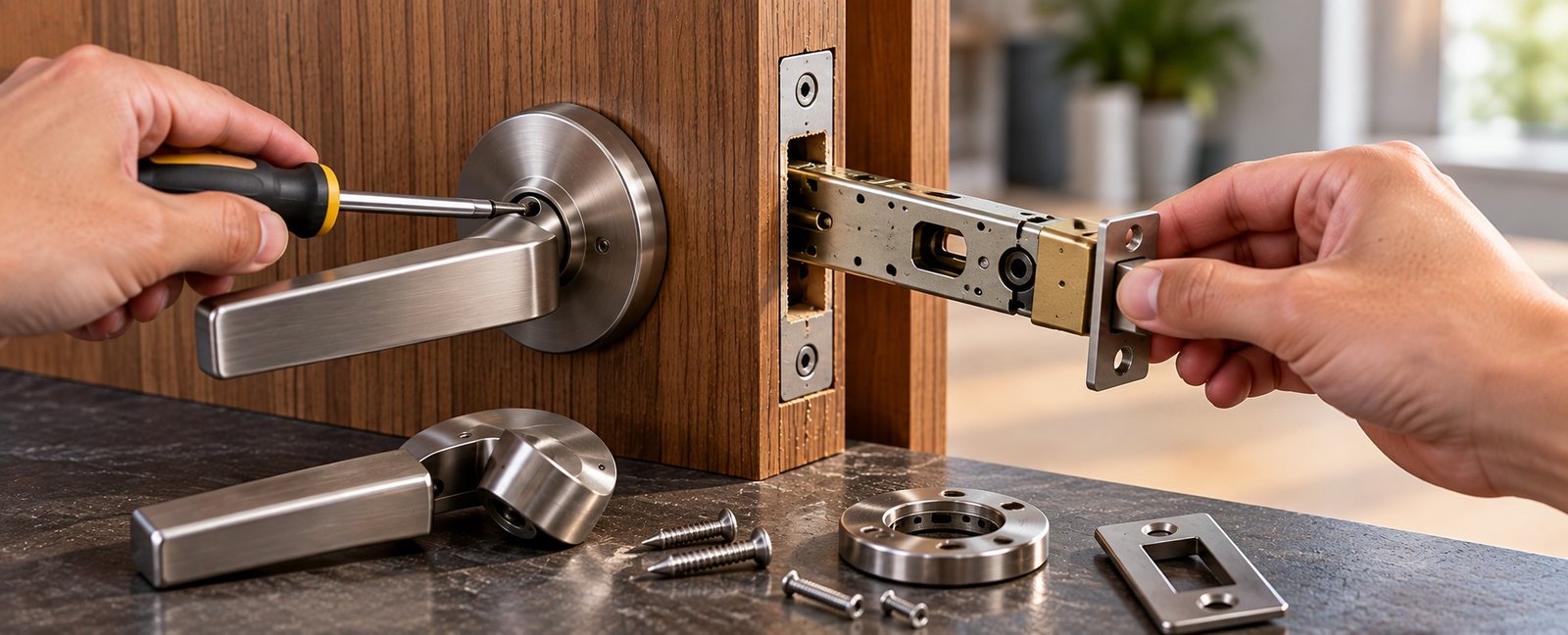
- Door hardware and locking systems, such as door closers and rim locks, warrant IEC consideration specifically where electronic or electromechanical components are involved.
- Tapes and sealants, like Teflon tape, are lower risk from a safety certification standpoint, but ISO-certified manufacturing still matters for consistent product performance and sealing reliability.
- Hoses and pipes, including heater hoses, fall under the same water and utility network regulations that apply to valves, making SASO documentation just as relevant here.
Frequently Asked Questions
- What’s the main difference between SASO, ISO, and IEC certification? SASO is Saudi Arabia’s own national compliance system for products sold in the Kingdom, ISO verifies a manufacturer’s broader quality management and production consistency, and IEC covers international electrical and electromechanical safety standards.
- Is ISO certification enough on its own for building hardware in Saudi Arabia? No. ISO confirms manufacturing process consistency, but it doesn’t verify Saudi-specific regulatory compliance. SASO certification is specifically required for many regulated building material categories entering the Saudi market.
- How can I verify a supplier’s SASO certification is genuine? Ask for the actual Certificate of Conformity and check the product’s compliance status directly through the SABER platform, rather than relying on a supplier’s claim alone.
- Do all building hardware products need IEC certification? No. IEC certification is relevant specifically for products with electrical or electromechanical components. Purely mechanical products, like standard valves or manual door hardware, don’t require it in the same way.
- What happens if I install uncertified valves or hardware on a commercial project? You risk failed site inspections, required rework, potential safety liability, and complications with insurance or warranty claims if the product fails after installation.
- Why do manufacturers pursue all three certifications instead of just one? Each certification verifies a different aspect of quality and compliance. Together, they give buyers confidence that a product is legally compliant for Saudi Arabia, consistently manufactured, and safe across its relevant technical requirements.
- Does SASO certification expire? Yes. SASO compliance, including the Certificate of Conformity and Saudi Quality Mark, requires ongoing compliance through inspections and testing, not a one-time certification that lasts indefinitely.
- Where can I check if a product is properly registered under SASO? The SABER platform, Saudi Customs and SASO’s linked conformity assessment system, allows verification of a regulated product’s current compliance status.
Conclusion
SASO, ISO, and IEC certifications each verify something different, and understanding that distinction turns a trust badge into something you can actually act on. SASO confirms legal compliance for the Saudi market, ISO confirms consistent manufacturing quality, and IEC confirms electrical safety where relevant. Asking suppliers for real documentation behind each of these, rather than accepting logos at face value, is the single most effective way to protect a project from delays, failed inspections, and safety risk down the line.
Your next steps:
- Request actual certification documentation from any building hardware supplier, not just a claim.
- Verify SASO compliance directly through the SABER platform for regulated products.
- Confirm which specific ISO standard, and which IEC requirements, actually apply to what you’re buying.
- Explore Kanzotech’s SASO, ISO, and IEC-certified product range, including valves, door hardware, tapes, and hoses.
Sourcing certified building hardware for a project in Saudi Arabia? Contact Kanzotech Accessories to request documentation and a bulk quotation.



 September 30, 2026
 HYZAM KENZ





Comments
No comments yet. Be the first to comment!