Introduction
Door locks are one of those building components that don’t get much attention until they cause a problem. A valve that fails shows up immediately as a leak. A pump that fails shows up as lost pressure. A door lock that was specified wrong shows up as a lock that stiffens up after six months, or a handle set that starts wobbling in year two, or worst case a security failure at a main entrance.
The most common reason for door lock problems in commercial buildings isn’t product quality. It’s a specification mismatch. Someone chose a lock designed for a home and put it on an office entrance that sees two hundred cycles a day. The lock technically fits the door. It just wasn’t built for what the door is actually doing.
If you’re a contractor, developer, consultant, or procurement professional working on a commercial project in Saudi Arabia , office buildings, hotels, hospitals, warehouses, schools , this guide is about helping you get that specification right the first time.
The Real Difference Between Commercial and Residential Door Locks
This isn’t just about price points or brand tiers. Commercial and residential locks are different products built to different specifications for fundamentally different operating conditions.
Cycle count is the most important difference most buyers overlook.
A residential front door might open and close eight to fifteen times a day. A commercial office entrance might handle two hundred cycles or more. An interior corridor door in a hospital never really stops. Quality commercial grade locks are engineered and tested for one million or more open/close cycles. Quality residential locks are typically tested to around four hundred thousand. Put a residential lock on a high-traffic commercial door and you’re not getting a product that will last , you’re getting one that was tested to roughly a year and a half of commercial use before it was allowed to ship.
Security requirements differ. Commercial locks have to contend with a different threat profile: forced entry at main entrances, access control across multiple floors, emergency egress requirements, and in many cases regulatory compliance that residential locks simply aren’t built around.
Door weight and hardware integration matters. Commercial doors are often heavier, fire-rated, or paired with door closers and access control systems. Residential locksets aren’t always engineered to integrate with these systems reliably.
Environmental conditions in Saudi Arabia add another variable. High ambient temperatures accelerate wear on low-grade seals and mechanisms. Dusty construction environments and high-humidity coastal locations both affect hardware finishes and internal components. Products specified for European or North American residential use may not perform to the same lifespan on a building site in Riyadh or Dammam.
The short version: residential locks are designed for homes. Commercial locks are designed for everything else. Using one in place of the other is a specification error, not a value decision.
The 5 Most Common Door Lock Mistakes on Commercial Projects
These mistakes show up repeatedly on commercial projects across Saudi Arabia. Most of them are avoidable at the specification stage.
1. Choosing Based Purely on Price
This is the most common and most expensive mistake over a building’s lifetime.
A lower-cost lock saves money at procurement. What it costs in maintenance, replacement labour, and building disruption when it fails in year two usually outweighs that saving several times over. On a commercial building where a failed lock on a main entrance creates a security incident or business disruption, the cost of the wrong specification is very clear very fast.
The right question isn’t “what’s the cheapest lock that will fit this door?” It’s “what’s the right lock for this door’s operating environment, traffic volume, and security requirement, and what will it actually cost to own over ten years?”
2. Using Residential Locks in Commercial Buildings
Covered above, but worth restating clearly: fitting a residential lock on a commercial door because it’s physically compatible is a specification error. The lock will fit. It won’t perform.
This mistake most commonly shows up on:
- Office building interior doors where procurement tried to standardise on a cheaper residential range
- Hotel room doors where the specification wasn’t checked against actual daily cycle requirements
- Warehouse and industrial facilities where security requirements weren’t fully considered
The fix is straightforward: match the lock grade to the building type and usage, not just the door opening.
3. Ignoring the Door Material and Construction
A lock that works well on a solid timber door may not perform the same way on a steel door, a hollow-core door, or a fire-rated door assembly. Different door constructions require different installation approaches and in some cases different product specifications.
Fire-rated doors deserve particular attention. A lock installed on a fire door has to maintain the integrity of the fire assembly , which means the hardware needs to be compatible with the door’s fire rating. An incompatible lock on a fire door doesn’t just underperform; it may void the door’s fire certification.
In Saudi Arabia, aluminium doors are common in commercial and mixed-use developments. The lock and handle set specified needs to be compatible with the aluminium profile, not simply assumed to work because it fits dimensionally.
4. Not Accounting for the Saudi Climate
This point comes up less often than it should in general guides, but it matters locally.
Locks and hardware installed in exterior or semi-exposed locations in Saudi Arabia face sustained heat, significant UV exposure, dust infiltration, and in coastal areas, salt air corrosion. Finishes that perform well in temperate climates can deteriorate noticeably faster in these conditions.
For exterior applications and coastal environments, prioritise:
- Corrosion-resistant finishes: stainless steel, satin chrome, powder-coated, or PVD-coated hardware
- Sealed mechanisms that resist dust infiltration
- Finishes that hold up under sustained UV exposure without fading or pitting
This applies to door lock complete sets and door handle sets equally , a quality handle set on a poor-finish lock body is still a problem waiting to happen.
5. Not Planning for Future Maintenance
The lock that gets specified is usually the one that’s easiest to install, not the one that’s easiest to maintain. On a twenty-year commercial building, that’s a poor trade.
Every lock will need servicing or replacement at some point. The ones that don’t get planned for properly are the ones that require dismantling finished building fabric to access when they fail. Commercial door hardware should be:
- Accessible for inspection and servicing without major disruption
- Available in consistent supply so like-for-like replacement is possible years later
- From a supplier with after-sales support in Saudi Arabia, not a brand that requires international shipping for replacement parts
Working with a supplier who has local stock and can support the building through its operational life is worth factoring into procurement decisions alongside the initial product specification.
Understanding the Lock Types You’ll Actually Use
The brief covers the main types clearly. Here’s how each one maps to real commercial and residential applications.
Mortise Locks
A mortise lock fits into a pocket cut into the door edge. The body is embedded in the door rather than surface-mounted, which gives it a much stronger installation, there’s no exposed hardware to lever off, and the bolt mechanics are more robust than surface-mounted alternatives.
Where mortise locks belong:
- Hotel room doors and corridor doors
- Commercial office main entrances and executive floor entries
- Educational facilities and institutional buildings
- Healthcare facilities
- High-end residential projects where security and appearance both matter
Mortise locks cost more than rim or cylindrical options and require more precise installation. On a high-traffic commercial building, that investment is straightforward to justify, the lock will outlast a cheaper alternative many times over.
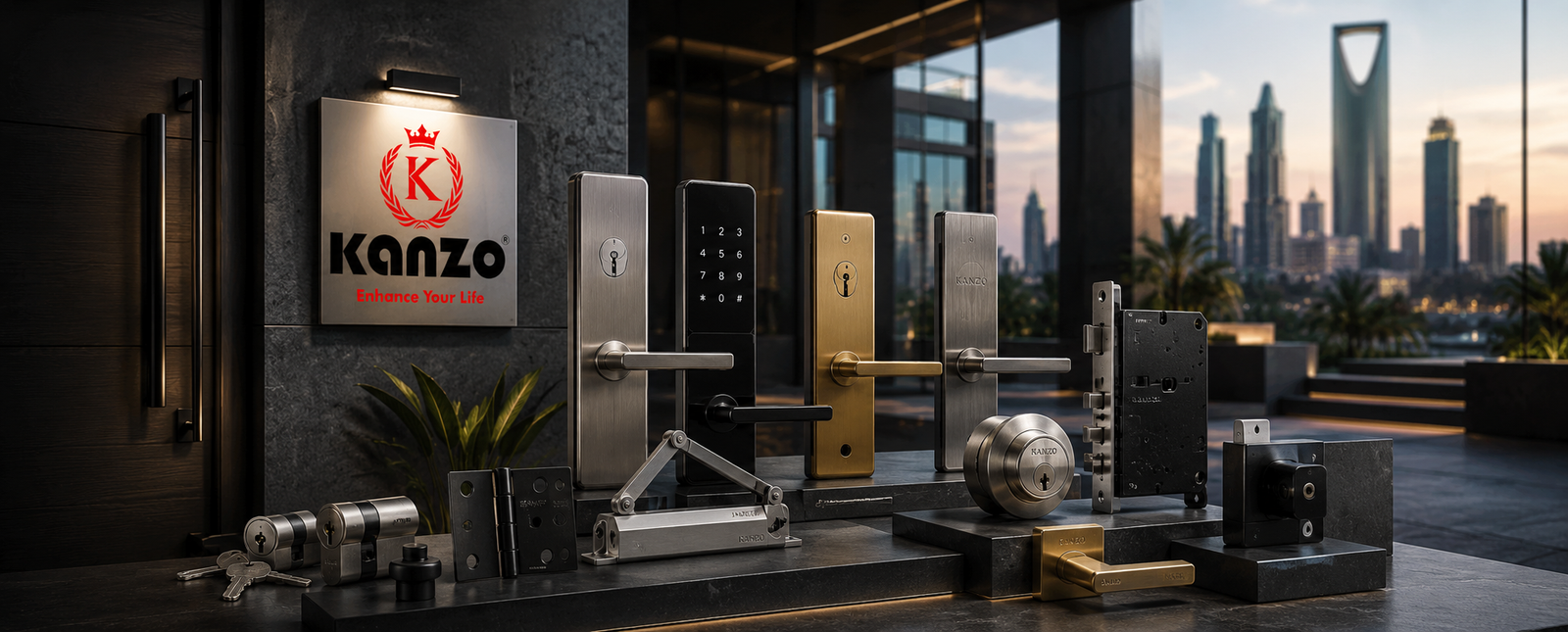
The door lock complete sets in Kanzotech Accessories’ range include mortise options suited for commercial and institutional applications.
Rim Locks
Rim locks are surface-mounted, they sit on the door face rather than inside it. Easier to install, and particularly useful for retrofitting where cutting a mortise pocket isn’t practical, but not the right specification for main commercial entrances.
Where rim locks belong:
- Residential properties and villas
- Secondary entrances and utility rooms
- Older buildings where door construction doesn’t suit mortise installation
- Budget-sensitive internal doors where security requirements are lower
For a commercial project where security and durability are priorities, a rim lock is rarely the right primary specification on entrance or high-traffic doors. It’s a useful product in the right application.
Cylindrical Locks
The cylindrical lockset is the most widely used type in commercial interior applications, it installs through a bored hole in the door face, balances security with ease of installation, and comes in a wide range of functions (passage, privacy, entry, storeroom). Most commercial corridor and interior office doors run on cylindrical locks.
For main entrances and high-security applications, a mortise is generally the stronger choice. For internal doors throughout a commercial building, cylindrical is the practical standard.
How to Choose the Right Lock for Your Project
Once you’ve decided on lock type, there are four more things to nail down before finalising the specification.
Building Type and Security Level
The building’s function tells you a lot about what the lock needs to do:
- Main entrances to office buildings and hotels need commercial-grade, high-cycle locks with a strong security rating
- Interior office doors need reliable commercial cylindrical or mortise locks, but the security requirement is different from the entrance
- Storerooms, plant rooms, and utility spaces need reliable security without necessarily needing the same grade as a main entrance
- Residential villas and apartments use residential-grade hardware appropriately
The mistake is treating all doors in a building the same. Specify by opening, not by project type.
Traffic Volume
How many times will this door open and close every day? Be honest with the number, because this is what determines whether a lock serves for a year or for ten.
A hotel room door in a busy property sees thirty to fifty cycles daily. A hotel corridor door sees considerably more. An office entrance in a busy commercial building can see over two hundred cycles before lunch. These aren’t abstract considerations, they’re the numbers that determine which grade of product is appropriate.
Finish Selection
Finish affects both appearance and longevity, and in the Saudi climate it’s not purely an aesthetic decision.
Stainless steel: the most durable for exterior and coastal applications. Holds up to salt air, UV exposure, and heat better than most alternatives.
Satin chrome: clean commercial appearance, good durability for interior applications.
Matte black: increasingly common in contemporary commercial and hospitality design. Check the specific product’s coating process, powder coat holds better than painted finishes in the Saudi climate.
Brushed nickel: popular in hospitality and high-end residential. Appropriate for interior applications in climate-controlled environments.
Brass: traditional, strong corrosion resistance in standard environments, appropriate for both residential and commercial interior applications.
Choose the finish that works for the specific opening’s location and exposure, not just the one that looks best in the specification document.
Complete Hardware Consistency
This is a procurement detail that affects both appearance and long-term maintenance: the lock, door handle set, hinges, and accessories on a door should be from a consistent, compatible supply. Mixing products from multiple suppliers creates finish inconsistencies, potential mechanical incompatibilities, and after-sales complications when replacement parts are needed.
For large commercial projects sourcing door hardware in bulk, working through a single supplier who can cover the full range of hardware requirements, locks, handles, hinges, and building accessories, simplifies procurement and ensures consistency across the project.
Why the Full Door Hardware System Matters, Not Just the Lock
A lock is one component of a door that functions as a system. The door performs as well as its weakest element.
A high-quality mortise lock body paired with a low-grade handle set creates a system failure at the handle before the lock body shows any wear. A quality lock on an improperly hung door creates alignment problems that accelerate wear on the latch and deadbolt. A lock without an appropriate door closer on a fire-rated door can compromise the fire assembly.
For commercial projects, the specification should cover the full door hardware package:
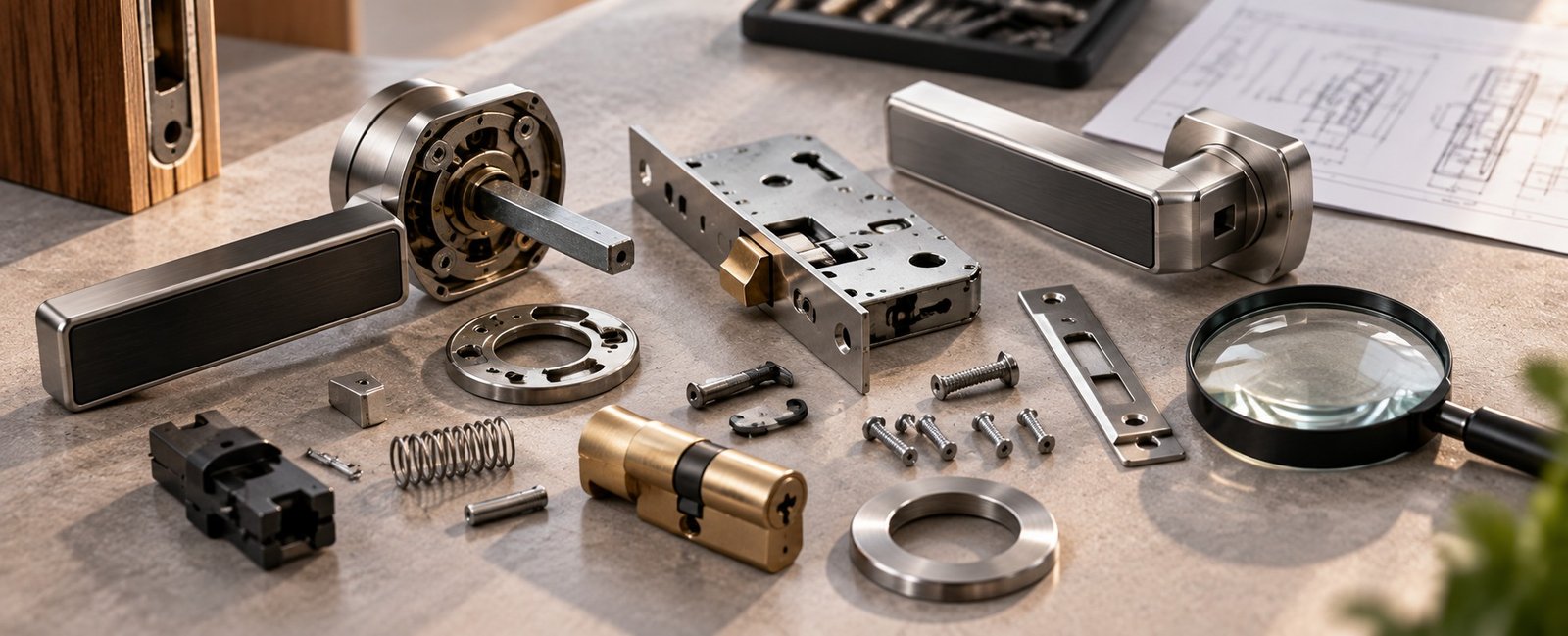
- Lock body and cylinder
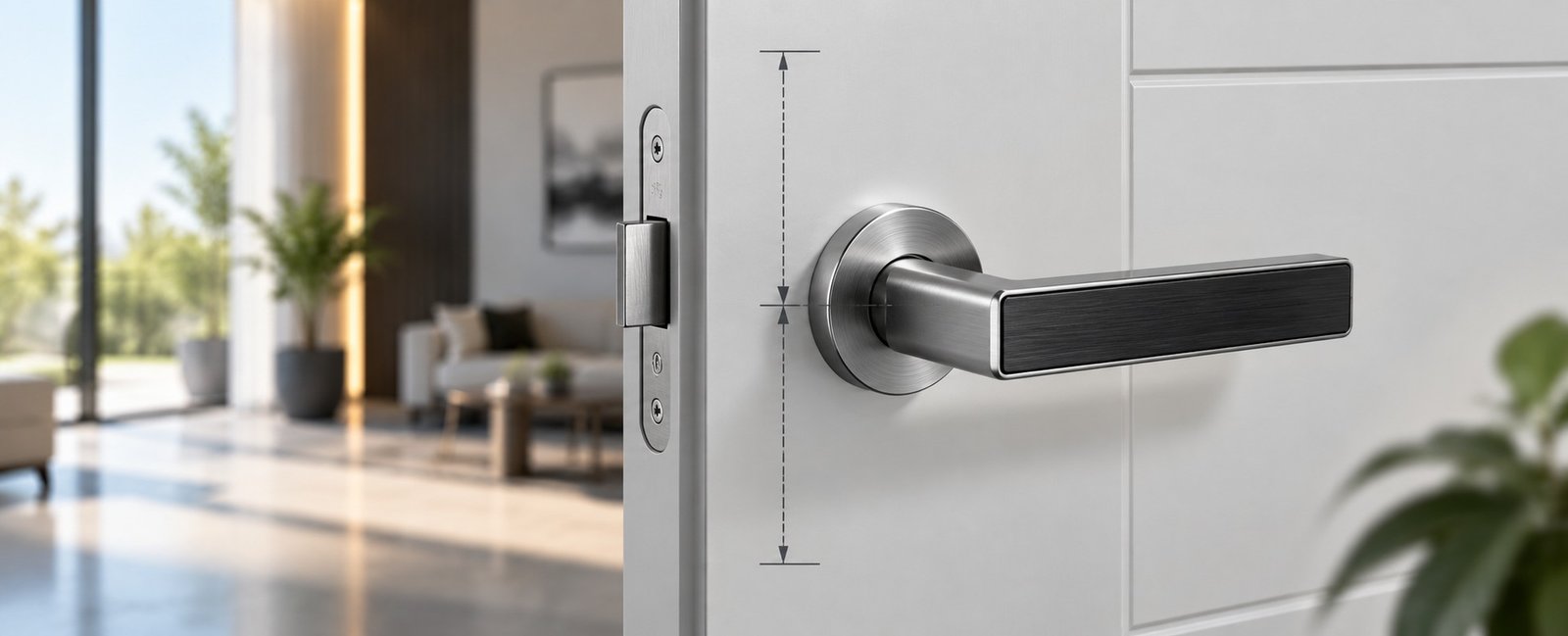
- Door handle set matched to the lock
- Door closer where required (particularly on fire doors and high-traffic commercial entrances)
- Hinges rated for the door’s weight and usage frequency
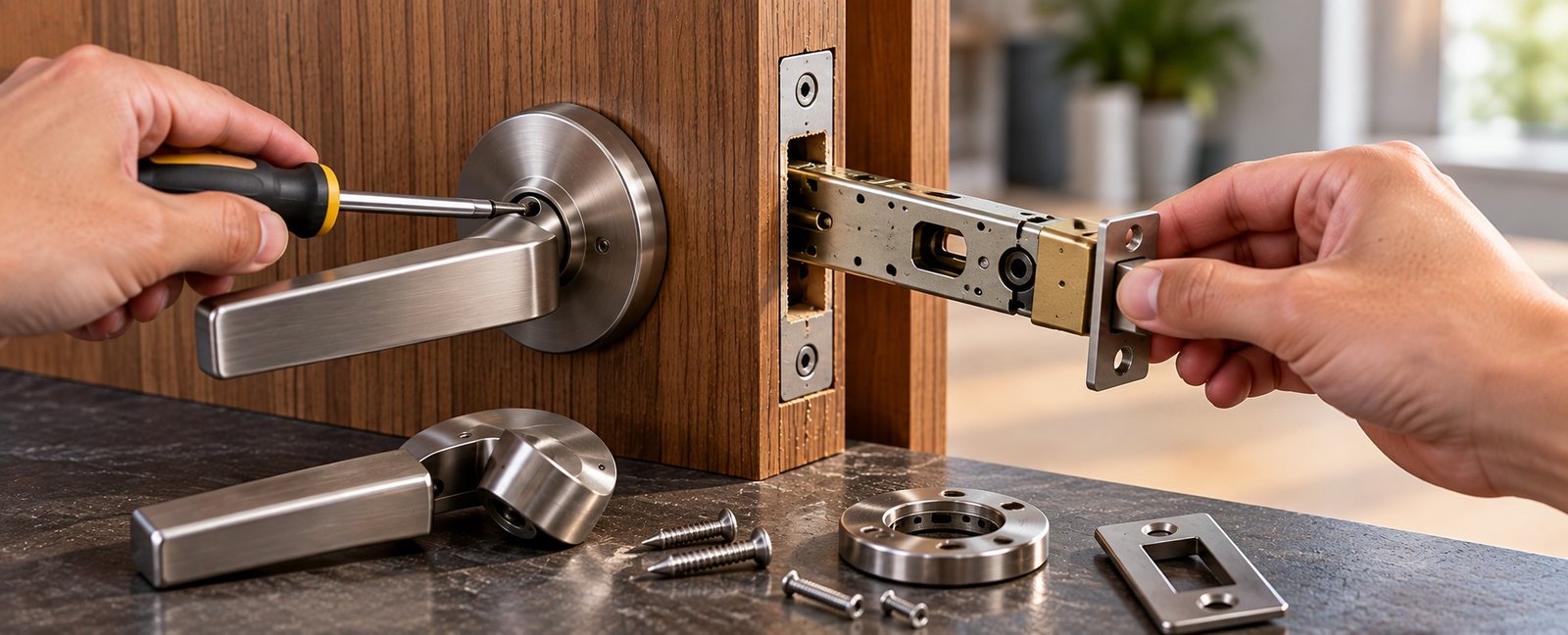
- Strike plate properly anchored to the frame
Kanzotech Accessories supplies door lock complete sets that cover the core hardware elements as a matched package, which simplifies specification and ensures component compatibility across large projects.
Why Contractors and Procurement Teams Choose Kanzotech Accessories
Since 1999, Kanzotech Accessories has supplied contractors, developers, architects, consultants, and procurement teams across Saudi Arabia with building accessories built for real project demands.
The door hardware range covers what commercial and residential projects in Saudi Arabia actually need:
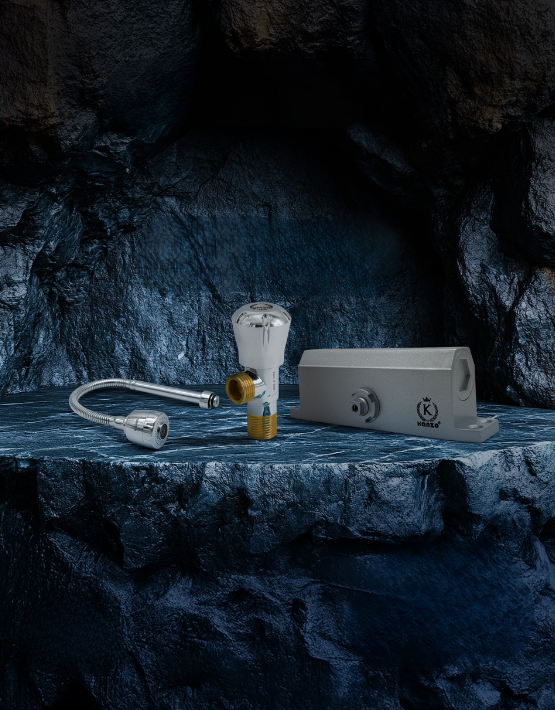
Alongside door hardware, the same sourcing covers valves and flow control products, Teflon tape and installation materials, and hoses and pipes , which means a single procurement conversation can cover multiple building hardware categories rather than managing separate suppliers for each.
For projects that also need water pumps or sanitary fittings, Kanzotech Pumps and Kanzotech Faucets are the complementary divisions within the same group.
Frequently Asked Questions
1.What’s the real difference between commercial and residential door locks?
It comes down to cycle rating, material grade, and what the lock is engineered to handle. Residential locks are tested for lower daily use in home environments. Commercial locks are built and tested for sustained high-traffic use typically rated to one million or more cycles versus around four hundred thousand for residential. In a commercial building, that difference is material.
2.Are commercial door locks more secure than residential ones?
Generally yes, because they’re built with heavier internal components, more robust bolt and latch mechanisms, and stronger housing materials. But “more secure” also depends on correct specification, a quality residential lock on the right door outperforms a commercial lock installed on the wrong one.
3.Can I use residential locks in a commercial building to reduce costs?
Physically, some residential locks will fit commercial doors. Performance-wise, the answer is no for high-traffic or main entrance applications. The maintenance and replacement costs usually exceed the initial savings within the first few years.
4.Which lock type is best for a commercial office building?
For main entrances and high-use doors, mortise locks with commercial grade handles and cylinders are the standard. For interior office and corridor doors, commercial cylindrical locks cover most requirements. The right answer depends on each specific opening’s traffic volume and security requirement.
5.How do I know which finish will hold up in the Saudi climate?
For exterior and coastal applications, stainless steel finishes offer the best resistance to salt air, UV exposure, and heat. For interior applications in climate-controlled environments, satin chrome, matte black, and brushed nickel all perform well. Avoid thin painted finishes in any exposed location.
Where can I source commercial door locks in Saudi Arabia? Kanzotech Accessories supplies door lock complete sets, door handle sets, and architectural hardware for commercial and residential projects across Saudi Arabia. Contact the team for bulk supply enquiries or project-specific RFQ support.
Conclusion
The difference between commercial and residential door locks isn’t a marketing distinction, it’s an engineering one. Cycle ratings, security grades, material specifications, and environmental performance all differ because the operating conditions differ.
Get the specification right at procurement and a commercial door lock does its job quietly for a decade or more. Get it wrong and it starts announcing itself in year two, usually at a time and in a way that’s inconvenient and expensive to fix.
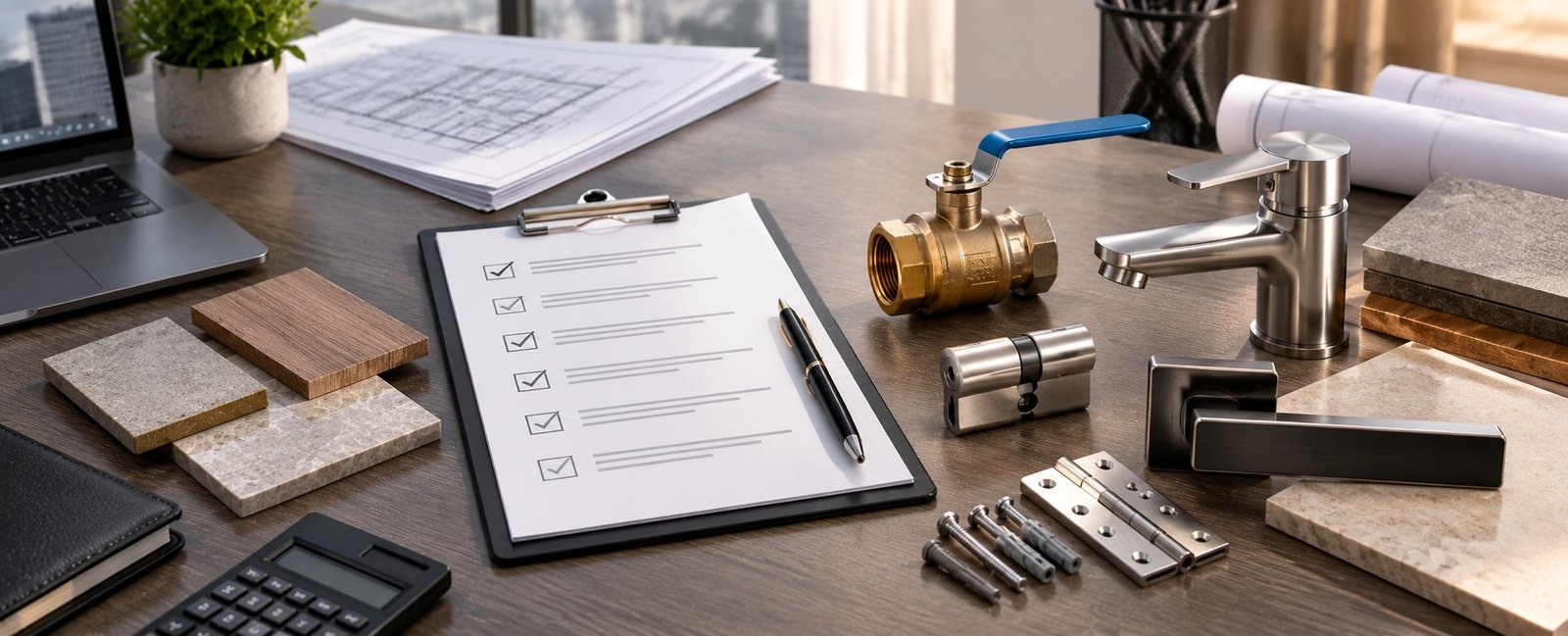
The questions to answer before you specify are straightforward: What building is this? What door is it? How many times a day will this door open? What’s the security requirement? What environment will the hardware be exposed to? Answer those five questions honestly and the right product selection follows from them.
Ready to Source Door Hardware for Your Project?
Whether you’re specifying for a new commercial development, a residential community, or a mixed-use project across Saudi Arabia, Kanzotech Accessories supplies door locks, handle sets, and building hardware built for the conditions your project will actually operate in.
Explore the full door hardware range or contact the team to request a quotation.



 September 30, 2026
 HYZAM KENZ




Comments
No comments yet. Be the first to comment!